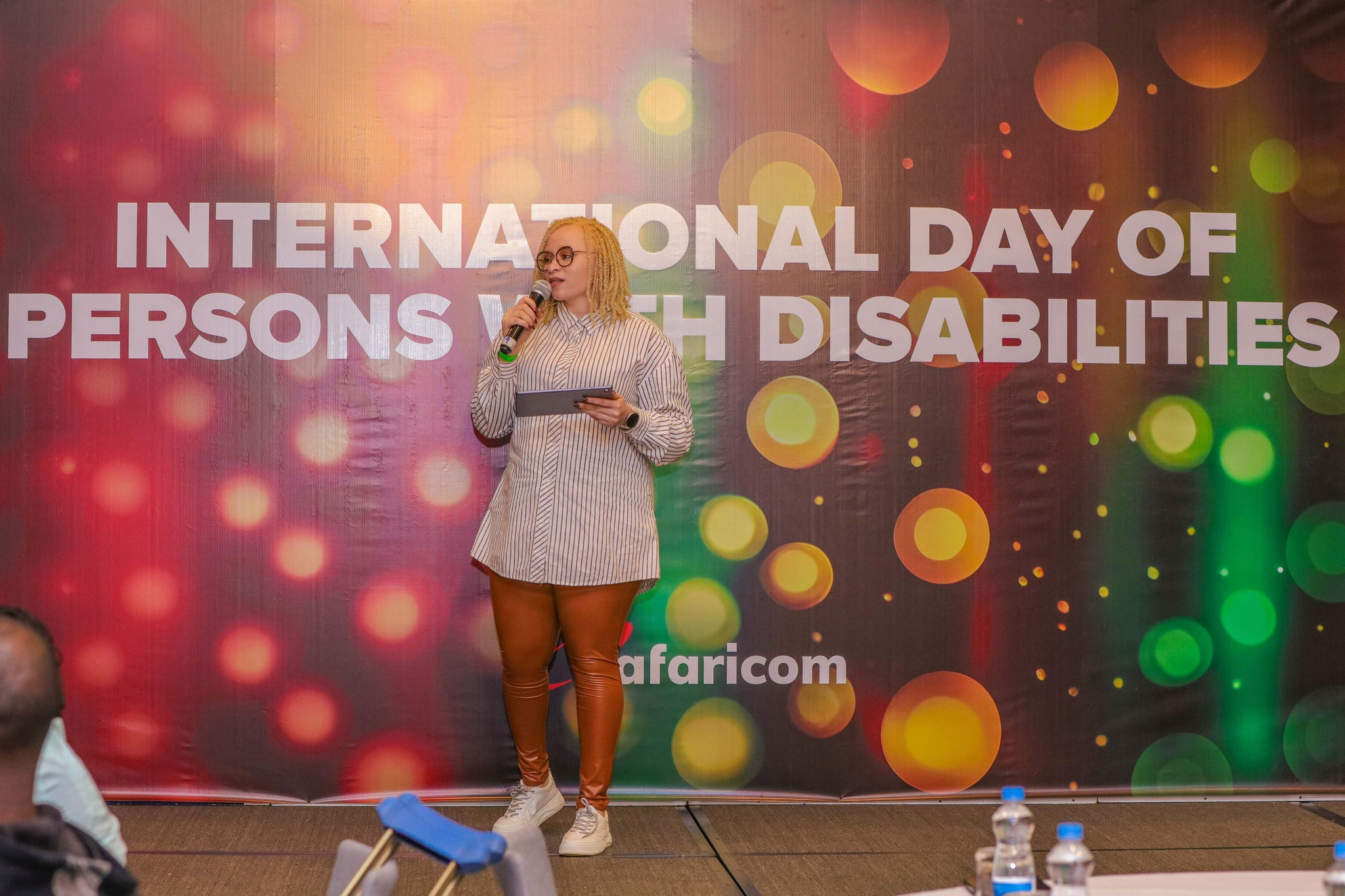
Safaricom Disability Inclusion Forum advances education, health, digital access, employment, and community support for persons with disabilities.
When Safaricom marks the International Day of Persons with Disabilities on December 3, the company ties that day into a broader commitment to meaningful inclusion for persons living with disability. The theme this year, fostering disability-inclusive societies for advancing social progress, reminds us that inclusion opens doors for people to participate fully in society and spur community growth. Safaricom’s approach emphasises ongoing action and not one-off visibility.
We were elated to attend this year’s event at Movenpick Hotel where organisations, advocates, parents and persons living with disabilities came together. Conversations ranged from education to health, mental health support to employment, and adaptive tools that change daily life.
Several players in the disability space pointed out that many people living with disability are invisible in public health, education and workplace planning. “Invisible disabilities” include learning difficulties, mental health conditions and chronic pain that aren’t obvious but still affect access to services and opportunities. Advocates at Mövenpick stressed the importance of active screening and supportive systems so these challenges are recognised early and addressed in tailored ways.
One of the organisations shaping this landscape is CBM Kenya, part of the global CBM federation. The organisation works closely with families and schools that accommodate learners with disabilities. CBM partners with special schools to provide adaptive education resources, hence supporting inclusion.
CBM also plays a very crucial role of screening for disabilities at early ages, identifying specific needs and connecting affected families with needed support. This support includes mobility devices like wheelchairs, corrective surgeries, walking aids and other assistive technologies even for non verbal learners. They also work with health facilities to strengthen rehabilitation services and promote community-based care.
Beyond physical support, CBM also trains and equips teachers to adopt inclusive teaching practices. This may involve curricula adjustments, specialised assessments or learning materials with accessible formats.
Safaricom’s own inclusion work extends into employment, digital access and representation. The company participates in global inclusion platforms that focus on disability in leadership and business strategy. They have taken steps to make digital services more accessible and to grow employment opportunities for persons with disabilities within the organisation. Safaricom has run tech re-skilling programmes for learners with disabilities to build digital and IT skills, including software development training and career mentorship designed to improve employability.
These efforts align with broader changes in Kenya’s legal and policy landscape, where disability is being recognised as a human rights issue in policy frameworks that promote accessibility, reasonable accommodation and participation in employment and education.
The conversations at Mövenpick were not nostalgic or ceremonial. They were practical. Speakers outlined the need for ongoing awareness in communities, targeted screening for both visible and non-visible disabilities, better teacher preparation, deeper workplace inclusion and stronger community support for mental health. Guests shared personal stories of barriers and small victories, illustrating that inclusion requires continual adjustments in systems that were never designed with everyone in mind.
Safaricom’s participation in the International Day is a start point and a reminder. Real inclusion demands daily engagement from businesses, governments, educators and citizens. Readers familiar with these issues will recognise progress has been made, while acknowledging more work is needed so that people living with disabilities can access health, education, employment and social opportunities with dignity and respect.
Follow us on Twitter and Facebook for real-time updates.