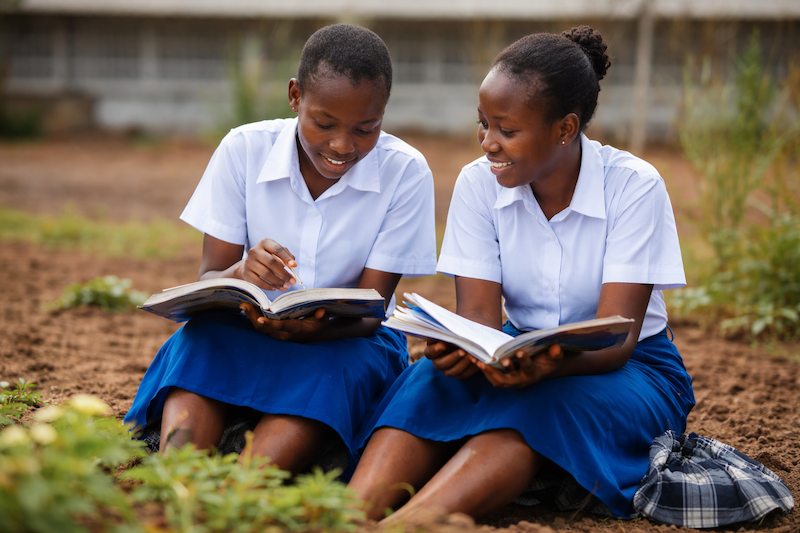
I&M Foundation two percent model enables predictable funding, sustained education, youth empowerment, conservation and community-led impact over time.
Kenya has a crowded philanthropic landscape and so when the I&M Foundation was launched in 2020, they made one deliberate choice which still shapes the projects it touches five years later. The foundation tied its future to a fixed commitment instead of treating philanthropy as a discretionary line item and that was dedicating 2% of I&M bank Group’s annual profit before tax to the foundation.
This approach means that there’s predictability which is important in this sector which gets often defined by short funding cycles and priorities that keep shifting. This choice has dictated the foundation’s scale, pace and ambition. This decision has allowed the Foundation to stay with ideas long enough for outcomes to surface instead of cycling through new ones endlessly.
Their anniversary now focuses on examining what predictable funding makes possible when it is applied patiently across four pillars – education, youth empowerment, environmental conservation and enabling giving.
To put this in perspective, a lot of corporate philanthropies operate on short horizons where budgets get reset, priorities move and projects end just as they begin to settle. So, with the 2% model, the Foundation takes the opposite and more sustainable approach. This commitment by the Bank enables the Foundation to secure a recurring funding base which enables them to commit to multi year initiatives that demand consistency and thus their partners know that funding will not vanish midstream and that communities will not be asked to recalibrate their expectations every year.
For the past five years, this structure has quietly reshaped the Foundation’s programs by ensuring they begin with an assumption of continuity rather than an exit strategy and this continuity means that the recipients can imagine futures beyond survival.
The I&M Foundation’s most visible area of investment has been education and its approach has resisted quick wins and instead aimed its scholarships as entry points with longer trajectories. For scholarship recipients, the support often begins with access, but it does not end there. Many beneficiaries receive mentorship, exposure opportunities, and guidance as they move through secondary school and into tertiary education.
Students supported by the I&M Foundation at institutions like Strathmore University have moved through their studies with a level of financial stability which allows them to focus on learning as opposed to survival and what this means is that for some, its them being the first in their families to reach university and for others, it’s staying enrolled when costs might otherwise have forced a pause in their academic years.
Early beneficiaries of the Foundation have gone ahead to complete their degrees, going into their professional careers or furthering their education with postgraduate studies. While the outcomes will vary as mentioned before, the pattern is very clear. That when education support is sustained longterm, the effects compound over time.
Another pillar that follows the same logic for the Foundation is youth empowerment, where they have invested in the difficult space between training and employment. They have invested in programs that address the difficult transition from learning to earning.
For instance, the Foundation has partnered with institutions like Moringa School to support young people from underserved communities to acquire digital skills which align with market demands. For a lot of the participants, this training represented their first exposure to formal tech education, and some graduates secured employment as soon as they completed the program. Others took longer paths, including combining freelance work, internships, or further learning before finding stable roles. For many, this program provided a first real opportunity to compete in sectors that were previously out of reach.
Moving from technical training, the Foundation has supported entrepreneurship with programs like the Enterprise Challenge. This initiative introduces high school students (more than 1,700 so far) to business thinking early, including experimenting with ideas, simulations and seed capital. With this exposure, a lot of the participants get exposed to subject choices, career aspirations and confidence even long after the program has ended.
Another clear demonstration of what long-term funding enables is environmental conservation. Early last year, the Foundation launched Project Imarisha Ngong’ Forest, their Ksh 162 million partnership with the Kenya Forest Service. This project brought with it 682 jobs that are tied directly to the forest restoration activities within its first year. The project installed 5km of electrified fencing and developed 35Km of nature trails, plus rehabilitated 3 hectares of degraded forest.
Project Imarisha Ngong’ Forest has employed workers from the surrounding areas including Dagoretti South, Lang’ata, and Kibera, and now the forest has become a source of income, pride and responsibility and no longer a distant public asset. The forest’s restoration connects environmental protection with livelihoods in a way that feels necessary and practical.
Moving away from the capital and the urban forest, the Foundations environmental work takes a different form at the Coast. Partnering with Kenya Community Development Foundation and A Rocha Kenya in Kilifi County, they have supported the planting of over 5000 mangrove trees. These trees protect the coastline, support fisheries and play a role in freshwater systems. These conservation efforts in Kilifi have also been tied to ecotourism and income generation, which creates incentives for local stewardship instead of extraction.
Enabling giving, which is the Foundation’s other pillar, reflects an understanding that lasting impact often comes through collaboration. The Foundations works with schools, training institutions, community organizations an public agencies to strengthen existing systems. These initiatives leverage teh baks physical presence.
Just last year, their “A Time to Give” program committed Ksh 10 million to grassroots projects delivered through 21 newly opened I&M Bank branches. This approach of using branches means they can identify hyperlocal needs and respond accordingly, with a wide variety of results. We have water harvesting systems in schools in Embu that reduce water costs by about 70%. We have solar installations at children’s homes in Mwea that provide long lasting and reliable backup power, and also street lighting projects in Kenol that address safety concerns raised directly by residents. Gede Special School got wheelchairs and learning furniture to support students with disabilities in practical and immediate ways.
While these projects are modest in nature, cumulatively they show that decentralised giving can address gaps that large programs often miss. In several cases, Foundation-backed programs have attracted additional partners, expanding their reach beyond initial projections.
The trajectories shared above make it easy to understand the Foundation’s impact in its first five years. We have scholarship recipients entering professional roles, youth trained in digital skills who are contributing to household incomes, and forest restoration projects that create jobs alongside environmental gains.
That’s the good thing about the predictable funding, which has allowed I&M Foundation to remain involved long enough to learn, adjust and recommit.
For its next phase, I&M Foundation’s priorities remain steadily guided by its focus on education, youth empowerment, environmental conservation and enabling giving, with this model evolving in confidence.
With five years of operation, the Foundation has provided evidence of what steady philanthropy can achieve when it invests in the process and resists urgency. The challenge is to deepen what already works, and stay present for today’s beneficiaries to become tomorrow’s professionals, mentors and leaders.
Follow us on Twitter and Facebook for real-time updates.