
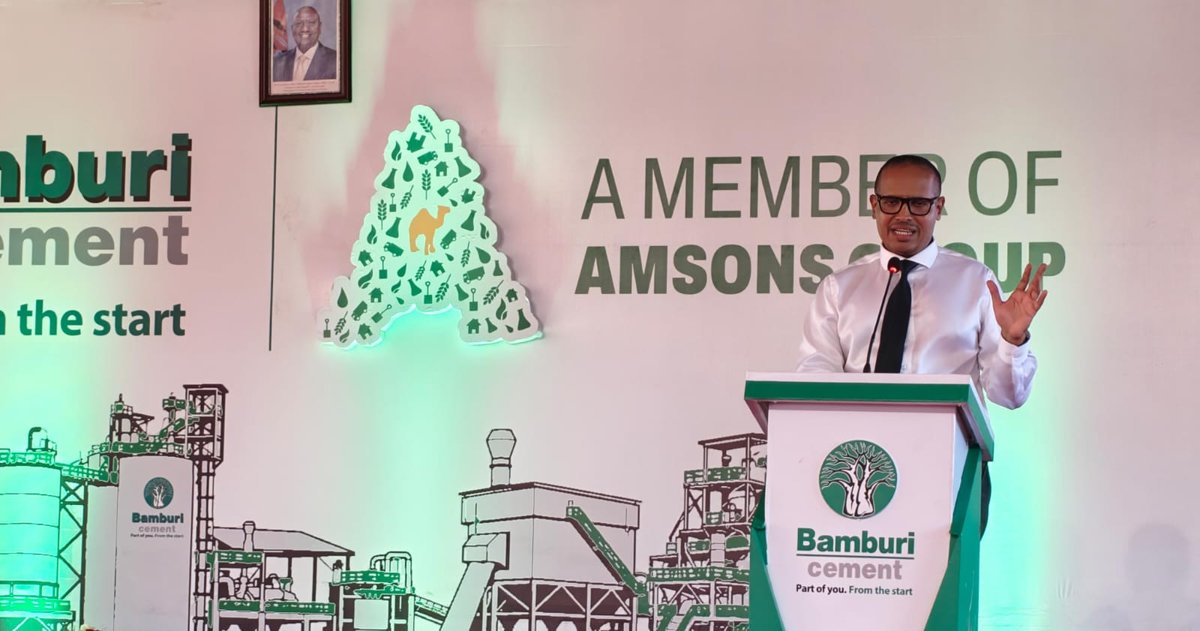
If you have ever built a house, even a small extension at the back, you know that cement is never just one line in the budget. A rise of a few hundred shillings a bag can quietly push a project back by months. That is why the groundbreaking of Bamburi Cement’s new clinker plant in Matuga, Kwale County, matters to more people than the engineers on site.
President William Ruto presided over the groundbreaking of the US$250 million (KSh 32 billion) plant, which will produce 1.6 million tonnes of clinker a year. Clinker is the main ingredient in cement, and Kenya has long relied on imports to meet demand. Bamburi Cement, a member of the Amsons Group, plans to use the new plant to more than double its capacity, from 1 million tonnes to 2.6 million tonnes of clinker and from 1.8 million tonnes to 4 million tonnes of cement.
Bamburi Cement CEO Eng. Geoffrey Ndugwa put the case plainly. “Clinker is the core ingredient at the heart of cement manufacturing,” he said, adding that the plant “will shield Kenyan manufacturers from global supply shocks and currency swings, while lowering the cost of building in Kenya.” By cutting reliance on imported clinker, the plant is expected to save foreign exchange, help stabilise cement prices and secure supply for the local market. For a family saving up for a plot and a few rooms, steadier prices make planning a lot easier.
Bamburi Cement’s new plant is also designed to be kinder to the environment. It will use advanced, carbon-neutral technologies and alternative fuels and raw materials, such as coconut and cashew nut husks and municipal solid waste sourced from the Coast. Turning farm waste and rubbish into fuel is the kind of idea that makes sense in a region where coconut and cashew farming are part of everyday life.
For the Coast, the bigger story may be work. The project is expected to create over 10,000 direct and indirect jobs in Kwale and the wider coastal region. Beyond jobs, it opens doors for micro, small and medium enterprises and local businesses in logistics, quarrying, equipment maintenance and other services. If you run a small business in the area, whether that is transport, catering for workers or supplying materials, this is the time to get your paperwork in order and find out how suppliers will be brought on board. The project will also offer skills transfer, so local people gain industrial experience that stays at the Coast long after construction ends.
Amsons Group Managing Director Edha Nahdi described the investment as “a statement of our long-term confidence in Kenya and its economic potential.” The construction works will be carried out by Sinoma CBMI Construction Co., Ltd, part of the China National Building Material Group, which brings wide experience in cement plant engineering. The plant will include a 6-stage precalciner system.
Bamburi Cement is also looking at the families living closest to the project. Ahead of the second phase of compensation under the KSh 250 million Mwachome Village relocation project, the company has trained 112 project-affected persons from 42 households in financial literacy. It is a small but meaningful step, since a large compensation payment can disappear quickly without a plan. “The success of this investment must go hand in hand with the well-being of the community around it,” said Board Chairman Dr John Simba. The ceremony was also attended by Kwale County Governor Fatuma Mohamed Achani.
Bamburi Cement says the expanded production will support the government’s 10-year national development roadmap, a KSh 5 trillion plan to be financed through the National Infrastructure Fund for roads, rail, ports, airports and pipelines, all of which depend on cement and concrete.
Bamburi Cement has been a household name since 1951. With this plant, the next chapter could be felt far beyond the factory gates, in the jobs created at the Coast and, hopefully, in what it costs the rest of us to build.
Never miss a story 💜
Breaking news, real stories and money tips for Kenyan women, as they happen.

