
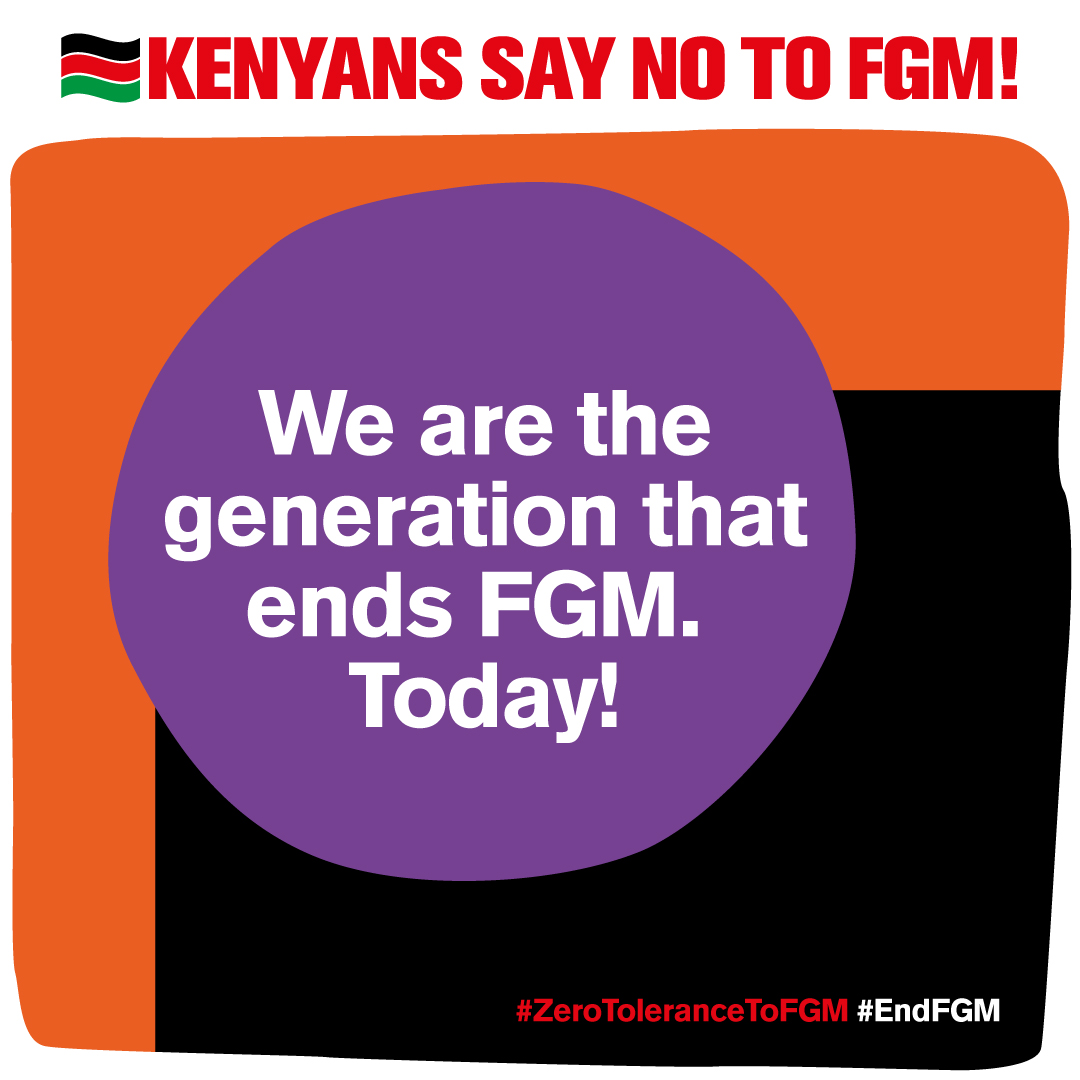
Stop Female Genital Mutilation careless leadership language normalizes violence, weakens enforcement, and puts girls’ safety and rights at risk.
A few careless words from a public leader can do more harm than we often care to admit. When leaders speak as though a banned practice is merely a matter of “culture” or a tool for discipline, they do not simply offer a personal view; they shift the boundaries of what is socially acceptable. Their rhetoric travels faster than policy—into what is whispered in villages, tolerated in homes, and excused in community forums. It makes the work of teachers, health workers, children’s officers, and law enforcement significantly harder, and it can dismantle years of progress in protecting the vulnerable.
This is why the conversation must be about leadership accountability—not personalities. Kenya has chosen the standard: Female Genital Mutilation (FGM) is a crime. The Prohibition of Female Genital Mutilation Act, 2011 was established to safeguard the physical and mental integrity of girls and women, and it places clear responsibilities on individuals, institutions, and leaders at every level of public life. Zero tolerance is not a slogan; it is a duty.
Read also – End FGM In Kenya. Reckless Remarks By Dorice Aburi Are Very Unfortunate
FGM is not a cultural elective or a topic for negotiation. The law is explicit that the offence is committed not only by those who perform the cut, but also by anyone who aids, abets, counsels, or procures the practice. It criminalizes the use of premises for FGM and the possession of tools intended for it. Crucially, it also makes it an offence to fail to report that an act has been committed, is being committed, or is intended to be committed. For public officials and community leaders, this is not abstract: words that normalize or romanticize FGM risk signaling impunity and weakening compliance with the law.
National responsibility is codified through the Anti-Female Genital Mutilation Board, mandated to advise government, design public awareness programs, and coordinate eradication efforts. But national frameworks only work when leadership is coherent at the local level—when chiefs and assistant chiefs, county administrators, police, gender officers, children’s officers, educators, and faith leaders exercise their authority to protect victims, disrupt harmful networks, and sensitize communities consistently and respectfully.
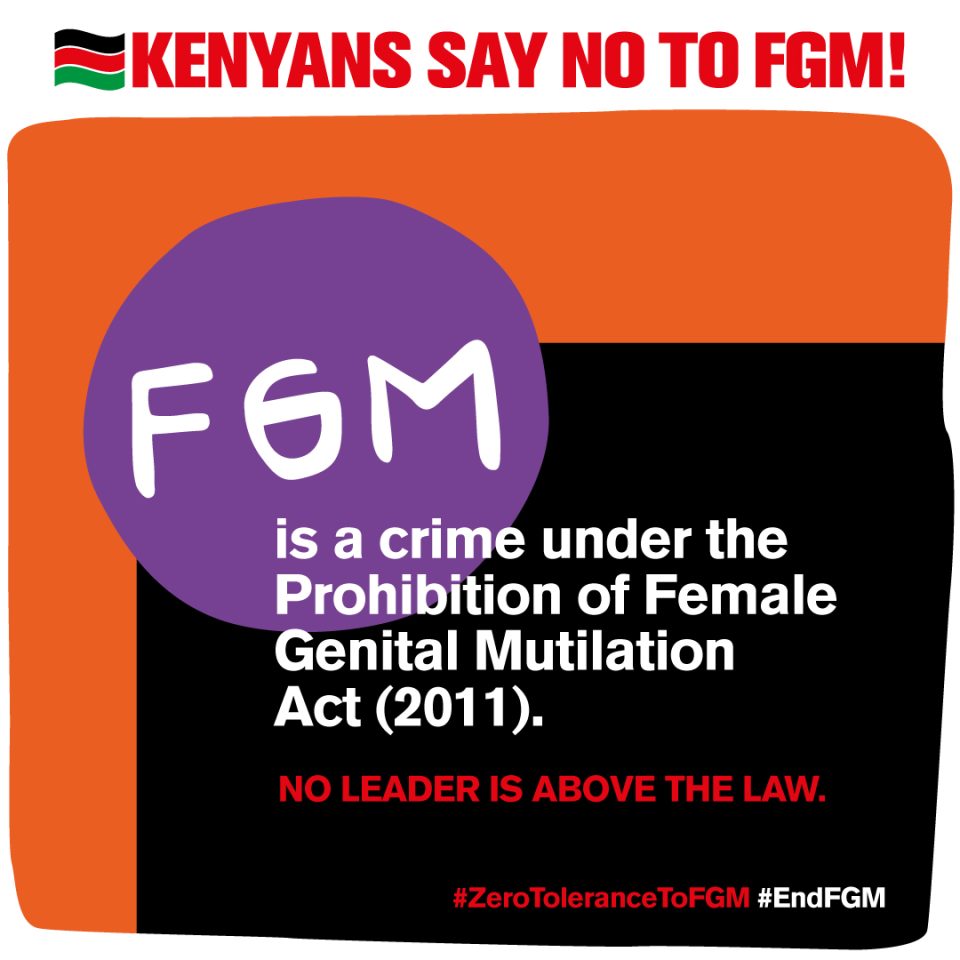
Stop Female Genital Mutilation now: Hold leaders accountable, protect girls, enforce the law, and eradicate harmful traditions across Kenya.
The government is also obligated—within available resources—to protect women and girls and provide support services for survivors. That mandate is undermined when leaders frame protections as “foreign” or “elitist,” or treat enforcement as optional. The law is clear that culture, religion, or custom cannot be used as a defense or justification for FGM, including “medicalized” FGM. Even medical trainees and professionals are liable if they participate. In other words, leadership cannot outsource responsibility to tradition, nor can the health system sanitize harm as care.
What keeps FGM alive is not only the act itself, but the ecosystem around it: social pressure, intimidation, silence, and political convenience. Kenya’s law recognizes this reality. It criminalizes abusive or derogatory language used to ridicule women for refusing the cut—or men for supporting them—because coercion is itself a form of violence. It also provides for extra-territorial accountability, ensuring that taking girls across borders does not become an escape route from justice. This is a reminder that ending FGM is not achieved through statements alone, but through structural enforcement and community protection.
If Kenya is serious about safeguarding its girls, then leadership must move beyond ambiguity to public commitment. The most powerful message leaders can send is not a provocative remark that tests public reaction, but a clear pledge that reinforces the law and protects children. That pledge should sound like action:
- Publicly affirm zero tolerance and make it politically costly to defend or excuse FGM.
- Support enforcement by promoting reporting pathways and protecting whistleblowers and survivors.
- Fund and strengthen survivor services—medical, psychosocial, legal aid, and safe shelters.
- Partner with communities to shift norms through respectful, sustained engagement—not episodic outrage.
- Champion girls’ education and dignity as the national development imperative it is.
Kenya’s ambitions—jobs, productivity, and universal health coverage—depend on girls being healthy, safe, and able to stay in school. FGM disrupts education, increases health risks, and entrenches inequality at precisely the stage when Kenya needs every girl to thrive. That is why leadership language matters so much: it can either lower harm or raise risk for a girl who cannot fight back.
As the International Day of Zero Tolerance for FGM reminds us, ending this practice requires collective action—led from the front. Kenya will not protect girls through silence, mixed signals, or “cultural” hedging. The standard must be absolute: no leader should romanticize violence as discipline, or use culture as a shield for a criminal act. Our girls deserve leadership that does not flirt with harm—but commits, publicly and consistently, to ending it.
Never miss a story 💜
Breaking news, real stories and money tips for Kenyan women, as they happen.

