
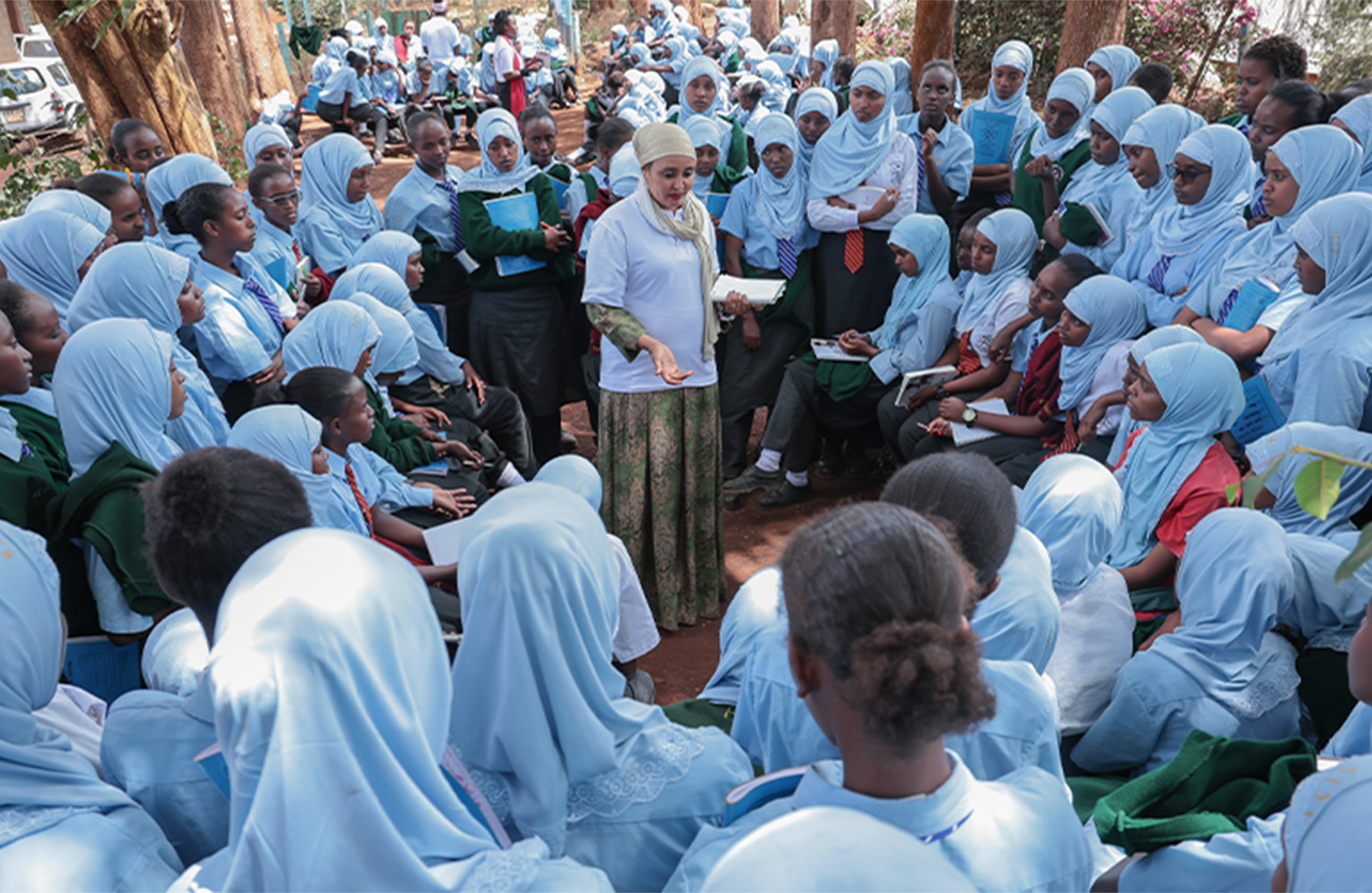
Iladho Galgallo STEM mentorship inspires Moi Girls Marsabit students as Safaricom engineer urges girls from pastoralist communities pursue STEM careers.
When Iladho Galgallo walked back into Moi Girls High School in Marsabit this February, the visit carried a quiet message for the students listening in the hall. Her story had started in the same classrooms years earlier, long before she became a Safaricom engineer.
Her visit formed part of Safaricom’s Women in Technology mentorship programme, an initiative that encourages girls to consider careers in science and engineering. For the students, the speaker at the front of the room had once worn the same school uniform and faced the same challenges they deal with today.
Iladho Galgallo now works as Manager, Cloud Solutions at Safaricom, a role that places her in one of the country’s most technical sectors. Her path to that position began in a small pastoralist community in northern Kenya.
Iladho’s education started under difficult conditions in North Horr, where long distances and financial pressure shape many students’ lives. In her community, families often placed little priority on educating girls.
The journey to school alone demanded determination.
“Travelling to Moi Girls High School used to take me two days to travel on a lorry, because our road is very rough. Also, while in school, I experienced many other challenges. First is the lack of school fees. I was chased out of school many times. Sometimes I missed classes for a week, sometimes two days,” she recalls.
Many students in pastoralist regions face similar interruptions. School fees arrive late, transport remains unreliable, and long distances separate villages from boarding schools.
Despite those obstacles, Iladho kept one goal in mind. She wanted to become an engineer.
At Moi Girls Marsabit, Iladho made an unusual decision. She chose physics. Only four students in her class selected the subject at the time. Science classes in rural schools often struggle with limited equipment and rotating teachers. Many students shift to art subjects instead.
Iladho stayed with physics and completed her Form Four exams. Her grades did not lead directly to a university engineering programme. She enrolled instead for a Diploma in Telecommunications at Kenya Polytechnic, now the Technical University of Kenya. That decision placed her on a technical path that later opened doors in the telecommunications sector.
After completing her diploma, Iladho entered the job market like many graduates do. Her first job paid Ksh 5,000 per month.
“After my diploma, I started looking around for a job. I secured my first job where I earned Ksh 5,000, then I met a Safaricom contractor, Masaba Services, where I worked for three years, earning Ksh 15,000 per month,” Iladho Galgallo.
Contracting work exposed her to the practical side of telecommunications infrastructure. Field assignments and equipment checks became part of her daily routine.
A turning point arrived when she met Lillian Kiambati, Safaricom’s Head of Service Management and a member of the company’s Women in Technology initiative. Kiambati mentored her through the application process until she secured a position at Safaricom.
Iladho Galgallo STEM mentorship – Returning to Inspire the Next Generation
Years later, Iladho returned to Moi Girls Marsabit with a different purpose. She spoke to students about persistence and the value of studying science subjects.
“I’m here to tell them that if I made it through all those challenges, they can also make it,” she told the students.
Safaricom leaders who attended the mentorship session reinforced that message. James Langat, Head of Regional Network Implementation and Operations, encouraged the girls to build strong academic foundations early.
Kiambati also addressed the long-standing belief that science subjects belong mainly to male students.
“It is possible to become a successful woman techie or engineer because now we are breaking stereotypes, to just tell you that science and physics are easy. Because we have done it, you should also make it,” she said.
In counties like Marsabit, access to education remains uneven. Schools sit far apart and resources vary widely from those in urban centres.
That reality shapes how students imagine their futures. When a former student returns as an engineer, the message lands differently. The career path suddenly feels closer to home.
Mentorship programmes attempt to close that psychological gap. They introduce students to professionals who once stood where they stand now.
For the girls at Moi Girls Marsabit, Iladho Galgallo’s story offered something simple and practical. It showed that a student from North Horr can study physics, build technical skills, and eventually lead cloud technology systems in Kenya’s telecom industry.
Never miss a story 💜
Breaking news, real stories and money tips for Kenyan women, as they happen.

