
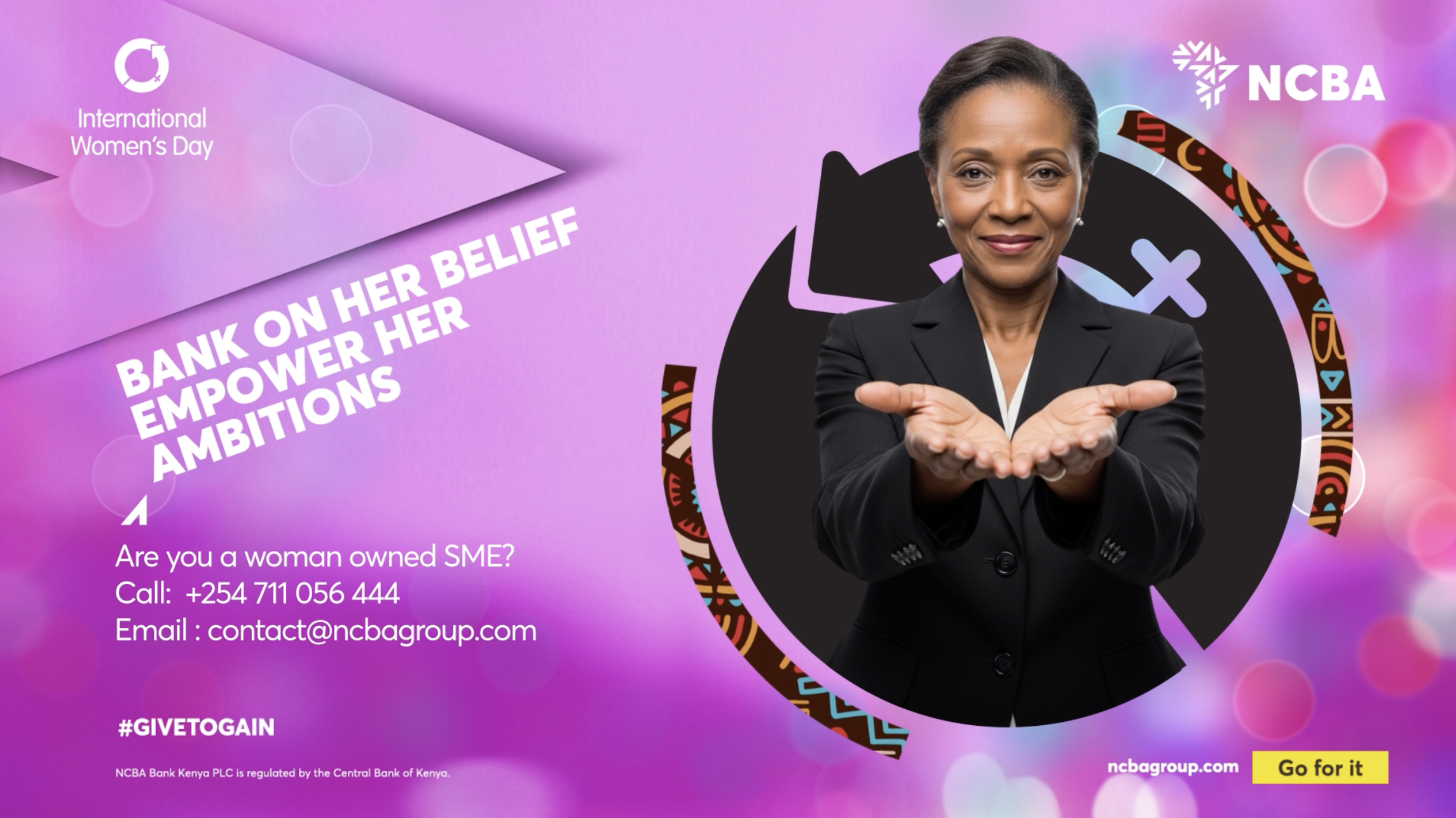
NCBA Women Enterprise Growth expands financing and advisory support for women-led agribusinesses across Kenya’s agricultural value chain.
In many entrepreneurial endevours, access to finance continues to shape how far many women-owned businesses can grow, and agriculture is no exception. Additonal empowerment is always crucial in helping women scale their businesses and on this International Women’s day, I’m going to highlight the NCBA Women Enterprise Growthconversation which reflects a partnership that is addressing this gap.
NCBA has teamed up with the African Guarantee Fund under the African Development Bank Group’s Affirmative Finance Action for Women in Africa (AFAWA) initiative to expand financing and business support for women-led enterprises across Kenya’s agri-food value chain.
Read also – Soko Kijiji Boosts Women Entrepreneurs Through NCBA
The timing matters.
The long rains are here and activity has picked up in ernest in the farms, markets and preservation and value addition businesses. Women run a large share of this work by farming, organizing supply chains, managing produce collection points and connecting farmers to buyers. The myriad of businesses in this field show clear growth potencial, but limited access to finance stands in the way.
This way, many women led entreprises remain small despite them putting so much work into agriculture, supporting household income and contributing to food production. Credit systems rarely align to the demands of these businesses.
Read also – NCBA AFAWA Backing Women Led Agribusiness Growth In Kenya
Agriculture is heavily influenced by weather, planting seasons, harvest cycles and fluctuating market prices. For this reason, loan facilities that rely on rigid repayment schedules do not always fit the reality on ground. This is one among many other challenges like women facing other barriers like restricted lang ownership, which in turn limits collateral and qualification for financing.
These limitations create a familiar pattern. Agribusinesses operate below their potential even when demand is huge, and this translates to loss of productivity in one of Kenya’s most important sectors.
How the NCBA–AFAWA Programme Works
The NCBA Women Enterprise Growth is built on a partnership between NCBA and the African Guarantee Fund which is designed to expand lending to women-owned businesses through risk-sharing mechanisms. Instead of relying entirely on traditional lending structures, the programme combines financing with advisory support and partial guarantees that reduce risk for lenders.
The results of this partnership are clear and encourating. The earlier phase of the collaboration in 2025 facilitated more than Ksh 17 billion in lending and impacted over 700 small and medium enterprises while supporting more than 7,000 jobs. This included around 2,200 opportunities for women.
In what I would think is tenstament to the support of the previous programme, this NCBA and African Development Bank have doubled the momentum, with lending capacity for women and youth entreprises increasing from Ksh 1.5 billion to Ksh 3 billion. More than 80 women are entrepreneurs are expected to participate across two cohorts.
Since the programme launched in October last year, NCBA has already facilitated over Ksh 747 million in loans to women-led enterprises. The programme targets to unlock about USD 5 million financing.
NCBA Women Enterprise Growth – Finance Paired With Business Support
The programme does not stop at financial support. Small entreprises face many other challenges before they even approach a bank, one of the major ones being documentation and even book keeping. These are required for larger credit facilities and mentorship and advisory support in this area go hand in hand with finances. Entrepreneurs receive guidance on financial management, value-chain opportunities and long-term business planning. Conversations also touch on climate risks, market access and positioning within emerging economic zones.
This allows lenders and entrepreneurs to go beyond the traditional loan application process, and for businesses to gear up for success and expansion.
NCBA’s procurement policy is fully aligned for women and youth empowerment by having at least 30% of its procument spend towards them as suppliers. That move increases market access for small enterprises and strengthens commercial relationships that support growth.
What This Means for Kenya’s Agri-Food Sector
Agriculture continues to play a central role in Kenya’s economy through employment, exports and domestic food supply and women forma large part of the workforce across different facets of farming. Expanding financing and business support through initiatives like NCBA Women Enterprise Growth allows more of these enterprises to scale and grow from survival to thriving.
As planting season returns across Kenya, many women entrepreneurs continue building businesses that sustain households and local economies. Financial partnerships that recognise the realities of agriculture offer a clear path for these enterprises to expand their role within the country’s food system, and NCBA is right there to support.
Never miss a story 💜
Breaking news, real stories and money tips for Kenyan women, as they happen.

