
KCB Reports KShs. 68.4 Billion Profit as Lending and Regional Operations Lift 2025 Results
KCB 2025 financial results show a bank that kept lending and held costs in check through a demanding economic period. The group reported KShs. 68.4 billion in profit after tax for the year ending December 2025, an 11 percent rise from the previous year. Growth came from a larger loan book, steady revenue from several business lines, and tighter spending across the group.
For you as a banking customer or investor, the results show how one of East Africa’s largest lenders is balancing expansion with risk management in a region that still faces pressure from high borrowing costs and currency shifts.
Loan Growth Drives Revenue
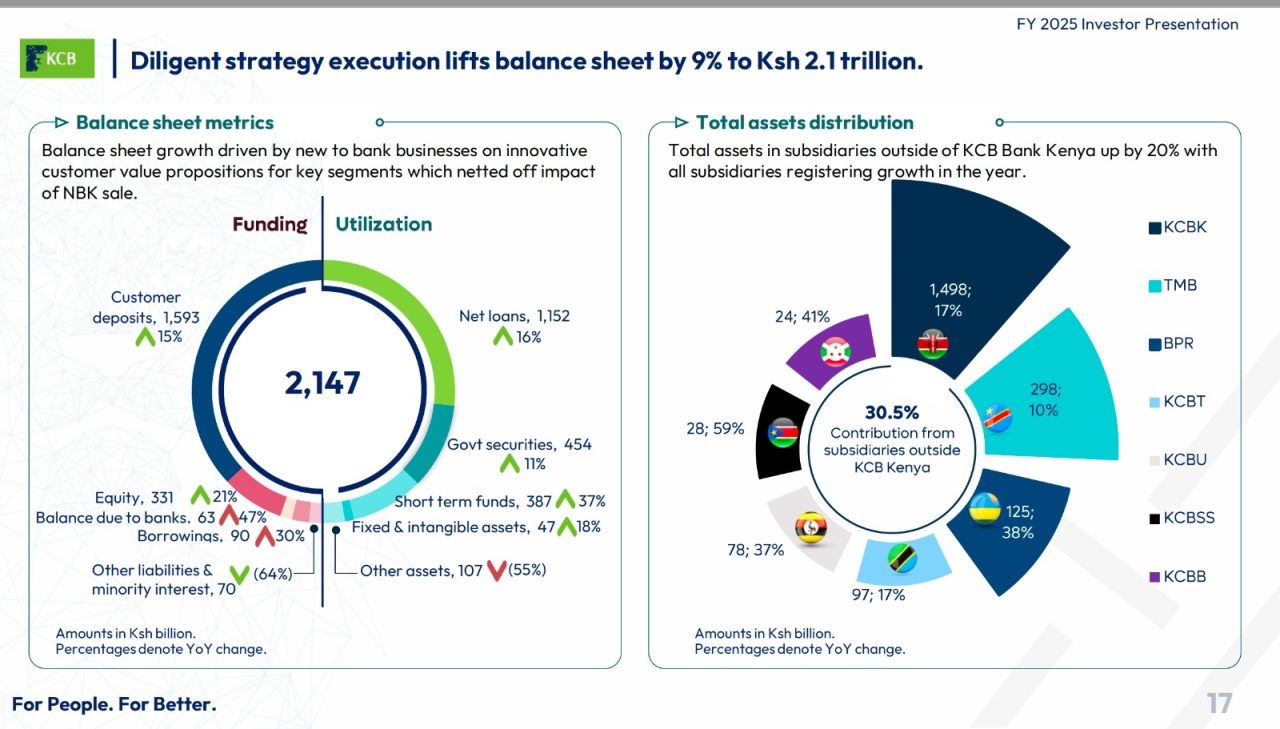
KCB increased lending during the year, with customer loans rising 15 percent to KShs. 1.59 trillion. The bank channelled much of that lending into interest earning assets, which grew to KShs. 1.84 trillion.
Total revenue reached KShs. 214 billion, up from KShs. 204 billion a year earlier. Net interest income formed a large share of that growth as the bank expanded lending to households, businesses and public institutions.
Non funded income accounted for 31 percent of total revenue. Digital banking services played a part in that performance as customers continued shifting toward mobile and online transactions.
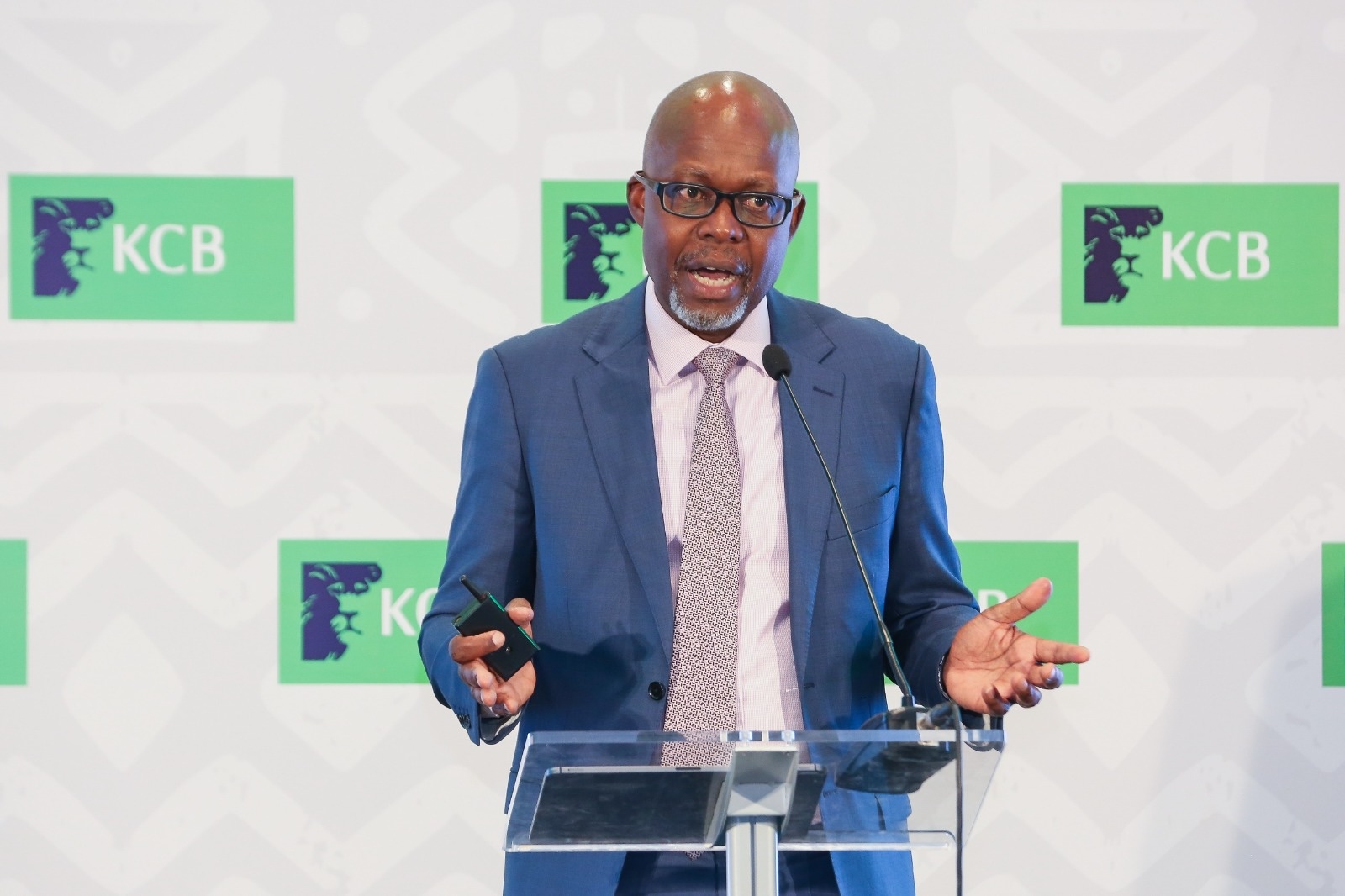
KCB Group CEO Paul Russo linked the results to the bank’s regional operations and customer base.
“Our 2025 performance reflects the strength of the KCB franchise, the resilience of our regional footprint, and the continued trust that customers place in us. Despite a challenging operating environment, we delivered solid growth driven by disciplined execution, continued investment in digital innovation, and our unwavering commitment to supporting sector focused lending that catalyzes economic transformation across the region,” he said.
Regional Business and Subsidiaries Contribute
The group’s regional strategy continued to shape its earnings profile. Subsidiaries outside Kenya contributed 30.7 percent of profit before tax and accounted for 30.5 percent of the balance sheet.
Non banking subsidiaries also posted higher earnings. KCB Bancassurance Intermediary reported KShs. 1.14 billion in profit before tax, a 29 percent rise. KCB Investment Bank recorded KShs. 348 million, up 31 percent, while KCB Asset Management delivered KShs. 160 million after a 54 percent increase.
These units reflect the bank’s push to earn income outside traditional lending.
Balance Sheet Expands Despite NBK Exit
KCB’s total assets grew 9.3 percent to KShs. 2.15 trillion even after the group exited National Bank of Kenya. Deposits rose 15 percent to KShs. 1.59 trillion.
Asset quality also improved during the year. The non performing loan ratio dropped to 16.9 percent from 19.2 percent. Gross non performing loans fell to KShs. 211.8 billion from KShs. 225.7 billion.
The bank linked the improvement to loan restructuring and recovery efforts alongside the separation from National Bank.
Capital buffers remained high. Core capital stood at 18.4 percent of risk weighted assets, well above the regulatory minimum of 10.5 percent. The liquidity ratio reached 50.8 percent against the required 20 percent.
Dividend and Shareholder Returns
The board proposed a final dividend of KShs. 3 per share. Combined with the interim dividend of KShs. 4 paid in November 2025, total dividends for the year reach KShs. 7 per share. That represents a payout of about KShs. 22 billion to shareholders.
Return on equity stood at 22.5 percent while return on assets came in at 3.3 percent. Shareholder funds closed the year at KShs. 331 billion.
KCB 2025 Financial Results – Looking Ahead
KCB expects steady economic activity across the region in 2026, though the group is monitoring global risks.
Chairman Dr. Joseph Kinyua pointed to rising geopolitical tensions and trade tariffs as factors that could affect markets.
“Looking ahead, we are optimistic about sustained business activity and economic growth prospects this year across the markets we operate in. We are closely watching the increased global uncertainties attributed to heightened geopolitical tensions and higher tariffs,” he said.
Alongside its financial performance, the bank continued backing regional projects. These include sponsorship of the World Rally Championship Safari Rally, climate finance support through a $150 million package with the African Development Bank, and a planned investment in payments firm Pesapal.
The KCB 2025 financial results show a bank that continues to grow across several East African markets while adjusting to shifting economic conditions. For customers and investors alike, the next phase will depend on how well the group maintains credit quality while expanding lending in the region.
Never miss a story 💜
Breaking news, real stories and money tips for Kenyan women, as they happen.

