
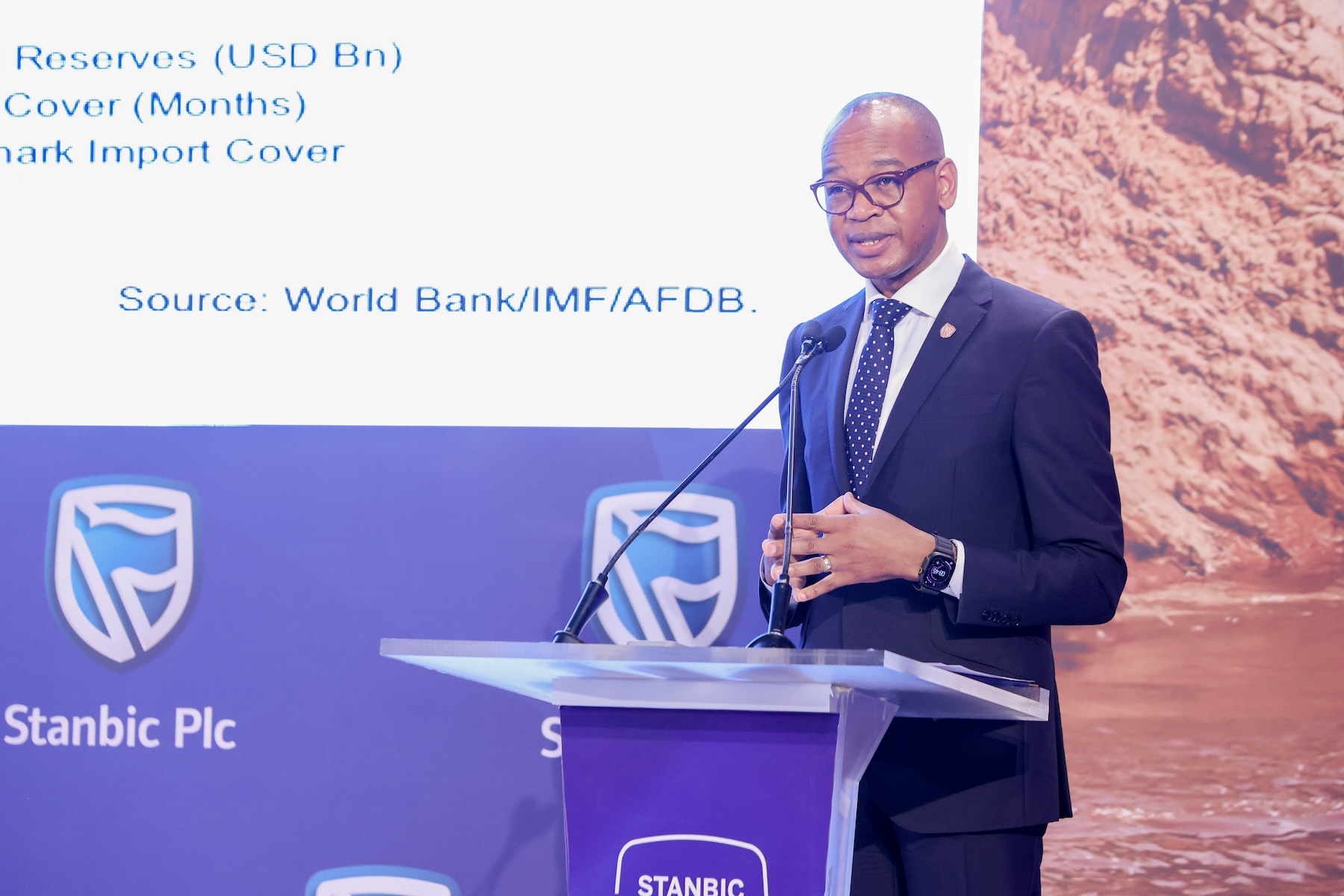
Stanbic Holdings 2025 results show stable profit as lending, deposits, and diaspora banking drive balance sheet growth.
The Stanbic Holdings 2025 results show a lender that expanded its balance sheet aggressively even as interest rates declined during the year. Total assets rose 18.9 percent to KShs. 541.3 billion, while loans to customers increased 18.5 percent to KShs. 272.9 billion.
Stanbic Holdings 2025 results show a bank adjusting to shifting economic conditions while expanding its balance sheet. The lender reported net profit of KShs. 13.7 billion for the year ending December 2025, maintaining the same profitability level recorded in 2024.
The results come at a time when Kenya’s interest rate environment has been changing. The Central Bank Rate declined during the year as inflation eased and currency stability improved. Banks that relied heavily on interest income faced pressure. Stanbic responded by expanding lending, increasing fee income, and targeting new revenue channels such as diaspora banking.
The outcome was a year of growth across several parts of the balance sheet while profits remained stable.
Balance Sheet Expansion Drives Growth
Stanbic’s balance sheet expanded quickly in 2025. Total assets rose by 18.9 percent to KShs. 541.3 billion.
Lending formed a major part of that expansion. Loans and advances to customers increased by 18.5 percent to KShs. 272.9 billion. Customer deposits also climbed, rising 17.5 percent to KShs. 373.7 billion.
The rise in deposits shows continued confidence from customers and businesses even as interest rates shifted during the year.
Interest Rate Cuts Affect Banking Income
Interest rate changes shaped the bank’s earnings pattern. The Central Bank Rate fell by a cumulative 225 basis points in 2025. As borrowing costs declined, net interest income slipped slightly, falling by 1.2 percent.
Stanbic compensated through growth in non-funded income. Fees and commissions expanded during the year and helped stabilize the bank’s revenue.
Chairman Joseph Muganda described the year as a transition period for the economy.
“2025 was a pivotal transition year. As the operating environment shifted from high interest rates toward greater currency and inflation stability, we saw a clear renewal in private sector credit demand. We proactively weathered this shift by providing a stronger foundation for disciplined growth and predictable earnings, positioning us well for sustained value creation.”
Diaspora Banking Gains Momentum
Stanbic increased its presence in the diaspora banking market. The bank’s share of remittance flows rose from 7 percent to 13 percent during the year.
Diaspora remittances remain one of Kenya’s largest sources of foreign exchange. Banks that capture these flows gain access to savings accounts, investment products and mortgage financing linked to Kenyans living abroad.
Chief Executive Joshua Oigara said global economic uncertainty shaped the bank’s operating environment.
“We navigated a complex global environment marked by geopolitical tensions and shifting trade policies. Our performance, defined by strategic adaptation and deepened partnerships, underscores the strength of our reset strategy. We are proud to have increased our share of diaspora remittance flows from 7% to 13%, becoming the preferred outlet for Kenyans abroad.”
Agriculture and Trade Financing
Stanbic continued lending to sectors that drive Kenya’s economy. The bank directed 9.9 percent of its lending to agriculture and introduced targeted solutions for tea and dairy value chains.
Trade finance also expanded. Stanbic channelled KShs. 133 billion into trade loans during the year, supporting importers, exporters and supply chains that rely on bank credit.
The bank also participated in large financing transactions through its parent company, Standard Bank. One example was the arrangement of a US$1.5 billion Eurobond that supported Kenya’s liquidity management.
Improving Asset Quality and Digital Operations
Stanbic reported improvements in credit risk management. The Non Performing Loan ratio declined compared with 2024, reflecting better loan recovery and a more stable environment for borrowers.
Technology investments also played a role in daily operations. The bank recorded system uptime of 99.8 percent across its digital platforms, supporting online and mobile banking services.
Climate Finance and Women Entrepreneurship
Stanbic continued directing funding toward sustainability projects and inclusive finance.
The bank issued more than KShs. 4.5 billion in green building loans and KShs. 273 million in solar financing. These loans support energy efficiency and renewable power adoption.
Women owned businesses remain another focus area. Through the DADA program, Stanbic has disbursed over KShs. 49.5 billion to women led enterprises since the program began.
Dividend Reflects Earnings Stability
The board recommended a dividend of KShs. 22.35 per share, up from KShs. 20.83 the previous year. The increase reflects a 7.3 percent rise.
Stanbic Holdings 2025 results point to a bank preparing for a different interest rate cycle. Lending growth, diaspora banking and sector financing are becoming the main drivers of revenue as Kenya’s financial sector adjusts to changing economic conditions.
Never miss a story 💜
Breaking news, real stories and money tips for Kenyan women, as they happen.

