
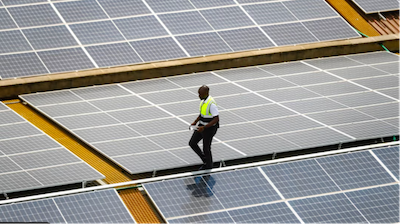
Plexus Growatt solar partnership expands smart solar solutions across Kenya’s commercial and industrial energy market.
Kenya’s clean energy conversation keeps moving, and the Plexus Energy Kenya Growatt partnership lands at a time when businesses are actively looking for stable power alternatives. Rising electricity costs and inconsistent grid supply have pushed many companies to rethink how they power operations. This new deal positions solar as a practical, everyday solution rather than a backup plan.
At an event held in Westlands, Nairobi, Plexus Energy Kenya formally introduced its partnership with Growatt, a manufacturer known for inverter technology used across residential, commercial, and utility-scale projects. The room was filled with engineers, contractors, and decision-makers who are already working within Kenya’s energy transition.
Why this partnership matters now
You are already aware of the pressure on Kenya’s power supply. Businesses deal with outages, voltage fluctuations, and rising bills. Diesel generators fill the gap, but fuel costs continue to climb. Solar has been part of the solution for years, but adoption has often stopped at basic installations.
This partnership signals a shift. The focus is moving toward systems that actively manage energy use, store excess power, and respond to real-time demand. That changes how solar fits into daily operations.
Edward Kinyanjui, CEO of Plexus Energy Kenya, framed it clearly during the launch:
“At Plexus, we did not start this journey to sell panels or inverters. We started it to make sure businesses don’t stop, schools don’t go dark, and hospitals don’t go silent. In Africa, power is not a convenience — it is survival. This partnership with Growatt is the next step in that mission.”
His point reflects a reality many sectors in Kenya face. Power stability is tied directly to productivity, safety, and service delivery.
From solar panels to intelligent energy systems
There is a noticeable shift in how energy companies are talking about solar. The conversation now includes monitoring, automation, and revenue generation.
Kinyanjui pushed that idea further:
“We chose Growatt because they invest in real innovation, they build systems that can scale, and they are open to local realities. What works in Europe does not always work in Isiolo. The future of energy in Kenya is not just solar panels — it is intelligent energy ecosystems that monitor, adapt, and create economic value.”
This approach focuses on systems that track usage patterns, optimise storage, and reduce waste. For businesses, that means better cost control and less downtime. For institutions like hospitals and schools, it means reliability where it matters most.
Plexus Growatt solar partnership – What Growatt brings into the mix
Growatt enters the partnership with a large global footprint. The company reports over 100GW of installed capacity across more than 150 countries. Its product line covers on-grid, off-grid, and hybrid inverters, along with battery storage and EV charging solutions.
That range matters because energy needs in East Africa are not uniform. A factory in Nairobi, a lodge in Samburu, and a school in rural Uganda all require different setups. Flexible systems allow installers to tailor solutions instead of forcing one model across every use case.
Plexus Energy’s role on the ground
While Growatt supplies the hardware, Plexus Energy Kenya handles what often determines success or failure: local execution.
Founded in 2010, the company has worked with over 3,000 clients across Kenya and the wider region. Its portfolio includes installations in schools, hospitals, hotels, factories, and residential homes. That experience shapes how systems are designed and maintained.
The partnership also includes training through the Plexus Solar Academy. This addresses a gap in the market where demand for solar installations is rising faster than the number of skilled technicians.
What changes for businesses and institutions
If you run a business or manage a facility, the practical benefits are straightforward. The partnership expands access to a wider range of inverter options, including hybrid systems that combine solar, battery storage, and grid power.
You also get local technical support, which has often been a weak point in solar adoption. Systems fail or underperform when maintenance is inconsistent or when installers lack follow-up support.
Pricing is another factor. With direct access to Growatt products, Plexus can offer more competitive packages for commercial and industrial clients. That makes solar a more realistic option for companies that have been hesitant due to upfront costs.
A steady shift, not a sudden leap
This partnership does not solve Kenya’s energy challenges overnight. Grid power will remain central for years. Diesel generators will still fill gaps. But the direction is clear.
Solar is moving from supplementary power to a primary energy source for many operations. The addition of smarter systems makes that transition more practical and easier to manage.
For you as a reader, especially if you’re in business, this signals something worth paying attention to. Energy decisions are becoming more technical, but also more flexible. And partnerships like this one are shaping how quickly that shift happens across Kenya and the region.
Never miss a story 💜
Breaking news, real stories and money tips for Kenyan women, as they happen.

