
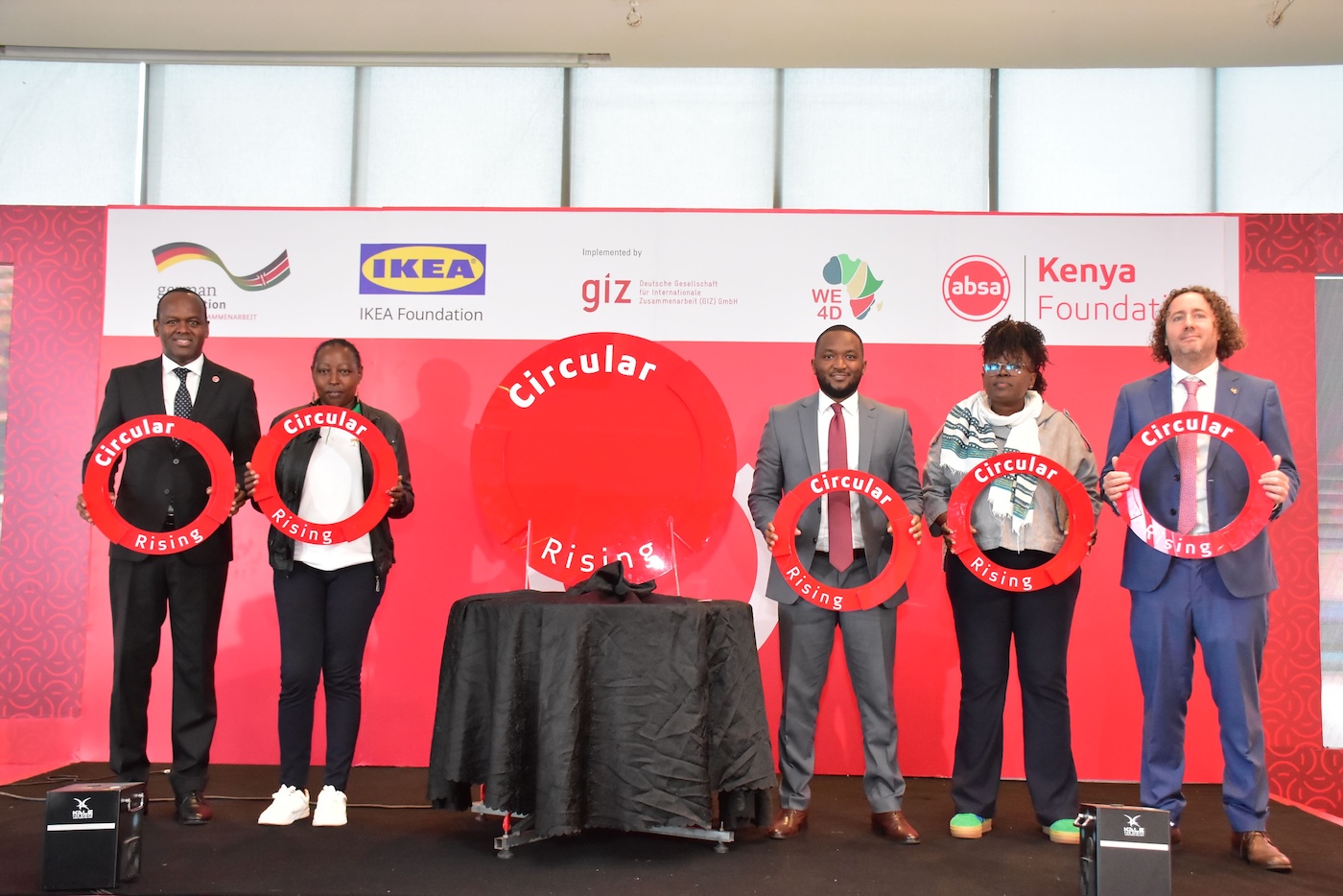
Kenya circular economy programme takes centre stage as Absa Kenya Foundation, GIZ and the African Guarantee Fund roll out CirculaRising, a large-scale effort aimed at jobs, waste reduction and support for women and youth-led businesses. The initiative enters a market where small businesses carry much of the economy yet still struggle with access to finance and structured support.
The programme sets clear targets. It aims to create over 6,000 jobs within two to three years, reach more than 2,000 micro, small and medium enterprises, and recycle over 6,000 tonnes of waste. It also plans to affect over 30,000 people indirectly through business growth and income generation.
A shift from waste to value
At the launch in Nairobi, Absa Bank Kenya CEO Abdi Mohamed placed the programme within a wider economic shift.
“For decades, global growth has largely followed a linear model where we take, make, use and discard. While this model has delivered progress, it has also generated enormous waste, placed immense pressure on natural systems, and widened inequality in how opportunity is distributed. The next chapter of growth will belong to economies that create value differently. Economies where waste becomes input, efficiency becomes advantage, and sustainability becomes enterprise. That is the opportunity the circular economy offers, and what underpins the launch of this initiative.”
That framing matters. Kenya’s waste streams, from textiles to plastics, continue to grow alongside urbanisation. Circular models offer a way to reuse materials, cut costs and build new business lines from what was previously discarded.
Kenya circular economy programme – How it will work
CirculaRising will run through three structured tracks. The Academy targets over 2,000 microenterprises with training, coaching and access to financing over 27 months. The Accelerator will support 150 small businesses across regions including Nairobi, Western and Coastal Kenya. A third Scale-Up track focuses on 25 to 30 mid-sized and large firms that handle high volumes of waste and want to expand export operations.
These businesses will receive support to adopt circular practices and meet international sustainability standards. That link to export readiness is key. Buyers in Europe and other markets now demand proof of sustainable production and traceability.
Thomas Jaeschke from GIZ tied the programme to employment and gender inclusion.
“With CirculaRising, we combine the empowerment of women’s employment with the scaling of circular business models in Kenya. Together with the Absa Kenya Foundation, we will support MSMEs in achieving economic, social and environmental impact, from increased employment and better incomes to improved recycling and waste management practices. This cooperation combines financial and advisory expertise to promote women in green value chains and to drive the transformation of the Kenyan economy.”
Financing gap remains a real barrier
The programme also responds to a long-standing issue. Many small businesses, especially those led by women, lack access to formal financing.
Patrick Lumumba from the African Guarantee Fund put numbers to that gap.
“Despite owning 40% of all MSMEs and contributing up to 20% of the country’s GDP, women-led enterprises continue to face significant barriers, with an estimated 70% lacking access to adequate financing and only 7% having formal access to financial services.”
CirculaRising will channel funding through initiatives such as AFAWA, with a target to mobilise over EUR 2 million by 2028. That funding will support businesses that already operate within recycling, repair and reuse value chains but lack scale.
Government backing and policy alignment
Government officials present at the launch pointed to the role of MSMEs in economic growth and job creation.
“MSMEs remain the backbone of Kenya’s economy. Initiatives such as CirculaRising are critical in unlocking their potential, enabling access to finance, and supporting their transition into sustainable and competitive enterprises,” said Principal Secretary Susan Mang’eni in remarks delivered at the event.
Environmental policy also links closely to the programme. Kenya has already taken steps on plastic bans and waste management. Expanding circular business models gives those policies practical grounding in everyday enterprise activity.
Dr. Festus Ng’eno, through remarks delivered on his behalf, noted:
“The transition to a circular economy presents significant opportunities for Kenya, particularly for MSMEs. Programmes like CirculaRising are essential in supporting green enterprise development, reducing waste, and driving climate action at scale in our country.”
What this means for Kenya’s economy
Kenya circular economy programme efforts such as CirculaRising sit at the intersection of three pressures. Waste levels are rising. Youth unemployment remains high. Small businesses need structured support to grow.
The programme attempts to address all three through one framework. It links waste reduction with enterprise growth and ties both to financing and training.
The challenge will come down to execution. Training programmes often struggle to translate into long-term business growth. Access to markets and consistent financing will determine whether these enterprises move beyond pilot stage into stable operations.
Still, the focus on circular production reflects a wider shift in how economies approach growth. Kenya is positioning its small business sector within that shift, with an emphasis on reuse, repair and resource efficiency as drivers of income and jobs.
Never miss a story 💜
Breaking news, real stories and money tips for Kenyan women, as they happen.

