

Safaricom Spark Accelerator connects Kenyan startups with mentorship, investor access, funding support, and long-term business growth.
Spending time inside the Safaricom Spark Accelerator Investor Demo Day made one thing very clear to me. Kenya is not running out of brilliant ideas. If anything, the bigger challenge has always been access to things like capital, mentorship, networks, structure, and the kind of support that helps early-stage founders survive long enough in the game to scale.
That reality sat at the centre of this year’s Spark Accelerator Investor Demo Day held at Safaricom headquarters, where nine startups pitched their businesses to investors and venture capitalists.
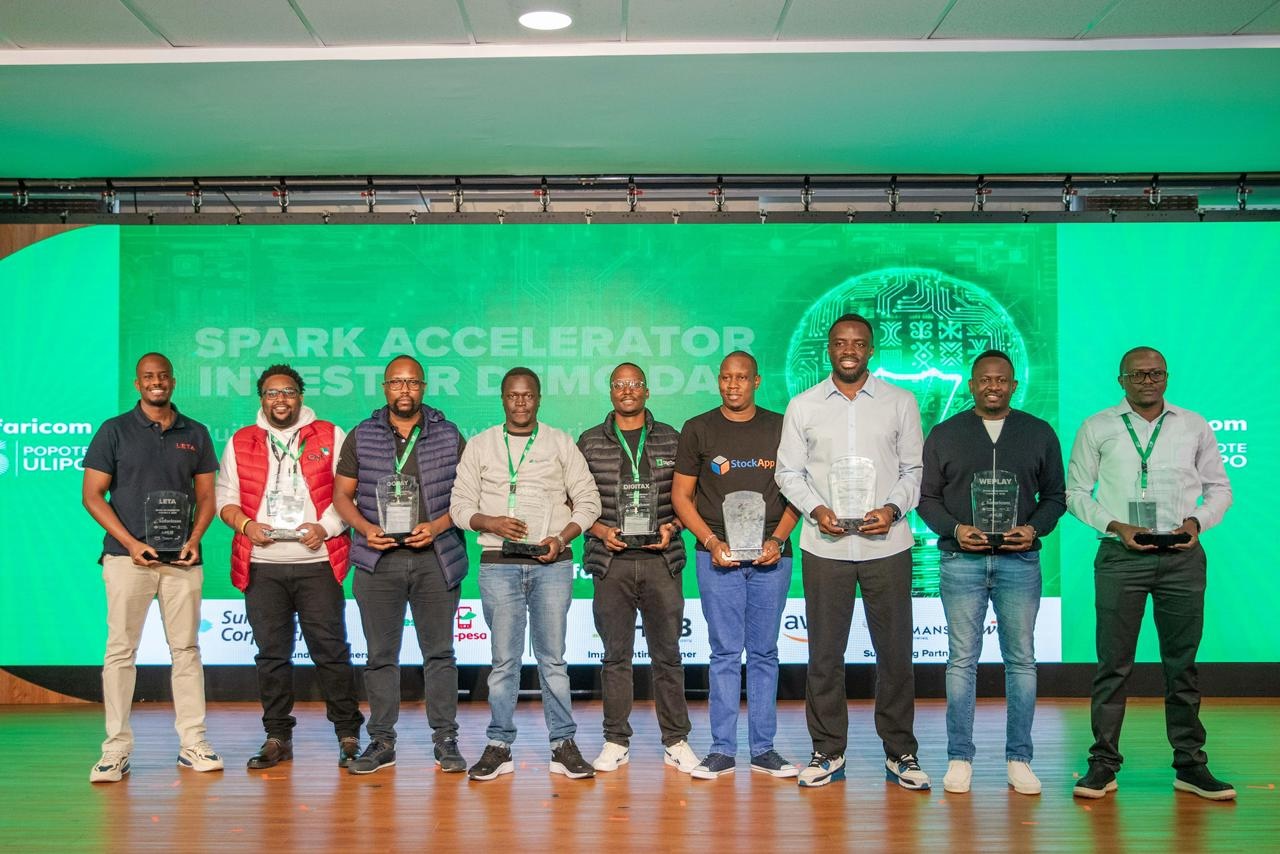
One of the glitches that Kenya has often had is to frame startups through funding headlines and million dollar valuations while overlooking the difficult middle stage between having a good idea and actually building a sustainable business. Many founders have products solving real problems but struggle with funding, visibility, operational structure, and most importantly, market access.
That is where accelerator programmes like Spark increasingly matter.
Safaricom’s Spark Accelerator Programme was launched in 2024 following the restructuring of the Spark Fund. The initiative brings together Safaricom, M-PESA Africa, Sumitomo Corporation, and iHub, alongside partners including AWS, PwC, Bowmans Law, and Vodacom. The goal of the programme is fairly direct – help promising startups move from survival mode into scalable businesses.
Kenya has built a solid reputation as one of Africa’s most active startup ecosystems. Nairobi continues to attrac founders creating products across fintech, logistics, creator economy tools, health technology, mobility, and digital commerce among others.
Safaricom Spark Accelerator – Silicon Savannah
But behind the “Silicon Savannah” label which we have rightfully earned, there is a harder reality many founders quietly face. Building a startup in Kenya can be expensive, emotionally draining, and just difficult. Access to funding remains uneven, operational costs are rising by the day, and many founders spend years trying to convince investors that local problems deserve serious consideration for support.
Programmes like Safaricom Spark help bridge part of that gap by offering mentorship, technical support, investor access, and go-to-market guidance before startups enter the conversations around funding.
The accelerator focuses mainly on fintech and digital content startups while taking what organisers describe as an ecosystem based approach. Since launching, the programme has supported 18 startups across two cohorts.
This year’s Investor Demo Day offered a glimpse into where many Kenyan founders are directing their attention.
Some startups focused on infrastructure and logistics. Others targeted creator monetisation, public transport systems, e-commerce, financial inclusion, and digital savings behaviour.
What stood out for me throughout the pitches was how deeply local many of the solutions felt.
MediaKits.io is building AI-powered tools helping creators structure and monetise their businesses professionally as the creator economy continues growing across Africa.
Leta AI is tackling one of the continent’s largest operational headaches. Logistics. The company uses AI-driven technology to improve last-mile delivery systems and help businesses move goods faster and more efficiently across Africa.
WePlay Arcade operates within the gaming and sports space, allowing users to compete through mobile sports and e-sports platforms while earning from participation.
Then there was Oye which I was most fascinated by and found quite relatable to the masses. The platform positions itself as a one-stop shop built specifically for boda boda riders, allowing them to access products and services ranging from fuel and insurance to data bundles and personal items through a USSD-based system. The founders argued that boda boda riders remain one of Kenya’s most economically active yet financially underserved groups.
GoPay is building digital infrastructure targeting payments and logistics within Kenya’s public transport sector, while FlexPay is positioning itself as an antidote savings focused model within the growing Buy Now Pay Later conversation through a “Save Now Pay Later” approach.
The pitches reflected something larger happening inside Kenya’s tech ecosystem. Founders are increasingly building around practical African realities instead of copying trends from foreign markets.
A few years ago, many startup conversations revolved heavily around fundraising headlines and rapid scaling ambitions. Today, there is noticeably more focus on sustainability, operational structure, monetisation, and solving actual market problems and this is clear in the presentations today.
The Spark Accelerator itself appears built around that thinking. According to organisers, startups inside the programme receive mentorship, technical advisory, training, funding support, and market access support intended to help them survive long-term growth pressures.
Investor Demo Day marked the final stage of the programme, giving startups direct exposure to investors potentially interested in seed funding or follow on investment.
There is still a long road ahead for many African startups given that funding environments remain cautious globally, and scaling businesses across fragmented African markets remains difficult. But spending time inside the demo sessions also made something else obvious. The ideas and talent exists, and the founders are buiding.
What Kenya’s startup ecosystem increasingly needs are structures capable of helping those ideas survive beyond the pitch stage.
That is why accelerator programmes like Spark are becoming harder to ignore.
Never miss a story 💜
Breaking news, real stories and money tips for Kenyan women, as they happen.

