
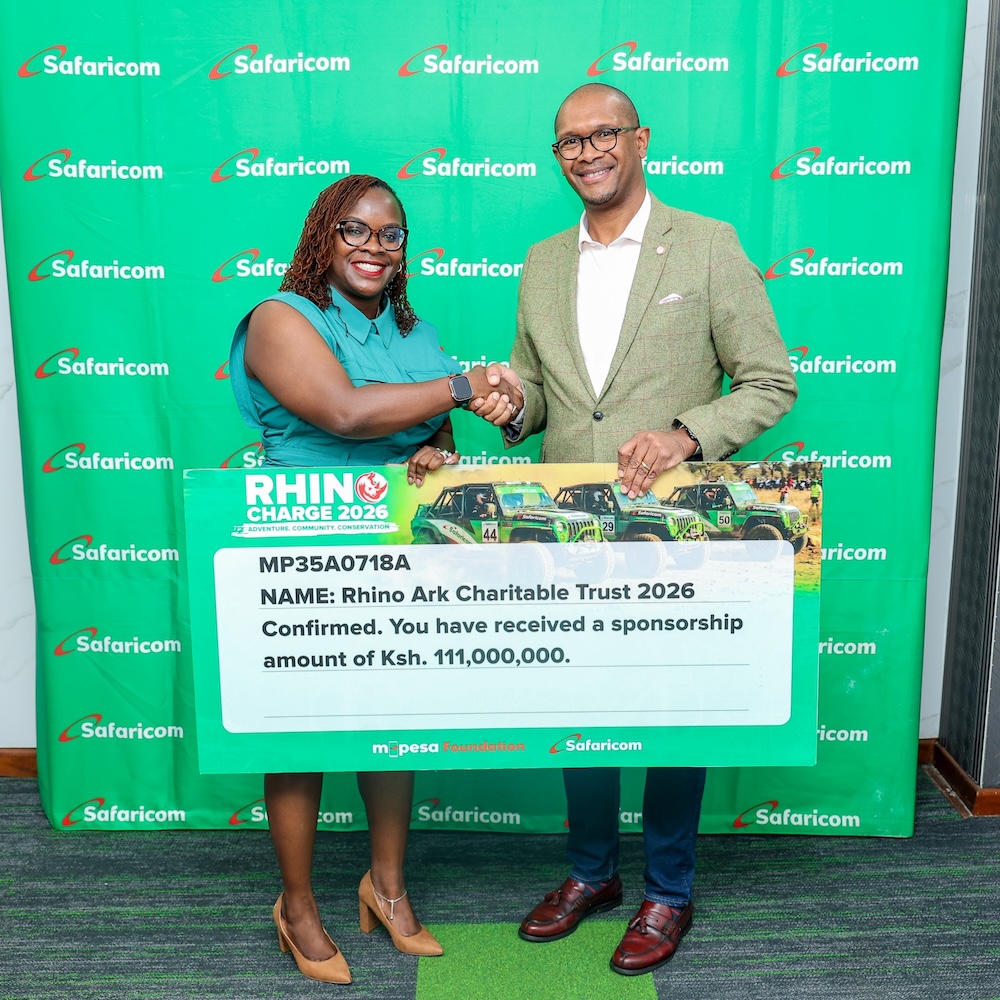
Rhino Charge Conservation Funding receives KES 114 million from Safaricom and M-PESA Foundation for forest protection projects.
The 2026 Rhino Charge Challenge heads to Samburu at a time when Kenya’s water towers continue to face pressure from deforestation, encroachment and human-wildlife conflict. Ahead of the annual off-road fundraising event, Safaricom and the M-PESA Foundation have announced a combined Ksh 114 million commitment toward conservation projects linked to Rhino Ark Kenya Charitable Trust.
The funding comes as Rhino Charge prepares for its 37th edition on 30th May, with organisers expecting up to 65 entries in one of Kenya’s most demanding motorsport events. Unlike traditional rally competitions, Rhino Charge focuses on navigation and distance across rough terrain rather than speed. Teams raise money for conservation before they are allowed to compete.
According to the organisers, the event has raised more than Ksh 2.6 billion over the years to support fencing projects and forest protection work around Kenya’s mountain ecosystems.
Out of the Ksh 114 million package, the M-PESA Foundation has committed Ksh 94 million toward Rhino Ark projects tied to fencing and rehabilitation of forests. The money will support conservation work in the Mount Elgon Forest’s Suam Block, the Mau Forest Complex across Narok, Kericho and Bomet counties, and the Mount Kenya Forest Rehabilitation and Protection Project in Tharaka Nithi County.
These forests play a direct role in Kenya’s water supply and agriculture. The Mau Forest alone feeds major rivers including Mara, Sondu and Ewaso Nyiro South. Rhino Ark says degradation in these areas has continued to affect surrounding communities and wildlife corridors.
Rhino Charge Conservation Funding – Long term environmental conservation
Safaricom CEO Peter Ndegwa linked the sponsorship to long-term environmental work during the cheque handover ceremony in Nairobi.
“This year, we are proud to commit Ksh 114 million through the M-PESA Foundation and Safaricom. As a company, sustainability remains central to how we create long-term value for our customers, communities, and the environment. Our support for the Rhino Charge reflects our commitment to practical conservation efforts that protect Kenya’s natural heritage while driving innovation and resilience,” he said.
Safaricom’s direct contribution of Ksh 20 million will support participating teams and network connectivity during the event. Part of that allocation includes 5G deployment in Samburu to support communication for competitors, organisers and spectators in the remote terrain.
Read also – Safaricom Rhino Charge Sponsorship Backs EV Team For Sustainability
Among the teams receiving backing is Car No. 44 led by Adil Khawaja, which will receive Ksh 15 million. The EV Explorers team led by Richard Kiplagat and the all-women Zambarau Heels on the Wheel team led by Agnes Mwangi will each receive KES 1 million. (Safaricom)
The EV Explorers team has attracted attention for pushing electric mobility into terrain usually dominated by modified fuel-powered machines. Last year, the team dealt with mechanical problems during the challenge, but says it plans to return better prepared.
“As a team, we are truly grateful for Safaricom’s continued support for this event. This is the second year in a row they are backing us,” said Richard Kiplagat. “As the only EV team in the competition, we are highly motivated not only to complete the challenge but also to emerge among the best.” (Safaricom)
The Zambarau Heels on the Wheel team continues to draw interest as one of the few all-women entries in a competition long dominated by male drivers and mechanics.
Team member Elizabeth Wanjiku said the sponsorship gives the team room to compete effectively while supporting conservation work tied to Rhino Ark. (Safaricom)
Conservation Questions Still Remain
Rhino Ark says its fencing programmes have helped reduce human-wildlife conflict around areas including Mt Kenya, the Aberdares and Kakamega Forest. The organisation reports that more than 650 kilometres of electric fencing have been built, protecting over 80,000 families living near wildlife zones. (Rhino Charge)
Still, conservation groups continue to face criticism over long-term forest management, illegal logging and settlement pressure in parts of the Mau and other water towers. Funding announcements tied to Rhino Charge often spark wider debate about how Kenya balances conservation, development and community needs.
For Rhino Ark Executive Director Christian Lambrechts, this year’s event remains tied to that larger fight.
“The impact of this initiative has been significant for both conservancies and communities at large,” he said as preparations for the Samburu event gathered pace. (Safaricom)
Never miss a story 💜
Breaking news, real stories and money tips for Kenyan women, as they happen.

