
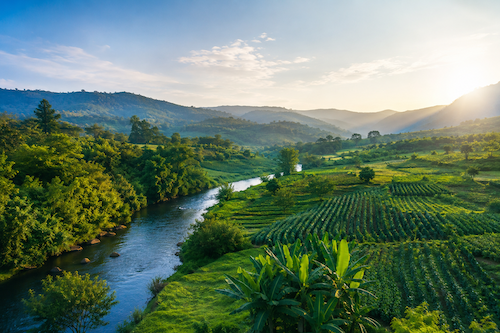
Ecobank Nature Bond Africa channels global capital into sustainable agriculture, water infrastructure and biodiversity protection.
For years, conversations about protecting Africa’s forests, rivers and biodiversity have often run into the same obstacle. Money. Despite hosting around 25% of the planet’s biodiversity, Africa receives less than 3% of global nature finance. That gap has left governments, conservation groups and development institutions searching for ways to attract larger pools of capital into environmental protection efforts.
Enter Ecobank.
The pan-African banking group has launched what it describes as the world’s first International Capital Market Association (ICMA) commercial bank-issued Nature Bond on the London Stock Exchange. The USD 450 million bond has already attracted attention from investors and sustainability experts, not only because of its size, but because of where the money will go.
Unlike many conservation funding avenues that focus on protected areas and environmental projects, Ecobank’s Nature Bond directs capital into sectors that shape environmental outcomes every day. The proceeds will support smallholder farmers, sustainable agriculture businesses and water infrastructure projects across 24 African countries.
Nature bonds remain a relatively new concept in global finance. Under ICMA guidelines, a Nature Bond requires proceeds to contribute directly to positive outcomes for biodiversity, land use, agriculture and ecosystems. The designation narrows the focus compared to traditional green bonds, which often finance a broader range of environmental initiatives.
Ecobank’s approach centres on the people and industries that interact with natural resources every day.
The bank says financing will support farmers adopting sustainable agricultural practices, agri-processors with verified deforestation-free supply chains and water systems that protect freshwater ecosystems relied upon by millions of people. The strategy reflects growing recognition that biodiversity protection is closely linked to economic activity, particularly in agriculture, which remains one of Africa’s largest employers.
The framework also targets areas where environmental pressures are most pronounced. According to Ecobank, 81% of the eligible lending pool is allocated to countries where agricultural land-use change remains a leading driver of biodiversity loss. Côte d’Ivoire, Burkina Faso and Ghana are among the countries expected to receive substantial investment.
Ecobank Nature Bond Africa – Investors Sent a Clear Signal
The bond entered the market at a time when investors are paying closer attention to environmental risks and sustainable finance opportunities.
Demand exceeded expectations.
Ecobank initially targeted a smaller issuance, but investor orders surpassed USD 1.36 billion, nearly four times the original target. The bank increased the bond size by USD 100 million and tightened pricing by 50 basis points following the response. The transaction attracted support from international investors as well as African institutions, highlighting growing interest in environmental finance linked to the continent.
The deal also received Moody’s highest sustainability quality score, SQS1 Excellent, a rating that reflects the structure, governance and environmental standards attached to the bond.
Building Confidence Through Accountability
One of the persistent criticisms of sustainable finance has been the risk of environmental claims that are difficult to verify.
Ecobank says it has spent four years building the systems needed to address that concern. Every eligible loan financed through the Nature Bond framework must meet seven independently verified sustainability conditions. The framework also includes deforestation screening and supply chain traceability requirements designed to monitor environmental performance over time.
Jeremy Awori, Group Chief Executive Officer of Ecobank Transnational Incorporated, described the transaction as a milestone for sustainable finance on the continent.
“This transaction is a defining moment for African sustainable finance. Investors did not just support this bond. They demanded more of it, allowing us to increase the size and tighten pricing.
“We are not a bank that simply labels bonds. We have spent four years building the systems, governance and accountability needed to make nature finance credible and scalable in Africa.
“This bond is ultimately about the farmers, cooperatives and communities whose livelihoods depend on healthy ecosystems.”
Rachael Antwi, Group Head of Sustainability and ESRM at Ecobank Transnational Incorporated, said nature finance in Africa must remain connected to economic activity on the ground.
“Nature finance will only scale in Africa if it is practical, measurable and connected to the real economy. This bond is designed to do that by linking international capital to eligible lending for sustainable agriculture and water infrastructure across 24 countries.
“It reflects the systems and standards Ecobank has built to ensure nature finance supports environmental resilience and the communities whose livelihoods depend on healthy ecosystems.”
For Africa, the significance of the bond extends beyond the USD 450 million raised. It offers a model for connecting global capital markets with local economic activity while directing funding toward the protection of ecosystems that support farming, water security and livelihoods across the continent.
As governments and investors seek new ways to fund biodiversity protection, Ecobank’s Nature Bond provides a glimpse of how private capital could play a larger role in safeguarding Africa’s natural resources while supporting the people who depend on them every day.
Never miss a story 💜
Breaking news, real stories and money tips for Kenyan women, as they happen.

