
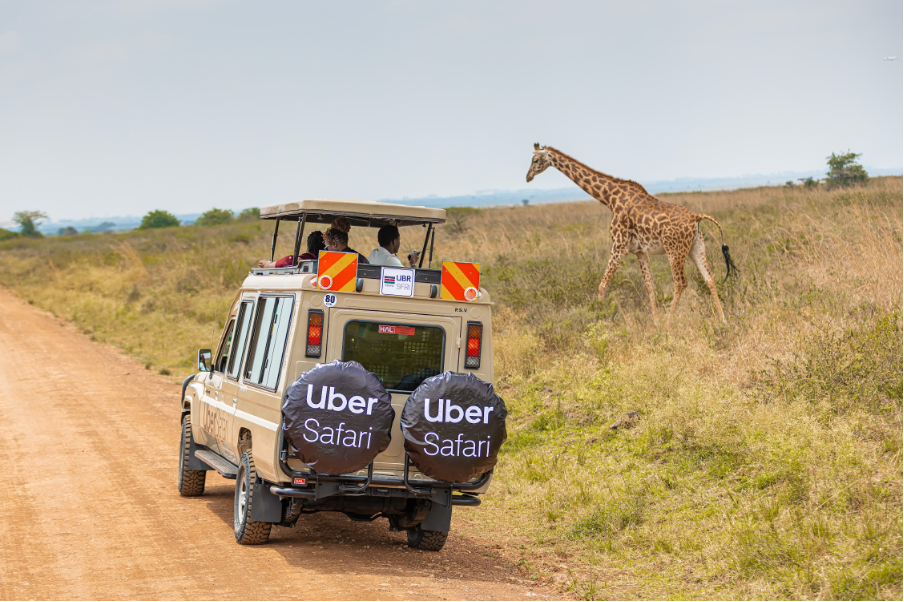
Uber Safari Nairobi Experience highlights urban wildlife access and electric mobility innovations reshaping everyday transport in Nairobi.
For most countries, spotting a lion or rhino requires a long drive out of town. In Nairobi, however, wildlife lives just minutes from the CBD, homes, offices and shopping centres. It is that reality that inspired Uber Safari, a new product that allows users to book a safari directly through the Uber app.
During an interview with FemmeHub, Uber East Africa General Manager Imran Manji explained how the company is using technology to make wildlife experiences easier to access while also investing in cleaner transport through electric motorcycles.
Uber Safari and Nairobi’s unique location
According to Imran Manji, the idea behind Uber Safari started with Nairobi’s unique location. Few cities can claim to have a national park within their boundaries, yet many residents rarely visit it.
“We are so blessed as a city to have a national park within our boundaries,” said Manji. “Five or ten minutes away from many people, there are rhinos, lions and giraffes. Why not find a way to make that more accessible?”
The solution was to bring licensed safari operators onto the Uber platform. Through partnerships approved by the Kenya Tourism Regulatory Authority, passengers can request a safari from the App and spend two to three hours inside Nairobi National Park.
Rather than operating its own safari vehicles, Uber acts as the connection between customers and existing licensed tour operators. The approach gives people a simpler way to book a game drive while supporting businesses already working within Kenya’s tourism sector.

The concept reflects a wider shift in how people access experiences. Increasingly, services that once required separate bookings and planning are moving onto digital platforms and for Nairobi residents and visitors, a safari can now be booked in much the same way as a regular ride across town.
Uber Electric Motorcycles
While Uber Safari focuses on tourism, electric motorcycles are aimed at a challenge that affects daily life across Kenya’s cities.
Motorcycles play a major role in first and last mile transport, deliveries and ride-hailing but they also contribute to air pollution through conventional petrol engines. Manji believes that electric motorcycles can make a meaningful difference because commercial riders spend far more time on the road than the average vehicle owner.

That level of usage means that the environmental impact of switching commercial riders to electric power is very substantial. Electric motorcycles also reduce engine noise, creating a quieter experience for riders, passengers and communities.
“If you think about the noise impact, no more noisy engine revving. These bikes are extremely smooth and extremely quiet,” said Manji.
For years, one obstacle slowed the adoption of electric motorcycles. Riders were not keen on buying electric bikes because battery-swapping stations were limited. The other side of the coin was that companies were hesitant to invest in battery infrastructure because there were too few electric motorcycles on the road.
Manji described it as a classic chicken-and-egg situation.
Uber stepped in by providing demand through its platform. The company committed to supporting enough trips to justify investment in charging and battery-swapping networks.
“We will guarantee enough trips for thousands of bikes, which then gives companies the confidence to put in place the infrastructure,” he said.
Today, Uber’s partners have expanded their battery-swapping networks across Nairobi. Arc Ride operates more than 200 locations, while Zeno has more than 75 and continues to expand.
The system allows riders to exchange depleted batteries for charged ones in about three minutes. Drivers purchase the motorcycle but use batteries owned and managed by specialist providers.
“It’s like an LPG cylinder,” Manji explained. “You return the depleted cylinder, you get the full cylinder, and you pay for the difference.”
The rollout has faced challenges, including battery shortages earlier this year caused by delayed imports. Even so, uptake has continued to grow.
According to Manji, passengers appreciate the smooth rides and lower noise levels, while drivers benefit from lower maintenance costs because electric motorcycles have fewer moving parts than petrol-powered bikes.
Taken together, Uber Safari and electric bodas show how mobility platforms are expanding their role in everyday life. One product connects people to wildlife experiences that sit on Nairobi’s doorstep. The other aims to make urban transport cleaner and more efficient.
For Nairobi, the result is a city where a safari and an electric ride can begin from the same place. A tap on your phone.
Never miss a story 💜
Breaking news, real stories and money tips for Kenyan women, as they happen.

