
I&M Predator’s Den Talek supports local entrepreneurs building resilient businesses that thrive beyond seasonal tourism and migration cycles.
For decades, the economic story of Talek has been written by other people’s calendars. When the wildebeest cross the Mara River and the safari vehicles line up at the gate, money moves through the town.
When the migration ends and the rains scatter the herds elsewhere, that money dries up just as fast. Anyone who has spent time near the reserve knows this rhythm well: a good July can carry a household through a lean December, but only if nothing goes wrong in between.
A delayed rainy season, a family emergency, or a slow tourist quarter can undo months of careful saving. It is a fragile way to build a life next to one of the most celebrated landscapes on the planet.
That fragility is precisely what I&M Bank’s Predator’s Den was built to confront. Run through the I&M Foundation alongside The Maa Trust and, more recently, Germany’s development agency GIZ, the programme takes its name and format from the television pitching contest, but its ambitions sit closer to the ground than that comparison suggests.
Read also – I&M Foundation Women Entrepreneurs Gain Financial Confidence
Backed by a Ksh 230 million joint commitment from the I&M Foundation, I&M Bank and GIZ through the develoPPP programme, the initiative directly links financial independence with environmental stewardship, and hundreds of applicants from Narok County have entered, undergoing training in business development, financial literacy and pitching, followed by months of mentorship.
In its most recent phase, 140 entrepreneurs from seven communities within the Greater Mara Ecosystem took part, with 21 finalists advancing through a two-month mentorship and training programme before pitching their ventures to a panel of judges. Nine of them eventually walked away with funding, receiving a combined KES 1.92 million in seed capital, alongside scholarships and continued business support.
What makes the programme worth paying attention to is not the size of the cheques, which are modest by banking standards, but the choice of who gets them.
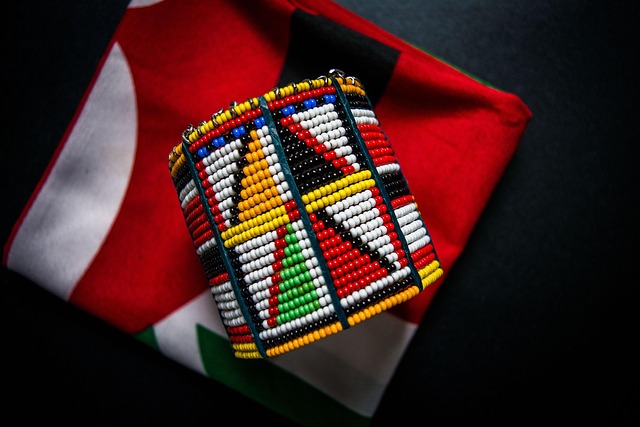
The businesses that have risen to the top of Predator’s Den are rarely the ones selling directly to tourists. A cyber café that doubles as a training ground for college applications and job searches. Poultry farmers supplying local food kiosks rather than distant markets. Women running beadwork and shuka enterprises that stretch a single sale into school fees for an entire household.
None of these ventures depend on a tour van pulling over. They depend on Talek residents needing something from each other, which is precisely why they can keep generating income long after the migration herds have moved on and the safari calendar goes quiet.
This is where the real argument for the programme lives.
Kenya’s tourism numbers around the Mara have climbed sharply, with visitor arrivals rising from roughly 119,500 in 2021 to over 343,000 by 2024, according to the Kenya National Bureau of Statistics. Yet that growth has not translated evenly into local prosperity. Much of the revenue generated by the reserve continues to flow past the communities that live alongside it, a pattern I&M Foundation staff have openly named as the gap the programme was designed to close.
Predator’s Den does not try to give Talek residents a bigger slice of tourist spending. It tries to build an economy that does not need tourists spending at all in order to function.
There is also a quieter but important shift buried in how the funding is structured.
Kenya Institute for Public Policy Research and Analysis data shows that the overwhelming majority of the country’s entrepreneurs rely on personal savings or family contributions to get a business off the ground, largely because commercial lenders view small enterprises as too risky to bank on.
A bank choosing to underwrite the training, mentorship and seed capital for first-time entrepreneurs in a place like Talek is not a small departure from that pattern. It is a bet that community-rooted businesses, however unglamorous, are worth the risk that commercial lending has historically avoided.
None of this guarantees permanence. A cyber café or a poultry supply chain still has to survive its own version of a bad season, and one funding round will not rewrite the economics of an entire region.
But the direction is the right one. If Talek’s future is going to depend on more than the whims of migration timing and rainfall, it will be built by people selling things their neighbours actually need, on days when no tourist is watching. Predator’s Den, for all its game-show branding, is quietly betting on exactly that future, and so far, the bet looks like it is paying off.
Never miss a story 💜
Breaking news, real stories and money tips for Kenyan women, as they happen.

