
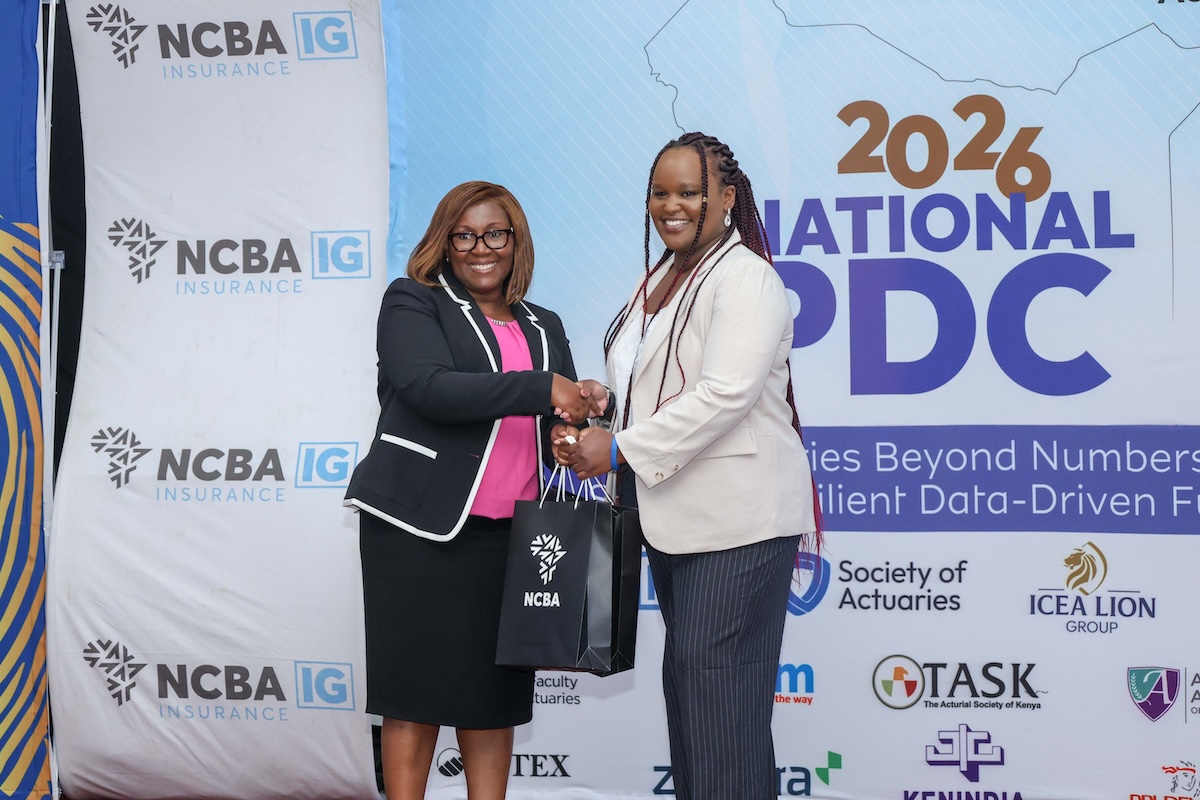
NCBA actuarial talent development supports students solving insurance challenges through mentorship, innovation and practical industry experience across Kenya.
As Kenya’s insurance industry becomes increasingly data-driven, the demand for professionals who can predict risk, design resilient financial products and respond to emerging economic challenges is growing. The ASSK Product Development Competition is becoming one of the places where that future workforce is tested long before graduation.
Rather than focusing solely on academic performance, the competition pushes actuarial students to tackle practical business problems, giving them an opportunity to develop products that respond to real-world challenges facing insurers, financial institutions and consumers.
The competition, organised by the Actuarial Students’ Society of Kenya (ASSK), brought together university students from across the country to develop solutions in insurance, risk management, financial services and economic resilience.
Founded in 2013, ASSK was created to bridge the gap between actuarial education and professional practice. Today it connects students from universities across Kenya with mentors, employers and industry leaders through competitions, networking events and career development programmes.
That practical approach is increasingly important as insurers and financial institutions seek graduates who can apply analytical thinking beyond the classroom.
NCBA Insurance supported this year’s competition as Platinum Sponsor, positioning the partnership as part of its broader investment in youth development under its new purpose, Banking on Belief, Empowering Ambitions – Ubuntu Spirit.
Although actuaries are traditionally associated with insurance pricing, their work increasingly extends into banking, pensions, investments, healthcare financing and climate risk.
As businesses contend with economic uncertainty, changing consumer behaviour and new regulatory requirements, professionals who can model long-term risk are becoming central to strategic decision-making.
That made this year’s competition more than an academic exercise. Students were challenged to build practical solutions that could strengthen financial inclusion, improve resilience and support sustainable growth within Kenya’s financial sector.
Speaking during the competition, NCBA Insurance CEO and Managing Director Stella Njung’e said the profession is evolving beyond traditional number-crunching.
“Actuaries today are innovators and strategic thinkers who help organizations navigate complexity. By sponsoring this competition, we are not only investing in the future of insurance but also living our purpose Banking on Belief, Empowering Ambitions. We believe in the collective strength of mentorship, collaboration, and inclusivity to build a sustainable future for youth and women across Africa.”
For many actuarial students, access to experienced professionals can be just as valuable as technical knowledge.
ASSK has increasingly positioned itself as a link between universities and employers, providing mentorship opportunities, professional exposure and practical competitions designed to prepare students for careers in financial services.
NCBA Insurance says its involvement is intended to complement that work by giving students opportunities to apply their knowledge in practical settings while building relationships within the industry.
The sponsorship also aligns with the company’s NCBA Change the Story initiative, which focuses on education, mentorship and innovation. Through the programme, the insurer says it aims to help young professionals gain industry exposure while encouraging fresh thinking around insurance and financial services.
As Kenya’s financial sector becomes more sophisticated, initiatives that expose students to real industry challenges before they graduate could play an increasingly important role in preparing the next generation of professionals.
Competitions alone will not solve the talent pipeline challenge, but they can give students something employers consistently value: experience applying theory to problems that businesses are already trying to solve. For an industry built on understanding future risks, investing early in future talent may prove to be one of its safest long-term bets.
Never miss a story 💜
Breaking news, real stories and money tips for Kenyan women, as they happen.

