
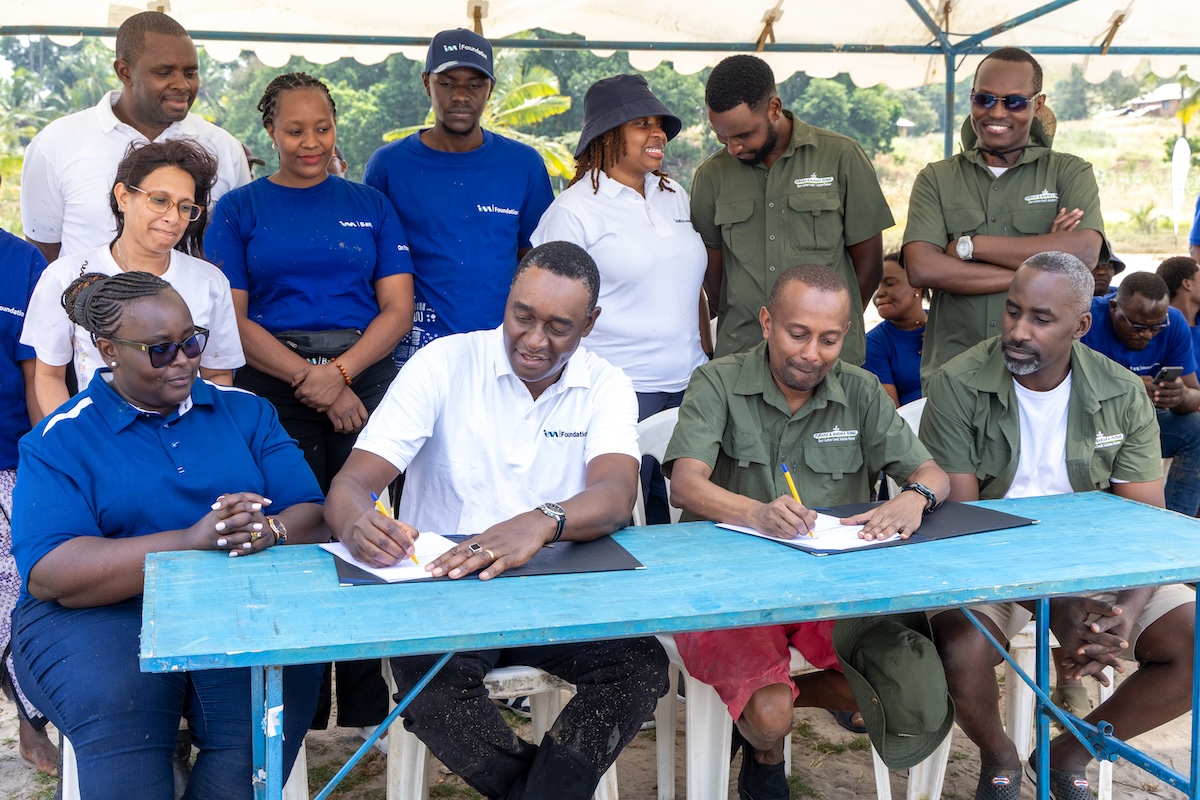
Kenya’s coastline is getting a boost. I&M Foundation has signed a new partnership with Furaha & Baraka Farms (FBF) to help restore mangrove forests in Kwale County, adding financial muscle to a restoration effort that’s already showing strong results on the ground.
The deal builds on work FBF has been doing with the Mwatsumbo Community Forest Association and the Kenya Forest Service, planting mangroves in the Mwache Block and giving local communities a stake in the outcome. The idea is simple: pair community knowledge and conservation know-how with the funding needed to scale up, so degraded coastal areas can recover faster and residents can earn a living from the process.
The numbers so far back up the approach. Between June and December 2025, the team planted 678,500 mangrove seedlings across roughly 70 hectares in the Mwache Block. When independent monitors checked back in May 2026, about 624,503 of those trees were still standing, a 92% survival rate that’s high by any restoration standard. From January through July 2026, another million seedlings went into the ground, pushing the project into a new phase of growth.
I&M Foundation’s contribution takes things further still. The bank’s foundation has pledged to help fund the planting of 1,563,000 more mangroves before the end of 2026, a commitment that should speed up restoration and widen the benefits reaching coastal households.
Dorine Nalo, Head of I&M Foundation, spoke at the signing ceremony about what draws the organization to projects like this one. She said the foundation puts its weight behind locally led solutions because that’s where lasting change tends to come from, work that protects natural ecosystems while giving communities a real chance to benefit from that protection. She described the FBF partnership as one that delivers measurable environmental results, builds climate resilience, and creates livelihoods people can count on.
It’s worth remembering why mangroves matter this much. These coastal forests shield shorelines from erosion, give fish and other marine life a place to breed and shelter, and pull large amounts of carbon out of the atmosphere. Few ecosystems do so much work at once, which is why restoring them ranks high on Kenya’s climate and development priorities.
Daniel Mwero, FBF’s Founder and Executive Director, framed the partnership as proof that healthy ecosystems and healthy communities rise together. He pointed to the progress already made with local and government partners as a foundation to build on, and tied the project to several UN Sustainable Development Goals, including climate action, life below water, life on land, and decent work. Mwero described FBF’s approach as rooted in circular economy thinking, where the value created by restoring nature flows back to the people doing the restoring, through jobs, training, and new livelihood options. Investing in both people and the environment, he said, is what makes the impact stick.
Taken together, the partnership offers a template other conservation efforts could follow: bring communities, conservation experts, government agencies, and funders to the same table, and the result is restoration that actually lasts. For Kwale’s mangroves, and the people who depend on them, that combination is already paying off.
Never miss a story 💜
Breaking news, real stories and money tips for Kenyan women, as they happen.

