
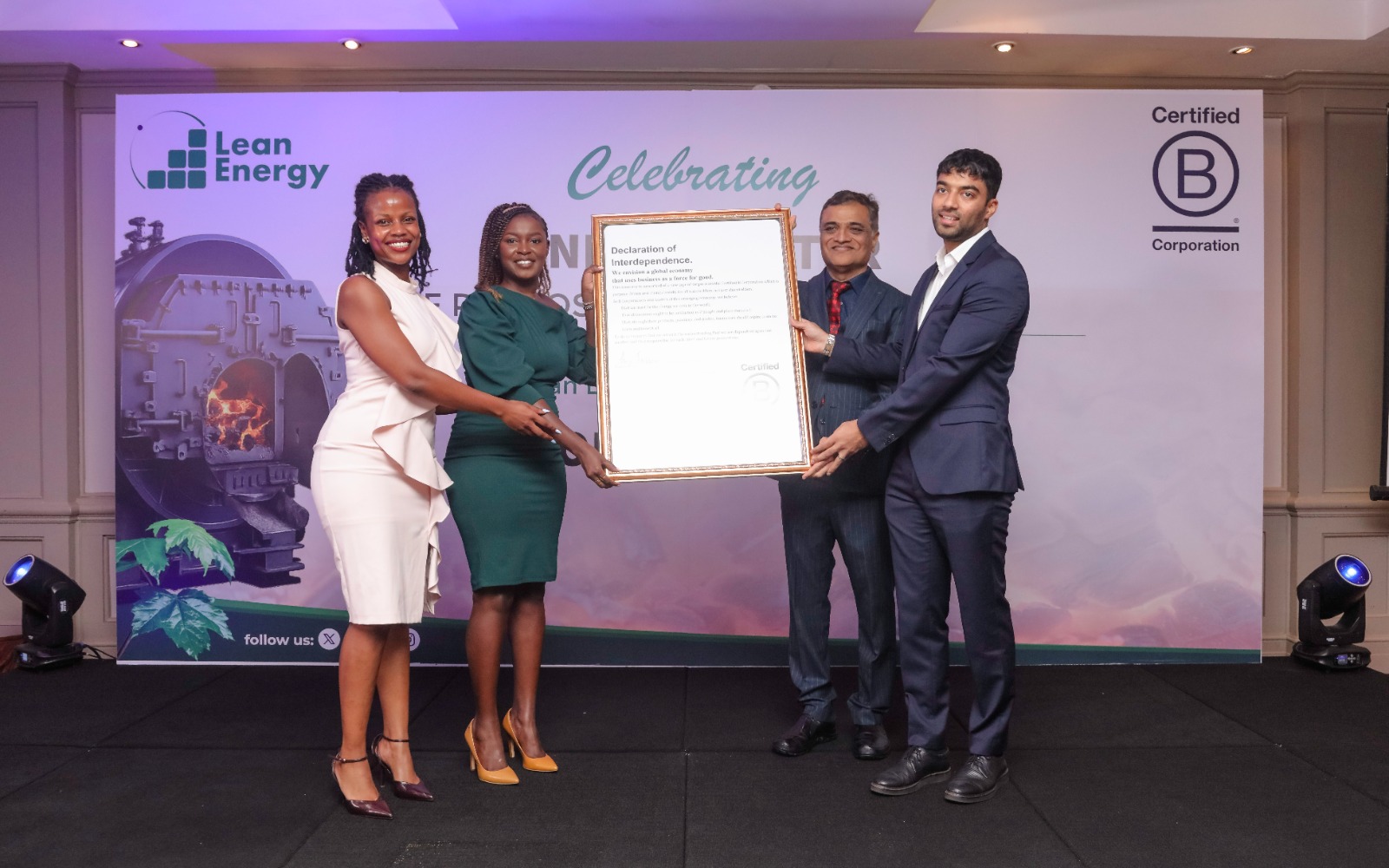
If you’ve ever run a factory in East Africa, you know the headache of keeping the boilers running. Imported diesel and heavy fuel oil are expensive, prices swing with the exchange rate, and every shilling spent on fuel is a shilling not spent growing the business. Lean Energy Solutions has built its whole model around solving that problem, and now it has the credentials to back it up: the company has earned B Corp Certification, an outside stamp of approval on how it runs its business and the impact it creates.
The timing matters. Manufacturers across the region are under real pressure right now to cut energy costs, shrink their carbon footprint and reduce how exposed they are to currency swings, all while still needing steady, dependable heat for their production lines. That is a tough balancing act, and it is exactly the gap Lean Energy set out to fill.
The company’s approach is fairly simple in concept. Under what it calls a Build-Own-Operate model, Lean Energy pays for, installs and runs biomass boiler systems on behalf of its manufacturing clients. Instead of a factory owner having to find capital for new equipment or hire staff to maintain it, they simply pay for the steam they use, similar to a utility bill. On top of that, Lean Energy handles the fuel supply itself, turning things like maize cobs and coffee husks, agricultural leftovers that would otherwise go to waste, into usable industrial fuel.
The numbers behind that work are notable. The company reports cutting 350,000 tonnes of emissions, supporting four million person-days of employment, and saving Kenya an estimated 50 million dollars in foreign exchange. It currently runs more than 20 boiler sites across Kenya and Tanzania, producing a combined 90 tonnes of steam per hour.
Dinesh Tembhekar, who founded the company and serves as its Managing Director, framed the certification as validation of a broader belief that industrial growth on the continent shouldn’t force a trade-off between staying competitive and protecting the environment.
To earn certification, Lean Energy scored 87.5 out of 100 on B Lab’s B Impact Assessment, comfortably clearing the 80-point bar required to qualify. Elizabeth Mutwiri of B Lab Africa noted that the assessment goes well beyond a company’s product, looking closely at governance, worker treatment, community impact and environmental management. In her view, Lean Energy’s result shows that an industrial business can build responsible practices directly into how it operates and grows, not just as an afterthought.
For Lean Energy, this certification isn’t really a finish line. It’s more of a marker for where the company goes next: scaling up a model that is commercially sustainable, powered by local resources, and built to support African manufacturing while still delivering real, measurable benefits to the people and communities it works with.
Never miss a story 💜
Breaking news, real stories and money tips for Kenyan women, as they happen.

