
When people talk about Kenya’s economy, the conversation usually revolves around inflation, taxes or the rising cost of living. Less attention is paid to another question that is just as important: where is the money going?
The answer matters because capital shapes the future. It determines which businesses expand, which sectors attract investment and which ideas make it beyond the drawing board. That is why sustainable finance is beginning to attract far more attention than it did a few years ago.
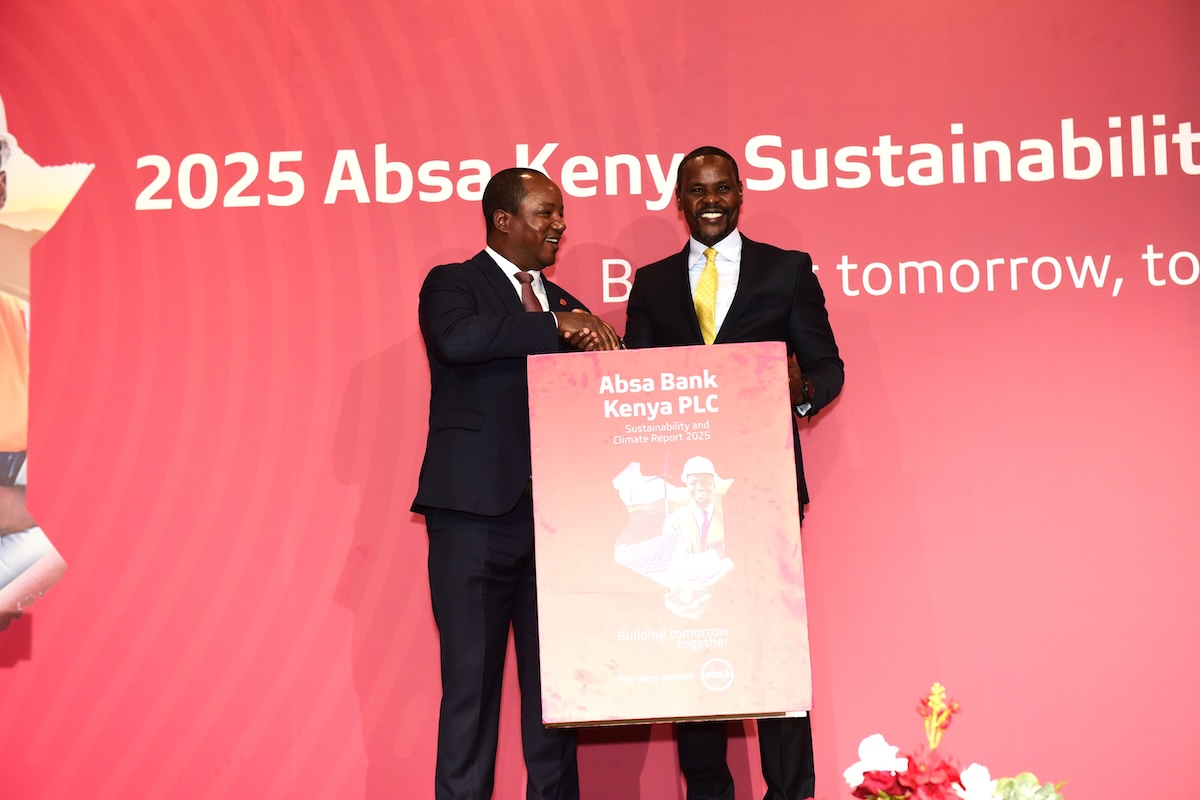
Released yesterday, Absa Bank Kenya’s 2025 Sustainability and Climate Report offers one snapshot of that shift. Since 2022, the bank has deployed KSh204 billion in sustainable finance, including KSh55.3 billion in 2025 alone. Nearly a third of its lending now falls under sustainable finance.
On paper, those are impressive figures. The more interesting question is what they actually represent.
For a long time, sustainable finance was largely viewed through an environmental lens. Plant more trees. Reduce emissions. Invest in renewable energy. Those priorities remain important, but the conversation has evolved to include the growth of small businesses, women entrepreneurs, affordable housing, renewable energy and climate-smart agriculture. Together, those investments reveal something about where Kenya’s economy is heading.
Small businesses for instance continue to carry a disproportionate share of the country’s economy. Whether it is a manufacturer investing in new equipment, a retailer opening another outlet or an agribusiness to improve irrigation, growth often depends on access to affordable financing. That is why financial inclusion remains such an important part of the sustainability conversation.
According to the report, Absa disbursed Ksh48.8 billion during 2025 to support micro, small and medium-sized enterprises, women, young entrepreneurs and underserved communities. It is easy to see that as another corporate statistic but in reality, it represents capital flowing to businesses that are often considered too small, too new or too risky despite their potential to create jobs and strengthen local economies.
The sustainability report also reflects another shift taking place across Kenya’s banking sector. Women are no longer being viewed simply as customers. They are increasingly recognised as business owners, employers and investors whose enterprises require financial solutions tailored to their needs. Expanding access to credit has implications that extend well beyond individual businesses and into households and local economies.
Young people feature prominently as well, although not only through financing. Finding employment remains one of Kenya’s biggest challenges, but employers are also looking for practical workplace skills that do not always come through formal education. In 2025, Absa’s ReadyToWork programme reached nearly 38,000 young people, bringing the total to more than 300,000 participants since launch. Ready To Work is an initiative by Absa Bank, that focuses on preparing young graduates for employability, entrepreneurial preparedness and digital skills so they’re ready for the world. These skills are just as important as academic qualifications.
Climate finance forms another important part of the picture. Kenya has experienced repeated droughts, erratic rainfall and changing weather patterns over the past decade, placing increasing pressure on agriculture and rural livelihoods. That has shifted climate finance from being a niche environmental issue to an economic priority.
The Absa sustainability report says that the bank provided about Ksh6.5 billion in climate finance during 2025, supporting things like climate smart agriculture, green buildings and renewable energy among others. These are investments geared towards helping businesses to adapt, while at the same time supporting the country’s move towards a lower carbon economy.
Absa’s report also highlights progress beyond financing. By the end of 2025, more than 1.5 million trees had been planted through its environmental initiatives, while the bank reported a recycling rate of 96.4 percent. Through the Absa Kenya Foundation, more than 50,000 people were reached through programmes supporting entrepreneurship, education, natural resource management and humanitarian response.
Numbers alone rarely tell the whole story, but they can point us in the right direction. The Ksh 204 billion highlighted in Absa Bank’s sustainability report is not simply a measure of money given to businesses. The report offers a glimpse into the sectors attracting investment and the kind of economy Kenya is trying to build. Whether it is a business looking to grow, an entrepreneur seeking capital or a community adapting to a changing climate, sustainable finance is gradually becoming less about corporate reporting and more about the future of Kenya’s economy.
Never miss a story 💜
Breaking news, real stories and money tips for Kenyan women, as they happen.

