
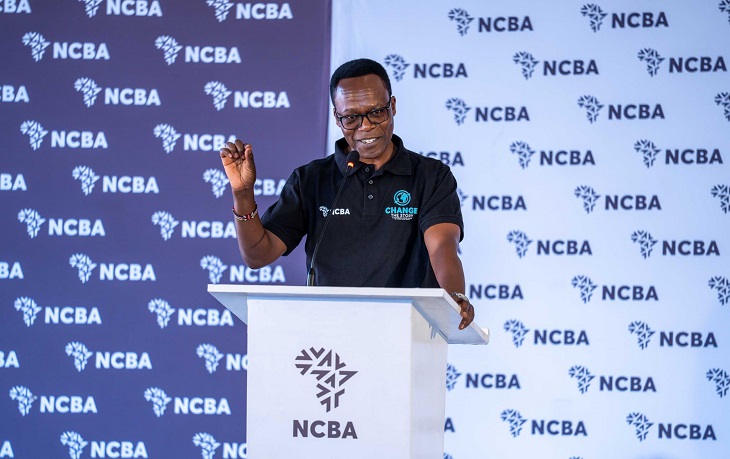
Good news for NCBA Bank Kenya PLC. The High Court in Nairobi has stepped in to stop criminal proceedings against the bank and its Group Managing Director and CEO, John Gachora, over the alleged Sh363 million fraud at First Assurance Investment Company Limited. It’s an early win for a legal team that has argued all along that the case against Gachora was never solid to begin with.
The court granted what’s called conservatory orders, basically a pause button on the case, under Case Number HCCHRPET/E035/2026 at the Milimani High Court. What that means in practice is that NCBA and Mr. Gachora can’t be arrested, taken to plea, or taken back to any magistrate’s court over this matter for now.
The case they’re linked to, Republic versus Salim Mohamed Busaidy and six others, was already before the Nairobi Chief Magistrate’s Court as Criminal Case No. E451 of 2026, but that’s now on hold too, at least where NCBA and Mr. Gachora are concerned. Mr. Gachora had been due to appear before the magistrate’s court to take plea on 11th August 2026, which is what made the application urgent in the first place. Because of that urgency, the court agreed to hear it even during recess. The High Court petition itself is due back before the presiding judge on 27th August 2026 for further directions, and the trial court has since confirmed the status of the orders as well, on 12th August 2026, with its own next mention set for 4th November 2026.
So what’s this all actually about? At the centre of it is an alleged theft of more than Sh363 million from First Assurance Investment Company Limited, stretching back to May 2018 and running through to April 2024. The man accused of pulling it off is Salim Mohamed Busaidy, a former nominated MCA who sat on First Assurance’s board. Prosecutors say he forged the signature of his co-director, Lamu Governor Issa Abdalla Issa Timamy, to push through withdrawals from company accounts held at NCBA and two other banks. He’s now facing 120 charges, including conspiracy to defraud, stealing, and acquiring proceeds of crime. He has pleaded not guilty.
Worth noting how the case against NCBA and Mr. Gachora actually came about. Court papers show the investigation originally targeted NCBA, KCB, and Co-operative Bank as reporting institutions under anti-money laundering law, over suspected proceeds of crime and forgery on the account, not the three CEOs personally. NCBA says it fully cooperated throughout, producing the account records, mandates, and supporting documents the investigators asked for under warrant. It was only later that the DPP moved to charge the sitting chief executives individually, John Gachora among them, over the bank’s alleged failure to report suspicious activity.
Here’s the important bit for NCBA and Mr. Gachora. Nobody is saying that Mr. Gachora had anything to do with the actual theft. The charges against him are Conspiracy to Defraud and Failure to Report Suspicion Regarding Proceeds of Crime under the Proceeds of Crime and Anti-Money Laundering Act, brought against him solely because of his position as CEO.
NCBA and Mr. Gachora say that’s simply not how the law works. Their case is that the duty to report suspicious transactions sits with the bank as an institution, handled through its Money Laundering Reporting Officer and its compliance systems, not with the CEO personally. Their lawyers have gone as far as calling the whole prosecution an abuse of process, built on a reading of the law that just doesn’t hold up.
NCBA isn’t fighting this fight alone either. KCB’s Paul Russo and Co-operative Bank’s Gideon Muriuki were charged over the same kind of allegations and have gone to court over it too, with Muriuki already securing similar protection.
The High Court now has to decide whether the prosecution can go ahead at all, and until it does, both Mr. Gachora and NCBA remain entitled to the presumption of innocence.
What is clear is that this case has turned into something bigger than one bank or one CEO. It is shaping up as a real test of how far Kenya’s anti-money laundering rules can stretch when it comes to pinning personal blame on bank executives. For now, NCBA has the upper hand, with the court giving early backing to its argument that the case against Gachora was built on shaky legal ground.
Never miss a story 💜
Breaking news, real stories and money tips for Kenyan women, as they happen.

