
For a Kenyan bank operating in a market where lenders are often compared on profit, deposits and branch networks, a new Forbes ranking offers a different way to look at performance. How a bank holds up when measured against financial institutions around the world.
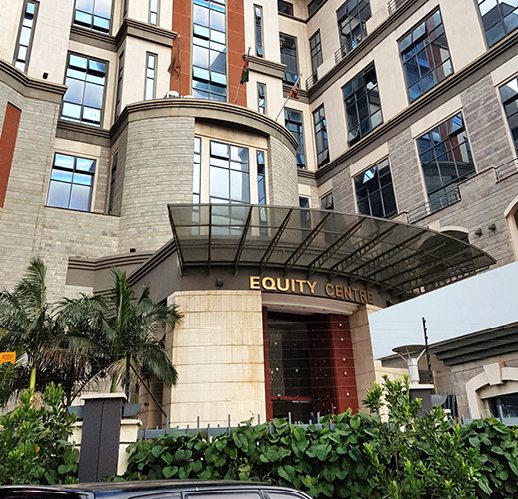
Equity Group Holdings has emerged as the highest-ranked bank in East and Central Africa in the inaugural Forbes World’s Top Performing Banks 2026 index, placing 71st globally in Tier 5.
Developed by Forbes in partnership with Statista, the ranking assesses 500 banks across 89 countries using financial data to examine the underlying strength of each institution. This sets it apart from rankings based largely on customer perception, giving greater weight to the financial measures that determine how a bank performs through different economic conditions.
The assessment is built around four areas: profitability and efficiency, capital and funding resilience, asset quality and risk management, and sustainable earnings growth. Profitability and efficiency account for 30 per cent of the score, including measures such as cost-to-income ratios and return on assets. Capital and funding resilience and asset quality and risk management each carry a 25 per cent weighting, while sustainable earnings growth accounts for the remaining 20 per cent.
For Equity, the ranking provides an international reference point for the financial strength of a banking group that has grown beyond its Kenyan base. Rather than looking only at headline profits or the size of its customer base, the Forbes assessment considers how effectively a bank generates returns, manages its costs, maintains capital and funding strength, manages credit risk and sustains earnings.
Four Kenyan banking groups feature among the 500 institutions assessed in the Forbes index. Equity takes the highest position at 71st globally, followed by KCB Group at 79th. Co-operative Bank of Kenya ranks 120th, while Stanbic Holdings is placed 138th.
The rankings are organised into six tiers based on asset size, allowing banks to be assessed alongside institutions of a broadly similar scale. Equity and KCB are both in Tier 5, which covers banks with between $10 billion and $20 billion in assets. Co-operative Bank and Stanbic are in Tier 6, covering institutions with between $3 billion and $10 billion.
The distinction is important because the ranking is not simply a contest between the largest banks in the world. Within each tier, institutions are assessed against financial measures that look at the quality and resilience of their performance.
Forbes required banks included in the ranking to be licensed deposit-taking institutions with more than $3 billion in assets, audited financial statements for their latest completed financial year and at least three consecutive years of financial data. The assessment drew on financial information from data providers, desk research and information submitted by banks.
Equity’s position gives the group a place among banks from across the world while also putting Kenya’s financial sector into a broader international comparison. For the bank, the 71st position offers a measure of how its financial fundamentals compare with global peers of a similar size, from the strength of its capital base and asset quality to the efficiency and sustainability of its earnings.
Never miss a story 💜
Breaking news, real stories and money tips for Kenyan women, as they happen.

