
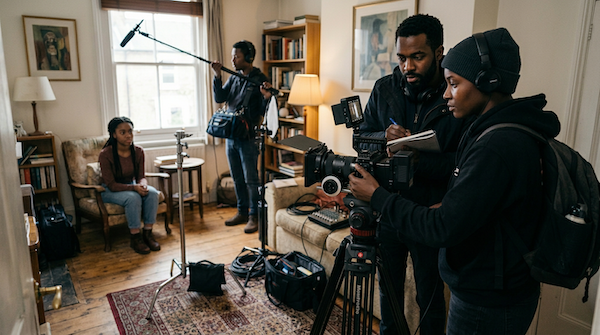
A tight budget does not automatically mean a smaller story. For many independent filmmakers, working with fewer resources has pushed them toward sharper creative choices, from where they shoot to how their characters come together on screen.
The MultiChoice Talent Factory has spent the past decade training 512 filmmakers across the continent. Together, its graduates have produced 162 films, and a number of them have gone on to build and run their own production companies, feeding directly into the growth of Africa’s wider film and television industry. What sits behind those numbers is a group of filmmakers who have learned to work within their means without losing the strength of the story they set out to tell.
A common trap for new filmmakers is chasing a production bigger than their budget allows. The alternative is staying close to what the story actually requires. A film built around the relationship between two people rarely needs sprawling locations, crowd scenes or elaborate action to carry weight. Strong characters, real conflict and stakes the audience can feel do most of the work, often without a single expensive set. The question worth sitting with before a script is locked is simple: what does this story need, and what can it live without.
Limits can also become tools. A script written across ten locations can often be told just as effectively in two or three, with a single restaurant, office or home reshaped scene to scene through lighting, wardrobe and production design. Instead of leaning on visual effects or large scale sequences, filmmakers can build the same impact through performance, dialogue, sound and how a scene is shot.
That approach shows up clearly in the careers of MTF alumni Nikita Neo Mokgware and Serena Serene Mmifinyana from Botswana. After starting N&M Productions, their debut feature, The Painting, screened in Lusaka and aired on Zambezi Magic. They went on to work with Angolan filmmaker Levis Albano on Muti Mbi Ma Pessoa, which found screens in Angola, Brazil, Portugal and France, proof that a small start does not have to stay small.
Working with less does not mean spending as little as possible everywhere. It means being deliberate about where the money goes. Sound, lighting, performance and post production tend to shape how an audience experiences a film more than a high end camera package ever will. The test is whether the audience would actually notice the difference, and if not, that budget is better spent elsewhere.
Agola Simon, from MTF’s Class of 2024, won Best Sound Design at the Uganda Film Festival for his work on The Unforgivable, having handled both production sound and post production on the film. His recognition speaks to how far technical craft like sound design can carry a production, independent of budget size. The same logic applies to locations, where finding spaces that can serve multiple scenes cuts costs without cutting ambition.
Planning matters just as much once the budget is locked. Detailed shooting schedules, shot lists and call sheets keep production days from slipping, and grouping scenes by location trims travel and setup time, while still leaving room for the unexpected.
Post production is where budgets often get forgotten too early. Editing, sound mixing, colour grading, music, graphics and subtitles all need funding from the start, along with any language versions or delivery requirements the distribution plan calls for. That discipline shows in how far some MTF productions have travelled. Azeezah Sama, produced by a member of the Class of 2023, screened at the Toronto International Nollywood Film Festival and the Silicon Valley Film Festival. Tejiri, from the Ghanaian Class of 2021, was selected for the African Cinema Section of the International Festival of Author Film in Morocco.
Even careful planning cannot account for everything. Weather, equipment failure, transport delays and long shoot days all carry real cost on a small production, which is why a contingency budget and some flexibility in scheduling matter from day one.
Across MTF’s academies and alumni network, filmmakers have carried local stories to international festivals, built companies from nothing and gained the kind of hands on experience that shapes a career well beyond a single film.
Never miss a story 💜
Breaking news, real stories and money tips for Kenyan women, as they happen.

