
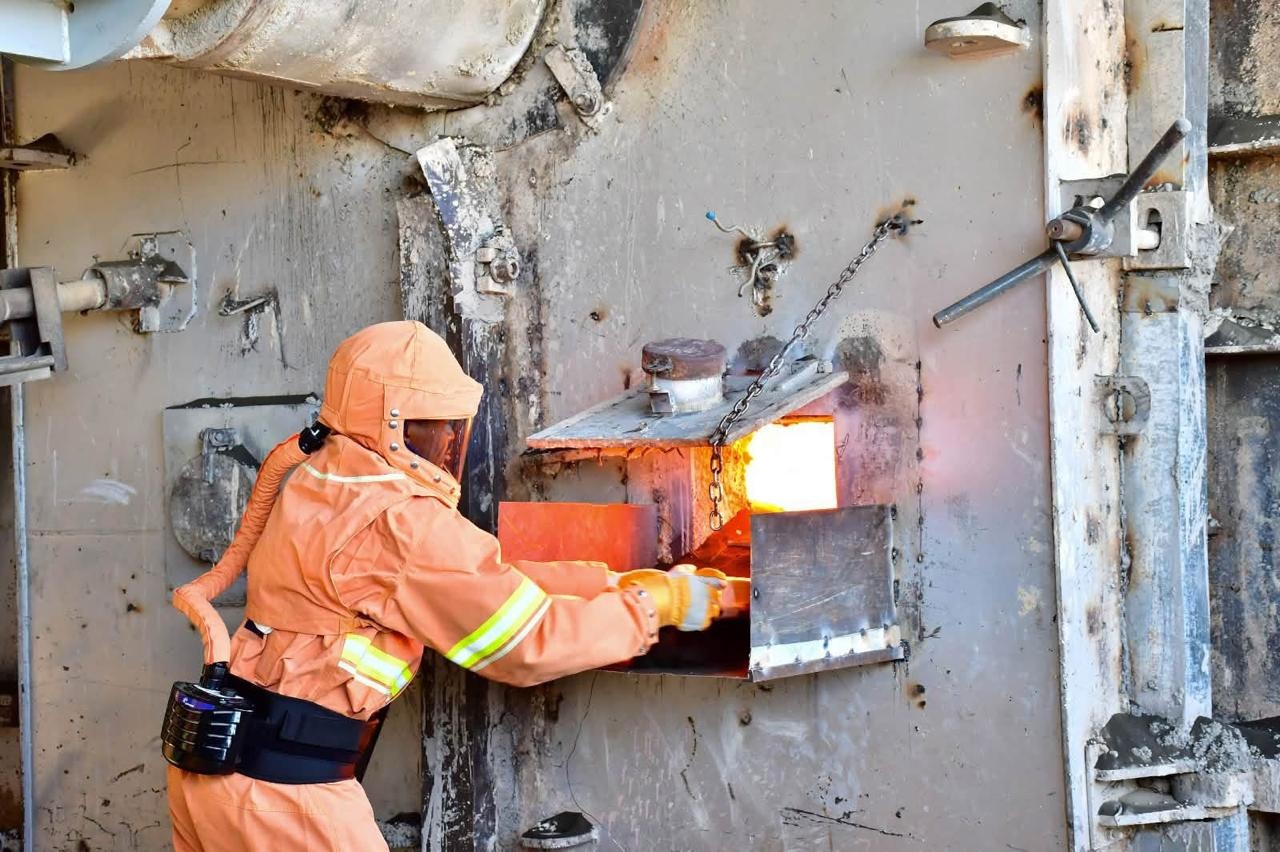
A tonne of methamphetamine has a way of finding its way back to the streets if it is not properly disposed of. That is the quiet fear behind every drug bust in Kenya, that the seized product simply gets stored somewhere, waits, and resurfaces years later through a different route. Yesterday, Bamburi Cement Plc closed that door for good on more than KSh 8.2 billion worth of narcotics.
The company hosted the destruction of over one tonne of drugs at its plant, using its clinker manufacturing kiln, a piece of industrial equipment that fires at temperatures above 1,500 degrees Celsius. Interior and National Administration Cabinet Secretary Kipchumba Murkomen presided over the event, which brought together national security leadership and Bamburi’s own executive team.
What makes the kiln useful here is not just heat, but certainty. According to the Global Cement and Concrete Association, gases inside the main firing zone stay at temperatures approaching 2,000 degrees for more than five seconds, well past the two seconds at 850 degrees required for complete burnout. Under those conditions, the organic compounds that make up methamphetamine break down entirely, leaving no residue and no emissions. There is no ash to sweep up, no partially burned product to worry about disappearing from a storage facility. The drugs simply cease to exist as drugs.
Bamburi Cement’s Chief Executive Officer, Mr Geofrey Ndugwa, framed the exercise as part of a broader responsibility the company has carried for years, one that goes beyond manufacturing cement.
“As a responsible manufacturer and a company deeply rooted in the Coast region, we recognise that our responsibility extends beyond producing cement,” he said. “Today’s exercise demonstrates what is possible when Government agencies and the private sector work together towards a common public interest objective.”
That partnership is not new, and it is not small. Ndugwa noted that Bamburi has worked with the Kenya Revenue Authority, the Kenya Ports Authority, the Kenya Bureau of Standards, and various security enforcement agencies to safely dispose of more than 10,000 tonnes of narcotics, contaminated grain, and illicit or counterfeit products over the years. All of it done at no cost to the government.
That last detail matters more than it might seem. Drug destruction is not cheap, and it is not simple. Getting rid of a tonne of methamphetamine safely requires infrastructure that most government agencies do not have readily available, and building that capacity from scratch would cost money that could otherwise go toward enforcement itself. Bamburi’s kiln solves that problem entirely, using equipment the company already runs every day for its actual business.
There is something worth noting in how unglamorous this arrangement is. No new facility was built for this. No special fund was created. A cement plant that exists to produce clinker for construction happens to run hot enough, and long enough, to make illegal drugs disappear completely. It is industrial capacity being put to a second use precisely when the country needs it.
For a region like the Coast, which has long grappled with narcotics trafficking routes, that kind of quiet, no cost cooperation between private industry and law enforcement may end up mattering more than any single high profile drug bust.
Never miss a story 💜
Breaking news, real stories and money tips for Kenyan women, as they happen.

