
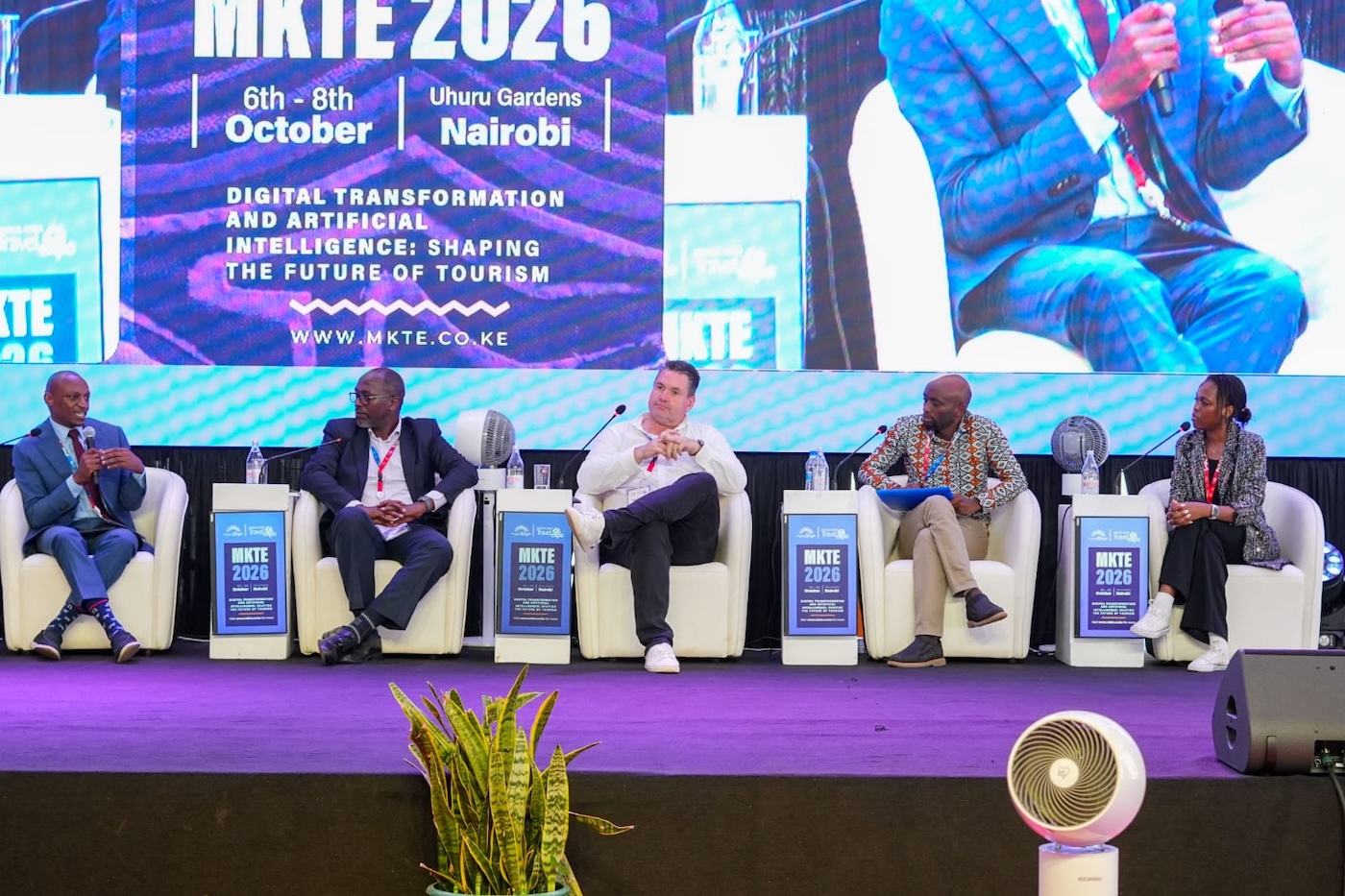
When the 2024 protests erupted, cancellations flooded Kenya’s tourism sector faster than anyone could respond. Bookings that took months to secure unraveled in days, and there was no agreed playbook to slow the damage. For Julius Thairu, Chief Commercial and Customer Officer at Kenya Airways, that episode captures the central weakness the industry must now fix.
Speaking at the Magical Kenya Travel Expo (MKTE) 2026, where Kenya Airways is the Official Airline Partner, Thairu urged the sector to invest in stronger risk management, health security and crisis response systems. He was addressing a panel titled “Tourism Preparedness and Resilience Beyond Global Crisis,” aligned with UN Tourism’s World Tourism Day 2026 theme, “Digital Agenda and Artificial Intelligence to Redesign Tourism.”
His message was direct. Kenya’s tourism industry has survived post-election violence, COVID-19 and the 2024 protests, largely thanks to the strength of the product and the determination of individual operators. “But surviving a crisis is not the same as being built for one,” he said. The next step, in his view, is a shift from resilience by experience to resilience by design.
The panel pointed to three systems the sector needs before the next disruption. The first is a travel insurance market that works for both operators and visitors. Thairu said cover should become a standard part of a quality tourism experience rather than an optional extra, offered through airlines, online travel agencies, hotel websites and mobile payment platforms. He described Kenya’s mobile money ecosystem as a distinct advantage for driving domestic uptake, and called on the Tourism Regulatory Authority to set minimum standards so customers see clear information on available cover before they complete a booking.
The second is a health security framework that reaches beyond Nairobi into the field. Thairu noted that travel advisories from major source markets can wipe out bookings overnight, which makes early engagement with bodies such as the UK’s FCDO and the US State Department essential. He framed health security as a strategic investment in destination competitiveness rather than a cost, and proposed a public-private financing model to sustain emergency medical response, disease surveillance and trained personnel without relying on donors.
The third is a coordinated crisis management and business continuity structure. Thairu argued Kenya needs a pre-agreed protocol with named roles, approved messaging, designated spokespersons and rapid response mechanisms spanning government, airlines, hotels and trade partners. He also called for sector-wide force majeure standards and a standing recovery playbook, complete with pre-allocated budgets and pre-approved assets, so recovery marketing can be deployed quickly.
Thairu also spoke about the airline’s wider role in the sector. “Tourism and aviation grow together, with a strong national carrier helping drive tourism growth while expanded connectivity creates new opportunities for tourism development,” he said. He described the Expo as an important platform for showcasing Kenya to the world, strengthening trade relationships and drawing visitors from key source markets.
Partnerships like MKTE, he added, bring together government, airlines, tourism agencies, hospitality players, investors and destination marketers to strengthen Kenya’s competitiveness. The challenge now, he suggested, is making sure that cooperation is in place before the next crisis arrives, not after.
Never miss a story 💜
Breaking news, real stories and money tips for Kenyan women, as they happen.

