
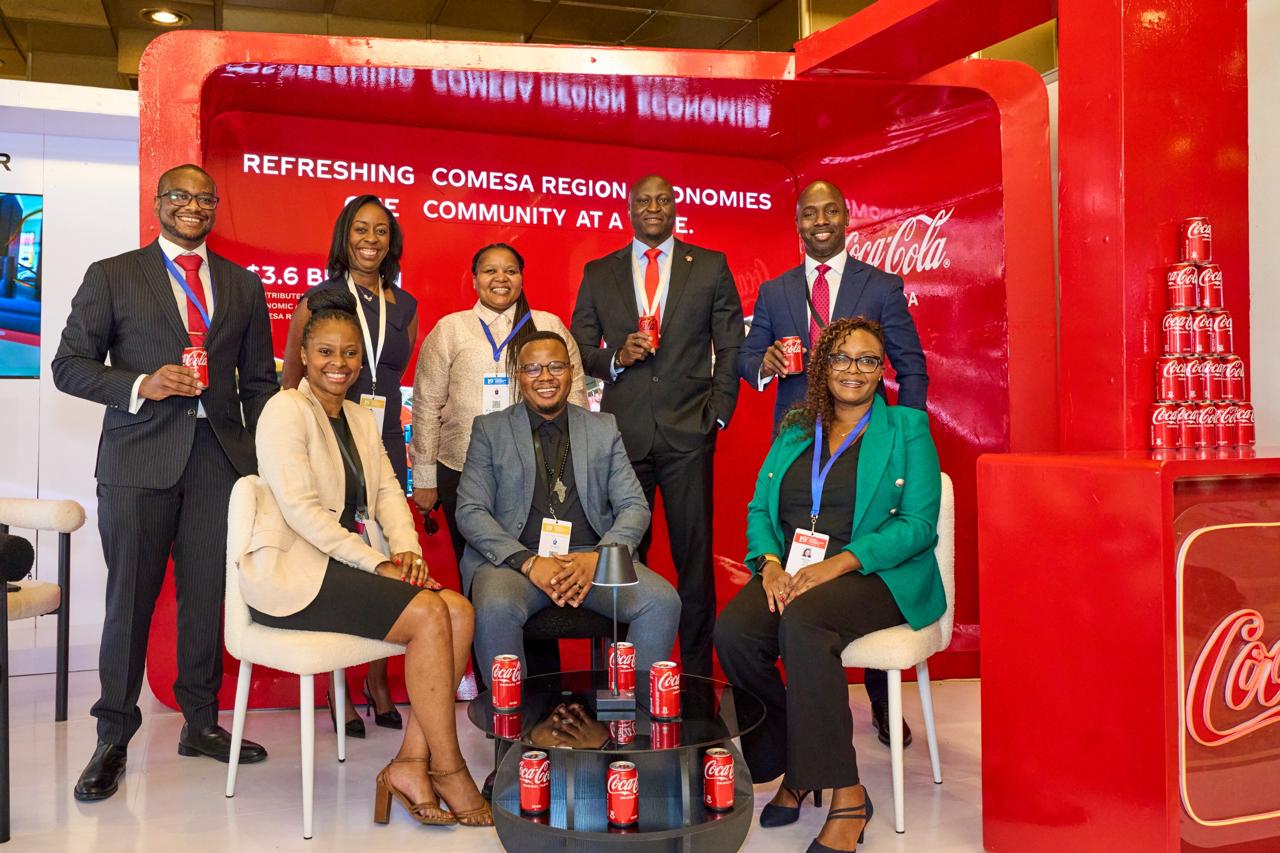
When the 19th COMESA Business Forum opened its sessions on trade and regional integration, one of the most closely watched announcements came from a company better known for what it puts in bottles than for what it adds to balance sheets. The Coca-Cola system presented the findings of a new economic study showing how deeply its operations are woven into the fabric of the 21-nation bloc.
The research, carried out by global consultancy Steward Redqueen, estimates that the Coca-Cola system, a network spanning bottlers, suppliers, distributors and retailers, added USD 3.6 billion to the region’s combined GDP in 2024. That figure represents 0.3 percent of COMESA’s total output. Through direct hiring and its wider value chain, the system supported more than 458,200 jobs.
The jobs figure carries a striking ratio. According to Luis Felipe Avellar, President of Coca-Cola’s Africa Operating Unit, every direct job created by the system supports another 28 across the regional economy. Those roles sit in places that rarely appear in corporate brochures: the kiosk owner restocking on a busy street corner, the truck driver moving crates between towns, the farmer delivering sugar to a processor.
Supplier spending is where the study draws its clearest line between a global brand and local industry. Coca-Cola spent almost USD 1.5 billion with suppliers across COMESA in 2024, money that flowed into sugar production, manufacturing, packaging and logistics. For many of those businesses, a large and predictable customer can mean the difference between staying small and investing in new capacity.
Alfred Olajide, Vice President of East and Central Africa Operations at Coca-Cola, described the system as a critical economic engine for the region. He said the company’s role goes beyond delivering beverages and extends to driving innovation, collaboration and sustainable development. The forum, he noted, offered a meaningful moment to underscore that commitment.
The study’s methodology deserves a brief mention. Steward Redqueen used a Multi-Regional Input-Output model, a tool economists favor for tracing how spending in one sector ripples into others. Applied here, it captured the system’s operations, local purchasing and extensive value chain links, showing how activity in agriculture can feed through manufacturing and distribution all the way to retail. The approach is designed to count not only what a company pays directly, but what that spending sets in motion further along the chain.
Sustainability featured alongside the economic findings. Several COMESA member states benefit from the Africa Water Stewardship Initiative, a program of nearly USD 25 million that aims to address water-related challenges across 20 African countries by 2030. For a business that depends heavily on water, both as an ingredient and as a shared community resource, the investment reflects a practical interest as well as a social one.
The announcement also fits the forum’s broader purpose. Leaders from across the region gathered to discuss trade, innovation and economic growth, and Coca-Cola took part as a key collaborator, a role that aligns with the forum’s mission of building stronger economic ties among member countries. Showcasing hard numbers in that setting gives policymakers and fellow business leaders a concrete example of how private investment can reinforce regional integration.
As with any company-commissioned study, readers will want to weigh the findings with some care, and the headline figures are best understood as estimates of contribution rather than a full accounting of costs and benefits. Even so, the scale is notable. A system that touches farms, factories, warehouses and small shops in equal measure illustrates how a single consumer brand can become an anchor for many livelihoods.
Avellar closed his remarks by stressing collaboration as the route to sustainable and inclusive growth, adding that the company is proud to work with COMESA in building stronger economies and better futures for the communities it serves. Whether that vision is realized will depend on continued investment and partnership, but the numbers presented in Lusaka-style boardrooms and forum halls alike suggest the foundation is already substantial.
Never miss a story 💜
Breaking news, real stories and money tips for Kenyan women, as they happen.

