
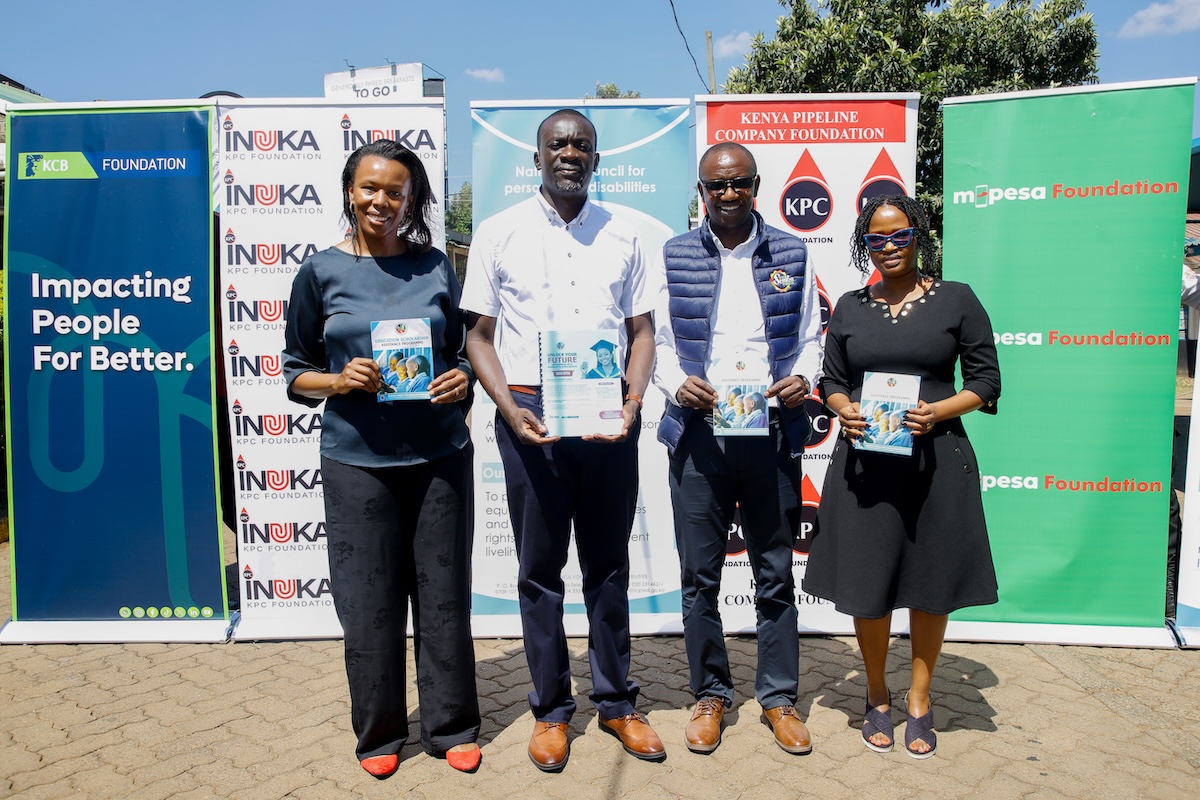
Learners with disabilities who are moving to Grade 10 in 2027 will no longer have to apply to each scholarship provider separately. The KPC Foundation, the National Council for Persons with Disabilities (NCPWD), the KCB Foundation and the M-PESA Foundation have launched a joint initiative that puts the application and recruitment process in one place.
Until now, a family seeking support from several providers had to repeat the same steps with each one, often travelling to different locations and paying for it. The new arrangement brings the participating providers together in one accessible location, with a single coordinated application. The partners expect it to cut the number of applications families have to make and to reduce the travel and related costs that came with them.
KPC Foundation Manager Rachel Gathoni said access to education should not be made harder by the process of asking for support. By bringing providers together on one coordinated platform, she said, the partners are removing the burden of multiple applications and unnecessary travel costs. The goal is a journey to secondary education that is simpler, more inclusive and more dignified.
Behind the single application sits a shared system. The partners will set up a harmonized national recruitment process supported by common county-level structures. They will run coordinated awareness campaigns and use a standardized assessment and vetting framework. The partners say this will make the selection of beneficiaries more transparent and remove the duplication of effort among the participating organizations.
Gathoni noted that no single organization can address all the barriers learners with disabilities face in getting a quality education. By combining resources and networks, the partners hope to reach more deserving learners while keeping the selection fair and open. In her words, no deserving learner should be left behind because of barriers in the application process.
The providers will also pool resources and expertise to reach more eligible learners across the country. Once the joint assessment is complete, each organization will still make its own decisions. Each will select and onboard its beneficiaries separately, based on its scholarship allocation, its program requirements, and the resources it has available.
That distinction matters. The shared process handles the part families found most tiresome, which is applying and being assessed, while every provider keeps control over who it funds and how many learners it can support.
The partnership is built around accessibility, convenience and inclusion. For learners with disabilities and their families, the practical result is more time spent preparing for the next stage of schooling and less time working through forms, queues and journeys to different offices.
Never miss a story 💜
Breaking news, real stories and money tips for Kenyan women, as they happen.

