
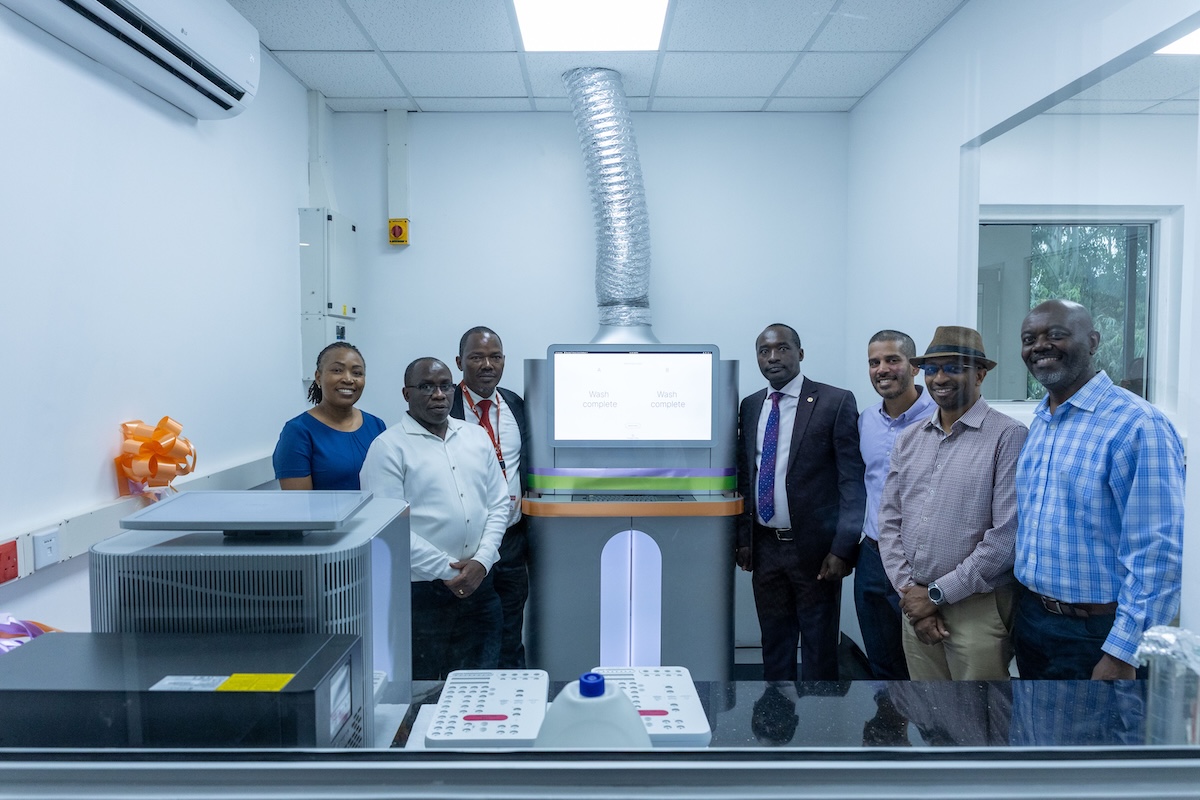
The machine that now sits at the heart of Nextgen Molecular Lab can read genetic material at a scale few facilities in Kenya can match. Getting it into the country, though, took far more than scientific know-how.
Dr George Ngondi is a microbiologist and genomics expert, and the founder and Director of the lab. Nextgen Molecular Lab undertakes molecular and genomic testing, using analysis of genetic material to help diagnose and better understand diseases. When Ngondi set out to build its advanced sequencing capability, he knew the science would be demanding. What he did not anticipate was how difficult it would be to secure the financing needed to bring the technology into the country.
The project required about US$3.5 million, equivalent to approximately KSh454 million. The search for that money proved to be one of the biggest hurdles. “We approached many banks, and everywhere we went, we faced a lot of challenges,” Ngondi says. “So, we had to go for debt financing, and debt financing was a bigger challenge.”
The sequencer was not the only cost. Before acquiring the main equipment, Ngondi had already invested more than KSh100 million in supporting infrastructure and laboratory equipment. That included a negative-pressure room for DNA isolation, PCR machines, quality-control analysers and equipment used in library preparation. The lab had, in effect, put significant capital into the specialised facility and the infrastructure needed to operate an advanced sequencing platform.
At the centre of the investment sits the NovaSeq System, an ultra-high-throughput Next-Generation Sequencing platform that can process large volumes of genetic material simultaneously. For a laboratory, it is more than another piece of equipment. It is where much of the genomic sequencing work happens.
Consider a sample brought into the facility, such as blood or other biological material. It holds genetic information that cannot be seen with the naked eye. The NovaSeq System reads that information at very large scale, helping scientists identify and study changes in DNA that may be linked to disease or drug resistance. When a human sample enters the laboratory, the machine becomes part of the process that turns it into useful genetic information.
Why does that matter in medicine? Genetic information can provide clues about disease and how it affects individuals. By reading large amounts of DNA, genomic sequencing can help researchers identify genetic changes associated with certain diseases, understand how diseases develop and support research into how patients may respond differently to medicines.
The system also gives a laboratory the capacity to process large volumes of genetic material in one place. The information it generates can support disease research, clinical investigations and the growing field of precision medicine, where treatment decisions are informed by the biological characteristics of individual patients.
The equipment came with a multimillion-dollar price tag, and the laboratory also needed specialised spaces, installation and supporting infrastructure to run it properly. Securing financing of that magnitude remained a significant hurdle. The breakthrough came when Equity Bank structured the financing around the genetic sequencer itself.
Never miss a story 💜
Breaking news, real stories and money tips for Kenyan women, as they happen.

