
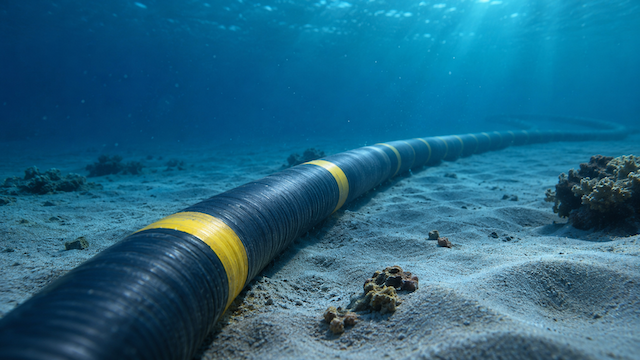
Seacom Africa Asia Cable is a $2 billion project linking Africa to Asia, with Mombasa expected to serve as a key landing point for East Africa by 2030.
A new subsea cable connecting Africa directly to Asia is in the works, with Seacom planning to invest $2 billion (approximately Sh258 billion) in the project. The cable is expected to be ready by 2030, with Mombasa set to serve as its main landing point for East Africa.
Seacom’s plan comes as demand for internet capacity rises, particularly from businesses adopting artificial intelligence. The company says existing subsea cables were built using technology that cannot support the speeds and volumes of data expected from newer AI applications.
Speaking on BBC Africa Enterprise, Seacom Chief Technology Officer Prenesh Padayachee said the Indian Ocean has relatively few subsea cables compared with routes connecting Europe and North America.
He said AI applications could require connectivity running into tens or even hundreds of gigabits, far beyond what older cable technology can accommodate.
Seacom is not new to Africa’s internet infrastructure. The Mauritius-headquartered company launched Africa’s first privately owned subsea fibre optic cable in 2009. The proposed Asia connection would add another route for international data traffic, with Kenya among the countries expected to benefit.
Other technology companies are also investing in subsea cables. Google and Meta have been developing their own networks, allowing them to manage connectivity costs and secure capacity for their operations. Padayachee said Seacom has followed a similar approach since its launch.
Seacom Africa Asia Cable and Kenya’s AI Ambitions
Kenya has its own reasons for needing more capacity. Banks and technology startups are using machine learning in their operations, adding to the amount of data moving across local and international networks.
Kenya’s National Artificial Intelligence Strategy 2025 to 2030 sets out the government’s plans to develop the country into a leading AI centre in Africa. Achieving those ambitions will require reliable networks capable of handling the growing volumes of data generated by AI applications.
The expansion of connectivity also raises concerns about cybersecurity. More data moving across international networks means greater responsibility for protecting the systems used by banks, telecommunications companies and government agencies.
The Communications Authority of Kenya recorded 72.16 million distributed denial-of-service attacks in the year to June 2026, an increase of 114.3 per cent. On November 2, Kenya inaugurated the board of its new National Cybersecurity Agency, which is responsible for protecting critical information infrastructure.
Seacom is also looking at how emerging technology could affect the security of its cables. Padayachee said the company is exploring post-quantum cryptography, encryption technology intended to withstand attacks from future quantum computers.
Cybercriminals remain a concern for operators of critical infrastructure, he said, making it necessary to keep updating security measures.
Padayachee believes governments should give internet connectivity the same consideration as essential utilities such as electricity and water. Access to reliable connectivity, he said, has become necessary for everyday economic activity.
The proposed cable is expected to be completed in 2030. Until then, Kenyan businesses adopting AI will have to rely on existing international connections as demand for network capacity grows.
Never miss a story 💜
Breaking news, real stories and money tips for Kenyan women, as they happen.

