
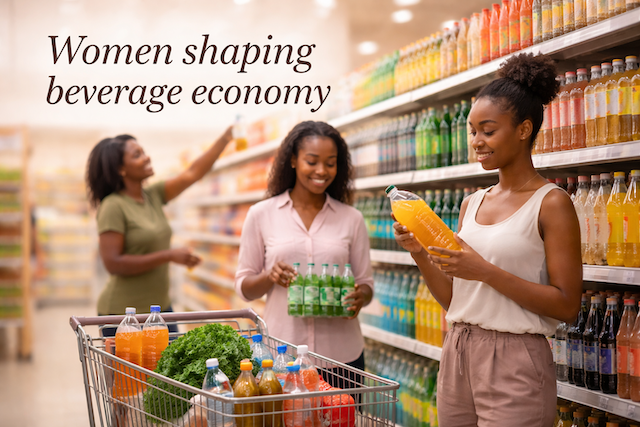
Women shaping beverage economy by balancing cost, quality, occasion, and wellbeing in everyday household purchasing decisions across Kenya.
On a Saturday afternoon in Nairobi, Kisumu or Eldoret, there is a scene that repeats itself with quiet consistency. A woman stands in the beverage aisle of a supermarket or pauses at a neighbourhood kiosk. She studies the options. She checks the price per litre. She thinks about how long it must last. She considers whether visitors might drop by on Sunday. It looks like an ordinary errand. It is not. It is an act of economic judgment, one that shapes Kenya’s beverage market more than we often acknowledge.
During Women’s Month, we rightly celebrate progress in leadership, entrepreneurship and public life. We speak about representation in boardrooms and politics. But beyond those visible spaces, women exercise economic influence every single day in ways that are less visible yet deeply consequential.
Globally, research frequently cited by organisations such as UN Women show that women influence a substantial share of household purchasing decisions, particularly in fast-moving consumer goods. In Kenya, where many households operate within tight and carefully managed budgets, that influence carries particular weight.
Beverage purchases are rarely random. They are deliberate. They involve balancing affordability with quality and immediate needs with upcoming occasions. In many homes, women organise the weekly shopping list. They decide when beverages are bought, how much is purchased and what is suitable for different moments such as: daily meals, school holidays, family gatherings or visitors.
Those decisions, repeated across millions of households, create predictable patterns of demand. They influence which pack sizes move fastest, when sales peak and what kinds of products gain loyalty. From an industry perspective, this is not simply a matter of marketing preference. It is the foundation of planning from distribution routes to inventory management.
Kenyan social norms add another layer. Hospitality is not casual; it is intentional. When guests arrive, what is offered on the table communicates respect and preparedness. The beverage choice matters. It must be sufficient, appropriate and within budget. For many families, that balancing act falls to women. The result is a purchasing logic that goes beyond taste. A larger bottle might be selected for a gathering, while smaller packs are preferred for everyday consumption. Occasionally, a premium option may be chosen to mark a celebration. Each decision reflects thought, not impulse.
At the same time, consumer behaviour is evolving. Urbanisation, changing work patterns and growing health awareness are influencing buying habits. Data from Euromonitor International has pointed to increasing interest in product variety and moderated sugar intake among urban consumers. Shoppers are paying closer attention to labels, portion sizes and overall value.
Women balancing professional responsibilities and family life are often at the centre of this shift. They are looking for options that offer both enjoyment and practicality. They are weighing price against nutritional information. They are thinking not just about today’s meal, but about longer-term wellbeing.
Some argue that grocery shopping is becoming more gender-neutral, especially in dual-income urban households. There is truth in that. More men are actively involved in supermarket decisions than in previous generations. But shared decision-making does not erase long-standing patterns. In routine household purchases, particularly those tied to everyday consumption and hosting, women’s influence remains significant. Recognising this reality is not about flattery. It is about economic accuracy.
When businesses understand who drives everyday purchasing decisions, they are better positioned to design products that fit real lives. Pack sizes make more sense. Distribution aligns more closely with actual buying cycles. Communication becomes less patronising and more respectful of the consumer’s intelligence.
Importantly, this recognition should move beyond symbolic gestures. Women do not need commemorative packaging to validate their influence. Their economic role is already visible in shopping baskets across the country. When a woman chooses what beverage to serve at a family celebration, she is making a series of calculations in seconds: cost per unit, expected number of guests, brand perception, household budget constraints. Multiply that decision across millions of homes, and the cumulative impact becomes clear.
Kenya’s beverage economy is not shaped only by advertising campaigns or corporate strategy sessions. It is shaped daily in supermarket aisles and small shops, where careful trade-offs are made between price, preference and occasion. As conversations about women’s empowerment continue, it may be worth widening the frame. Empowerment is not only about high-profile positions or public milestones. It is also about recognising the steady, consistent economic influence exercised in everyday life.
Sometimes, the most powerful market forces are not loud. They are simply consistent.
Cynthia Ochuodho – SBC Kenya HR & Legal
Never miss a story 💜
Breaking news, real stories and money tips for Kenyan women, as they happen.

