
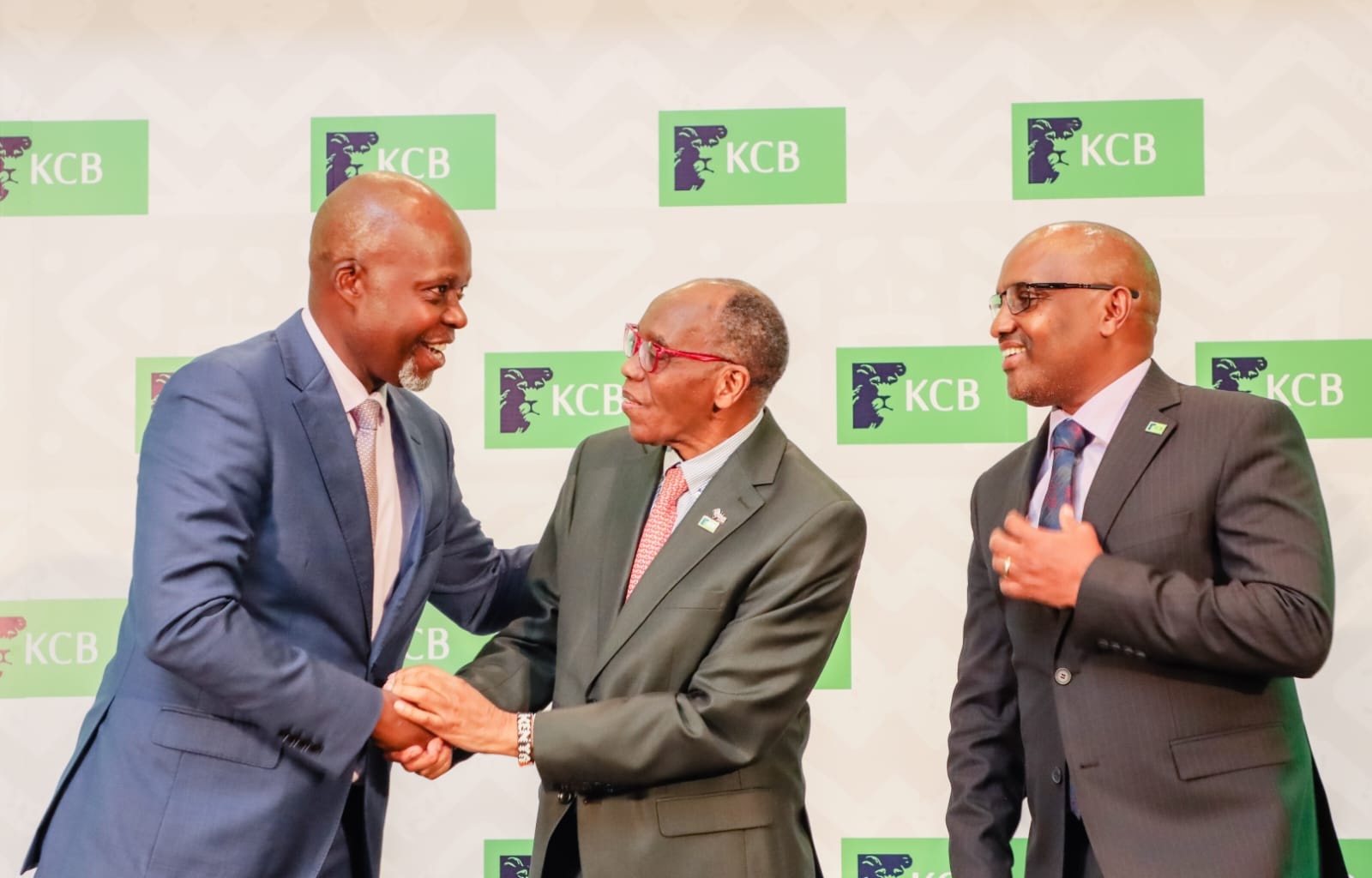
KCB regional banking growth boosted profits as subsidiaries, digital lending, and deposits supported performance across East Africa.
KCB Group PLC’s latest earnings show how large regional banks are adjusting to slower credit demand, global instability, and changing interest rate cycles across East Africa. The bank reported KShs. 24.4 billion in pre-tax profit for the first quarter ending March 2026, marking a 15.3% rise from the same period last year.
Read also – KCB Women Entrepreneurs Financing Through FLME Hits KSh149 Billion
KCB profit growth comes at a time when many businesses and households across the region are still cautious about borrowing and spending. Central banks in several East African markets have continued lowering rates, a move that reduces borrowing costs but also cuts into how much banks earn from loans.
That pressure appeared in KCB’s results. The Group said declining asset yields affected all its markets during the quarter as regulators sustained rate cuts across the region. Even so, operating income still rose by 8.5% to KShs. 53.6 billion, supported by growth in interest-earning assets and digital lending activity.
The results also offer a clearer picture of how banking is changing in East Africa. Growth is increasingly coming from digital transactions, regional subsidiaries, insurance products, investment services, and foreign exchange activity instead of traditional branch banking alone.
KCB regional banking growth – Regional Banking Is Carrying More Weight
KCB’s subsidiaries outside Kenya continued contributing heavily to the Group’s earnings. The bank said subsidiaries excluding KCB Bank Kenya accounted for 29.5% of total pre-tax profit and 31.5% of the Group’s balance sheet. That regional diversification matters because economic conditions across East Africa rarely move in the same direction at the same time. When one market slows down, another can help absorb pressure.
The Group’s non-banking businesses also posted profits during the quarter. KCB Bancassurance reported KShs. 209 million in pre-tax profit, while KCB Investment Bank recorded KShs. 274 million and KCB Asset Management posted KShs. 64 million.
KCB Group CEO Paul Russo linked the performance to the bank’s regional structure and digital investments. “Despite the challenging operating environment, we delivered solid growth driven by disciplined execution, continued investment in digital innovation, and our unwavering commitment to providing financing which catalyzes economic transformation across the region,” he said.
Russo also pointed to wider global risks affecting African markets. “While economic activity in East Africa remained resilient, we continued to see the impact of the Middle East conflict on economies, with a likely ripple effect of depressed credit demand, increased credit risk and lower remittance receipts, and on deposits,” he added.
Customers Continue Depositing More Money
One of the clearest signals from the earnings report came from customer deposits. KCB’s deposits rose by 16% to KShs. 1.7 trillion, helping push the Group’s balance sheet to KShs. 2.3 trillion. Banks closely watch deposit growth because it reflects customer confidence and gives lenders more room to finance businesses, mortgages, trade, and consumer borrowing.
KCB said the increase came from onboarding new retail and corporate customers across the region. The gross loan book also expanded from KShs. 1.21 trillion to KShs. 1.32 trillion. The Group also reported improvements in loan quality. Its non-performing loan ratio dropped to 16.6% from 19.3%, while the stock of bad loans declined from KShs. 233.3 billion to KShs. 217.8 billion.
That reduction matters because bad loans have weighed heavily on many African banks in recent years as businesses struggled with inflation, currency pressure, and reduced consumer spending. At the same time, KCB increased provisions for possible loan losses to KShs. 4.9 billion, showing banks still expect financial pressure in some sectors of the economy.
For shareholders, the bank’s return on equity stood at 21.5%, while earnings per share rose to KShs. 22.18 from KShs. 20.03 a year earlier.
KCB Chairman Joseph Kinyua said the results reflected the Group’s long-term regional strategy, though he warned external risks remain active. “The Middle East conflict presents a significant counterforce to global growth through its impact on commodity markets, inflation expectations and financial conditions,” he said.
The earnings reflect a banking sector that is becoming increasingly cautious, digitally driven, and regionally interconnected. East African lenders are balancing growth with risk management as households and businesses continue adjusting to a difficult economic climate.
Never miss a story 💜
Breaking news, real stories and money tips for Kenyan women, as they happen.

