
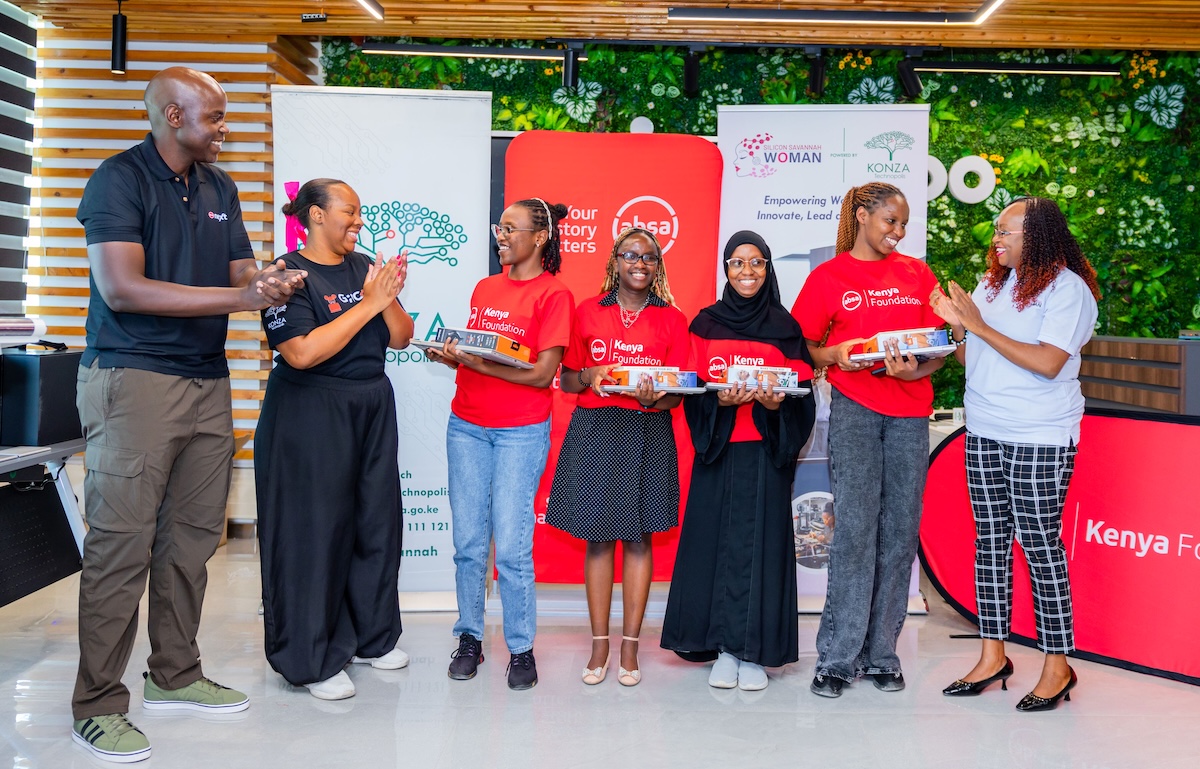
Anyone who has ridden a matatu in Nairobi knows the small drama at the end of the trip. The conductor digging for change, the passenger hunting for coins, and somewhere behind it all a vehicle owner who has no easy way of knowing what the day actually earned. That everyday friction is what four young women turned into the winning idea at the third GirlCode Kenya Hackathon, held last weekend at Konza Technopolis.
Mary Wangui, Linet Mugwanja, Aisha Barasa and Cynthia Chepkorir built Naulisako, an AI-powered fare collection platform that streamlines public transport payments, automates reconciliation for vehicle owners and generates reliable sales records. In plain terms, it makes paying simpler for passengers and keeps the books honest for the people who own the vehicles. Judges chose it from a field of 44 young women, a mix of students, graduates, developers and aspiring entrepreneurs, who spent two days building solutions to real-world challenges with industry mentors close at hand.
Speaking for the team, Linet said the win affirms that young women have an important role in shaping the future of technology. Naulisako, she explained, grew out of everyday problems in the transport sector, and the team is proud to have built something that can make payments more efficient, transparent and accessible. She hopes their journey encourages more young women to treat technology as a tool for solving real problems.
The rest of the podium had a familiar theme. The Bots team finished as first runners-up with Biashara Bot, which digitises and automates financial record-keeping for unbanked and underserved small businesses. Korva took third place with Korva Creatives Economy, a platform that pulls creator revenues, engagement data and intellectual property earnings from several channels into one place. Between them, the top three solutions went after the same quiet headache: knowing where the money is. The teams went home with laptops, tablets, Bluetooth speakers, headsets and inspirational books.
The hackathon was organised by Absa Bank Kenya, GirlCode and the Technopolis Development Authority. GirlCode CEO Zandile Mkwanazi said Kenya has one of the most exciting innovation ecosystems on the continent, and that the group was glad to continue its partnership with Absa for a third year while welcoming Konza as venue partner. The aim, she said, is to create spaces where young women can learn, build and see themselves as part of Africa’s technology future.
For Absa, Chief Information Officer Moses Okundi said the programme reflects the bank’s commitment to digital inclusion and youth empowerment. Digital skills and access to technology, he argued, open doors to economic opportunity, and three years with GirlCode show the bank’s intent to give more young women pathways into the digital economy. He tied the effort to the bank’s purpose of empowering Africa’s tomorrow, together, one story at a time.
The Technopolis Development Authority provided mentorship and technical support, and hosted the event at Kenya’s flagship smart city. Josephine Ndambuki, its Chief Manager for Business Development and Innovation, said hosting the hackathon reflects a commitment to giving young women room to develop skills and test ideas, and that the authority wants to see more of them become innovators, entrepreneurs and technology leaders.
Kenya was the sixth and final stop in this year’s GirlCode Pan-African Hackathon Series, which also visited South Africa, Tanzania, Ghana, Botswana and Uganda. The series supports GirlCode’s goal of reaching 10 million girls and women across Africa by 2030 through coding programmes, mentorship, hackathons and digital skills training. The Pan-African winners will be announced on 12 October 2026. The winning team will receive R100,000, roughly KES 790,655, while the winning SME will get incubation support to help scale its solution.
Absa Bank Kenya’s involvement sits within its wider push for inclusive growth, delivered through the Education and Skills Pillar of the Absa Kenya Foundation, which backs programmes that match learning to industry needs and strengthen economic resilience.
Never miss a story 💜
Breaking news, real stories and money tips for Kenyan women, as they happen.

