
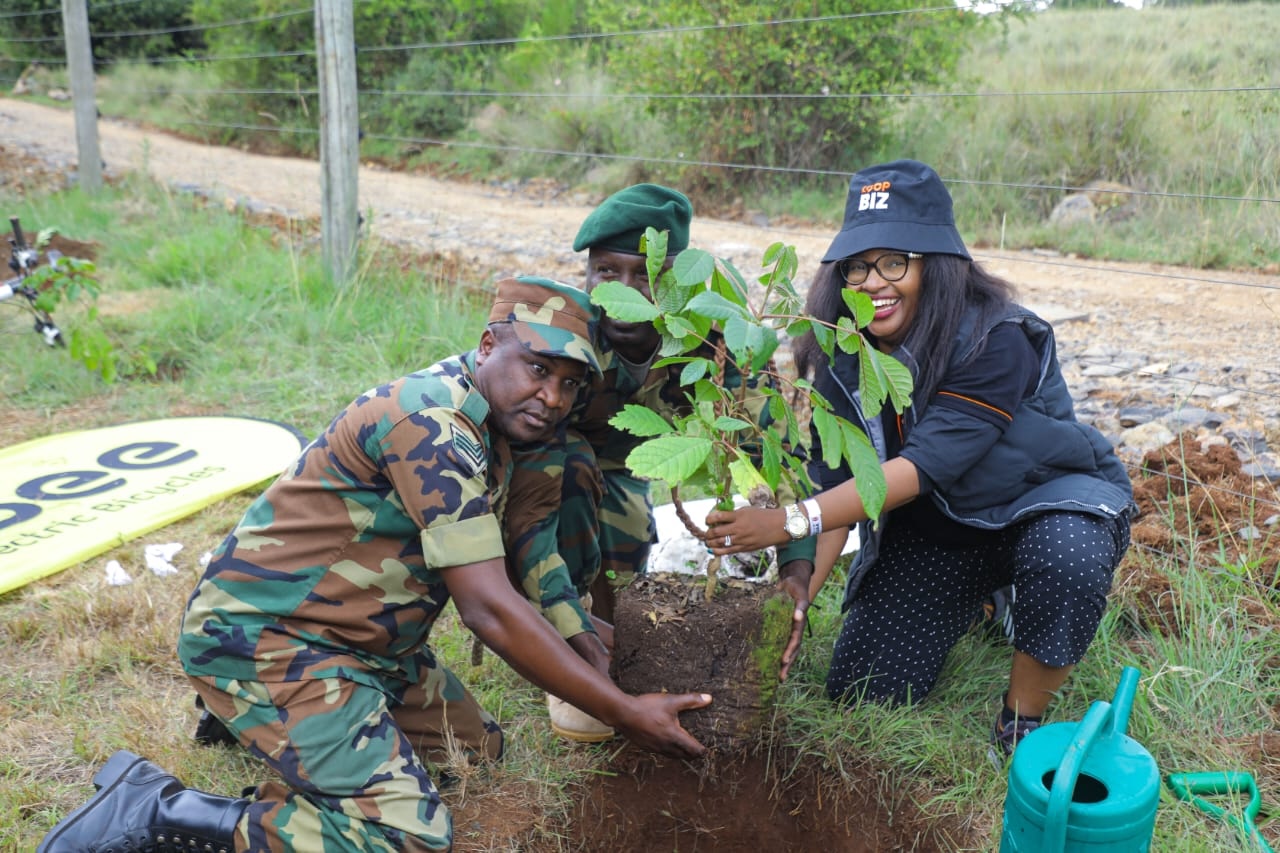
The LOOP Safari Gravel Series has planted 10,000 trees since it launched in 2024, a milestone that ties cycling, conservation and sustainable tourism together.
Four thousand of those trees went into the ground across the four stops of the 2026 season, which ended in Nanyuki on Saturday, 17 October. Jordan Schleck and Mary Aleper won the final race. The finale took place at Mount Kenya Wildlife Conservancy, where LOOP DFS planted 100 indigenous trees to leave something lasting in the area that hosted the riders.
This year’s circuit began in Limuru in March, moved to Naivasha in June and Vipingo in August, then closed in Nanyuki in October. At each stop, cyclists, spectators and local communities came together, and tree planting formed part of the gravel racing experience rather than an add-on to it.
Nelly Wainaina, NCBA Group Director for Marketing, Communication and Citizenship, said sport can bring people together around a shared purpose and leave an impact that reaches beyond the finish line. She explained that the series links the spirit of cycling and adventure with a duty to protect the natural environments that make those rides possible. Reaching 10,000 trees, she said, shows what can be achieved when sport and sustainability work together, and NCBA intends to keep investing in conservation so the destinations it visits and the communities that host it benefit for the long term.
Gravel cycling suits that approach. Riders spend their time on off-road terrain and in open landscapes, which gives them a direct connection to the places they travel through. LOOP DFS uses that connection to encourage participants to back conservation and tree growing in the destinations they explore.
The effort also fits into NCBA Group’s wider sustainability agenda, which aims to grow 10 million trees by 2030. Against that target, the series offers a working example of how a sporting event can contribute to conservation while building ties between people, communities and nature.
For the riders who race the series, the result is a season that leaves more behind than tyre tracks. Each stop adds to a growing number of trees in the host regions, and with 10,000 now planted in just a few seasons, the series has set a clear mark for what sports tourism can do for the places that welcome it.
Never miss a story 💜
Breaking news, real stories and money tips for Kenyan women, as they happen.

