
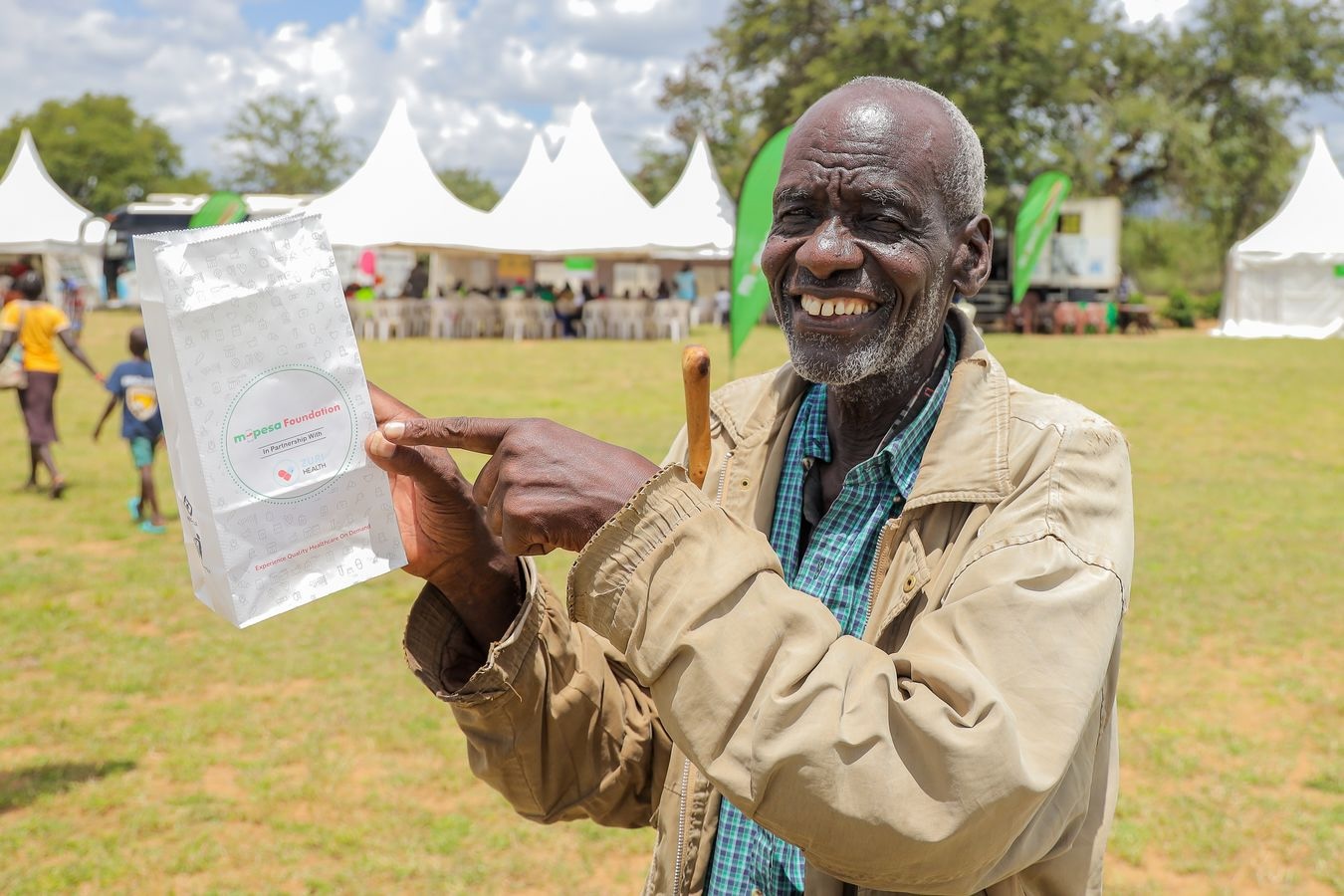
Corporate giving in Kenya once had a familiar formula, and versions of it still exist to date. A company wrote a cheque, handed it over at a photo opportunity, and moved on to the next project.
Safaricom has always seen different.
When the company was finding its feet in the late 1990s, its leadership was already questioning whether that strategy was enough in terms of lasting impact and transforming lives. Michael Joseph, the company’s founding CEO, had watched the routine play out and wanted Safaricom to take a different approach to its relationship with communities.
Rather than simply selecting organizations to receive donations, Safaricom created a system through which Kenyans could apply for support for projects in their own communities. The requests did not have to involve huge sums of money. Some of the earliest projects were as modest as painting park benches or building a cow shed at an orphanage.
A committee reviewed hundreds of applications every week, funding projects such as providing electricity to classrooms, furnishing dormitories and supporting community events. The company’s involvement also stretched beyond areas with network coverage, with support for marathons, goat races, the camel derby in Maralal and cultural events. This model gave Safaricom a direct view of needs on the ground, as identified by communities themselves.
The work eventually became too substantial to remain an informal corporate programme. In 2003, Safaricom registered the Safaricom Foundation, giving the company a formal structure through which to manage its community empowerment. The Foundation went on to work in areas including education, health, water and community development, often working with implementing partners such as the Red Cross and Oxfam.
Safaricom employees also participated in their own capacities by supporting projects in their hometowns, while a separate programme allowed them to take three or six months away from their jobs to work for charities. In further encouragement of participation, employees were also given three days of paid leave each year to participate in community projects.
Then came M-PESA which created different questions for the company.
When the mobile money service launched in 2007, the Central Bank of Kenya required customers’ funds to be kept separately from Safaricom’s money. Commercial Bank of Africa became M-PESA’s banker, and the funds generated interest that was invested in government securities. Initially, the expectation was that this interest would be enough to cover small expenses like bank fees, audit costs and other expenses.
M-PESA, however, became more successful than its founders had anticipated, and the interest generated from customer balances grew quite significantly. Safaricom and M-PESA Holdings therefore had to decide what to do with money that could not simply be returned to customers without creating an enormous administrative challenge, given the fact that M-PESA balances change very frequently.
The M-PESA Foundation was then established to direct the money towards charitable causes across Kenya. There was a deliberate distinction between it and the Safaricom Foundation. Michael Joseph said that the M-PESA Foundation was not supposed to become another way of promoting Safaricom and that its resources would instead be used for capital projects.
“We made it a very big stipulation that it would not be confused with the Safaricom Foundation. It meant that we could not have projects promoting or branding Safaricom in any way, that we would only use that money for capital projects,” Michael Joseph.
Over the years, the two foundations worked massively around education, health, economic empowerment and the environment. By the time Safaricom reached its 25th anniversary, the M-PESA Foundation had impacted 7.1 million lives across all 47 the counties. Of this, the foundation says that Khs5.1 billion went to education, Ksh4.6 billion to health, Ksh1.1 billion to the environment and livelihoods, and Ksh302 million on humanitarian outreach.
Some of the investments address very practical needs that had bothered communities for decades. In Kwale for instance, the Ksh235 million Nyalani Dam project involved rehabilitating the dam and installing solar power to distribute water to more than 400 families.
At Ruma National Park in Homa Bay, a borehole under the Nyatoto Community Water Project serves close to 300 families that had previously relied on Lake Victoria for water.
In matters health, the Foundation’s Uzazi Salama programme works on reproductive, maternal, neonatal, child and adolescent health, while telemedicine facilities have been established at hospitals in counties including Samburu, Lamu, Baringo, Homa Bay and Narok.
The M-PESA Foundation Academy in Thika stands out as the foundation’s flagship project, and perhaps a clear sign of how far ahead the foundation is thinking. Conceived as more than a conventional secondary school, it was built around leadership, business and character development alongside the regular curriculum. Its admission model reflects that ambition by selecting one boy and one girl from each of Kenya’s 47 counties who are academically promising but financially disadvantaged.
The same thinking now extends to Citizens of the Future which was launched in 2025. The programme plans to upgrade 500 schools, provide scholarships for 10,000 students in senior secondary and tertiary institutions, and support the training of student teachers over five years.
More than two decades later, what started as small requests from communities has grown into a wide reaching programme touching schools, hospitals, water systems, conservation and livelihoods across the country.
Never miss a story 💜
Breaking news, real stories and money tips for Kenyan women, as they happen.

