
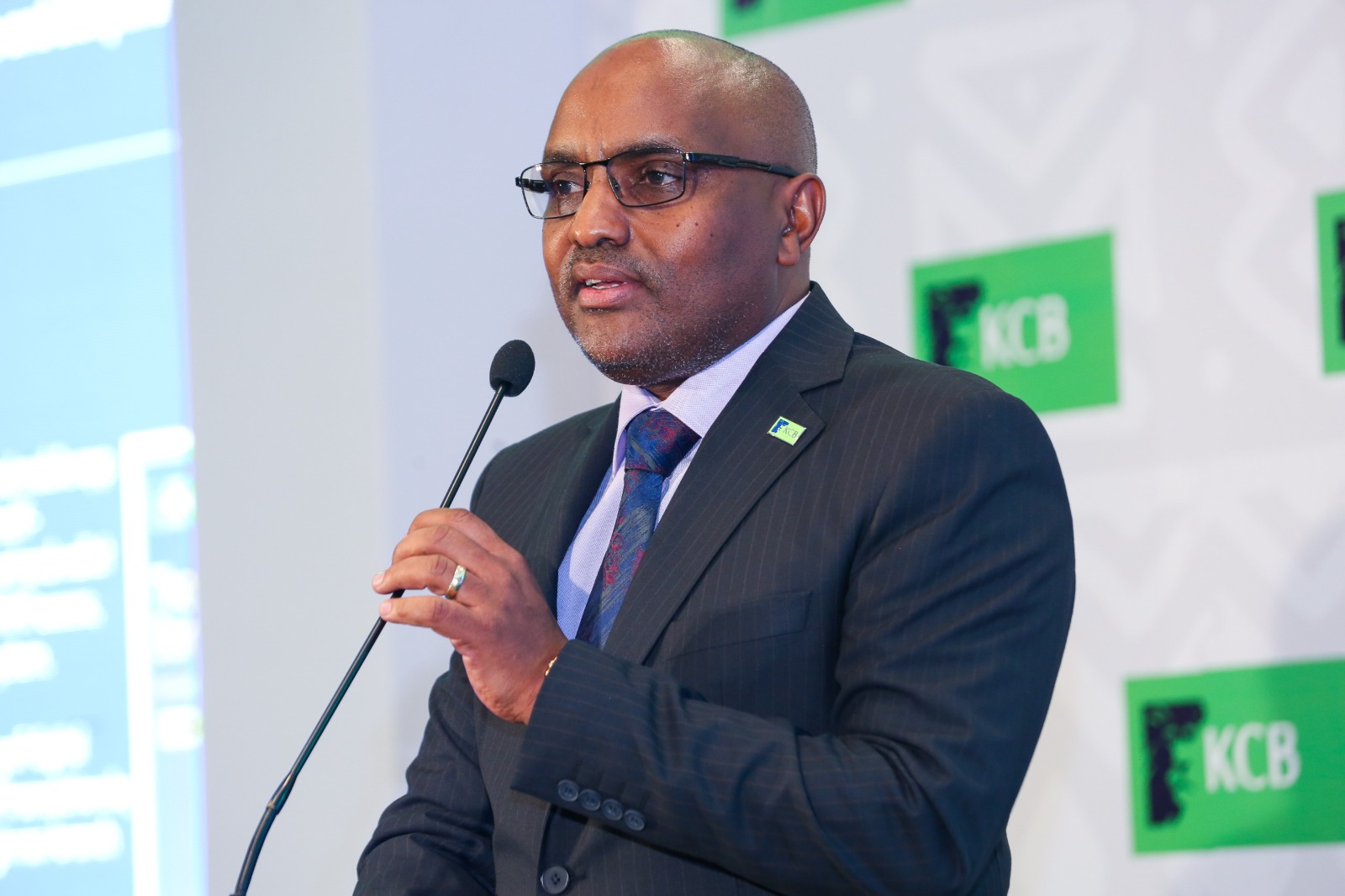
A look inside KCB’s Regional Strategy is central to understanding the bank’s 2025 results which were released last evening. The bank posted a Kshs. 68.4 billion profit after tax for the year ending December 2025, 11% up from the previous year. This performance reflects growth in lending, steady revenue expansion, and more prudent cost management across the group.
For those who observe East Africa’s banking sector, the results offer a useful window into how large lenders are positioning themselves in a region where economies are steadily expanding.
Profit Growth Anchored by Lending Expansion
The 2025 KCB results show a bank leaning heavily on credit growth to expand revenue. For instance, customer loans grew to 15 percent to reach Kshs. 1.59 trillion. Interest earning assets climbed to KShs. 1.84 trillion, which reflects a 13.8% rise.
Total revenues reached Kshs. 214 billion, up from Kshs. 204 billion the previous year while higher net interest income played a major role as the bank continued lending to businesses, households, and to the public sector. Digital services which are increasing in uptake also supported income generation. Non funded income accounted for 31 percent of total revenues.
KCB Group CEO Paul Russo framed the results as evidence of customer confidence across the region.
“Our 2025 performance reflects the strength of the KCB franchise, the resilience of our regional footprint, and the continued trust that customers place in us,” he said during the results announcement.
He added that growth came from disciplined execution, continued investment in digital banking, and lending directed toward key sectors of the regional economy.
KCB’s Regional Strategy – Regional Operations Take a Larger Role
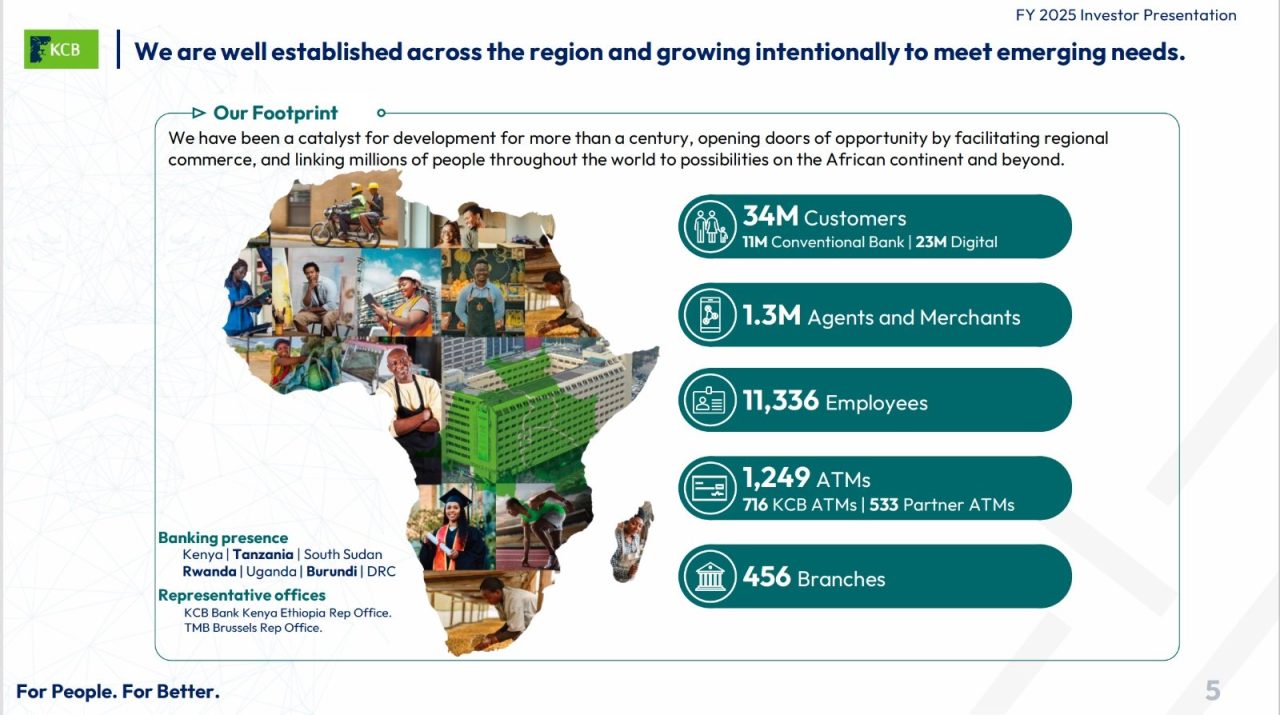
Regional diversification is a major part of KCB’s strategy for the bank that operates across several markets including Uganda, Tanzania, Rwanda, Burundi, South Sudan and the Democratic Republic of Congo. Subsidiaries outside Kenya contributed 30.7 percent of profit before tax and accounted for 30.5 percent of the group’s balance sheet and this footprint allows the group to spread risk across multiple economies while tapping into expanding trade links within East Africa and beyond.
Chairman Dr. Joseph Kinyua described the region as a key growth engine.
“East Africa remained the fastest growing sub region in Africa, driven by expanding trade, demographic growth, digital innovation and regional integration,” he said during the release of the financial results.
Trade corridors between countries such as Kenya, Uganda, Rwanda and the DRC continue to expand and this explains why regional banks are increasing cross border operations. Banks that operate across these markets gain access to corporate clients involved in infrastructure, manufacturing and logistics as the region continues to grow.
Balance Sheet Growth and Asset Quality
KCB’s total assets rose 9.3 percent to Kshs. 2.15 trillion during the year. This happened even after the exit of National Bank of Kenya, a move aimed at sharpening focus on its core operations.
Deposits increased by 15 percent to reach Kshs. 1.59 trillion. The bank maintained stable capital buffers with core capital standing at 18.4 percent of risk weighted assets, well above regulatory requirements.
Asset quality also improved, with non performing loan ratio dropping to 16.9 percent from 19.2 percent a year earlier. The bank attributes this improvement to loan recovery efforts and restructuring initiatives. Operating discipline also played a role.
Shareholder Returns and the Road Ahead
Shareholders will benefit from the year’s performance through dividends. The board proposed a final dividend of KShs. 3 per share, bringing the total payout for 2025 to KShs. 7 per share after an interim dividend paid earlier in the year. The total distribution amounts to KShs. 22 billion.
Going forward, KCB expects continued economic activity across its markets. The bank is monitoring unexpected geopolitical tensions and trade pressures that could affect operations and growth.
Dr. Kinyua noted that East Africa continues to present opportunities for financial institutions that can support trade, infrastructure and small businesses across borders.
For KCB, regional expansion remains key to future growth and the bank’s results suggest that East Africa’s integration agenda is steadily shaping how banks compete, lend and expand across the continent.
Never miss a story 💜
Breaking news, real stories and money tips for Kenyan women, as they happen.

