
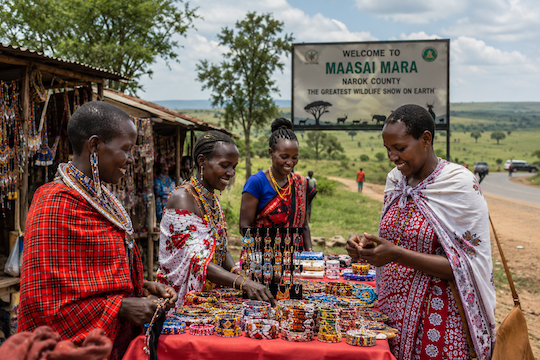
Tourism money flows through Talek every year, but for many women living near the Maasai Mara, daily life still depends on unstable income and small businesses. One bad tourism season, delayed rains or a family emergency can quickly disrupt entrepreneurs and by extension household finances. This is the unfortunate reality behind many food kiosks, roadside businesses and bead stalls operating around the reserve.
This is also the reality that shaped the I&M Foundation Predator’s Den empowerment programme in Talek, which brought together women and youth entrepreneurs for business training, mentorship and funding support aimed at helping local enterprises grow beyond survival mode. The initiative which is implemented in partnership with The Maa Trust and GIZ, focused on entrepreneurs with already running businesses within the community, from Maasai shukas, food businesses, poultry and cyber cafes among others.
The conversation around rural enterprise in Kenya often focuses mainly on financing, yet many women entrepreneurs in places like Talek are dealing with a much wider set of challenges. Some are trying to build businesses but are discouraged by limited market access. Others struggle with things like book keeping, pricing, inconsistent sales or the absence of mentorship and business training. All this time, many women operate informally while balancing childcare, farming responsibilities and household demands at the same time.
That reality forms part of the thinking behind the Predator’s Den initiative. Beyond funding businesses, the programme focused heavily on helping entrepreneurs improve their business management, planning and long-term growth and sustainability. Around 115 young entrepreneurs received training before selected participants moved into the pitching stage, where several businesses secured funding support to help expand operations.
In Talek, as in the larger Mara area, beadwork remains one of the most visible forms of women-led enterprise. Visitors entering the Maasai Mara regularly encounter women selling handmade jewellery, fabrics and other crafts along roadsides and market spaces. Behind those sales are households depending on tourism income to pay school fees, buy food and keep daily life moving.
But we know that tourism income can fluctuate really sharply and when visitor numbers drop, families feel the impact immedietely. That instability has pushed growing attention toward helping communities around conservation areas build more stable businesses that can survive beyond tourism peaks.
I&M’s Predator’s Den approach reflects that concern. Women who were part of the initiative received support aimed at improving business management, growth planning and market access. The discussions around entrepreneurship in Talek increasingly focus on sustainability, consistent income and helping businesses survive difficult seasons.
This is crucial for entrepreneurs because many rural businesses collapse quietly even under ordinary pressure. A beadwork business may have quality products but fail because prices are inconsistent or buyers remain limited to passing tourists. A food vendor may struggle with stock management or record keeping despite having regular customers. These are practical business problems that often receive little attention in conversations around women entrepreneurship.
There is also a growing effort to connect rural entrepreneurs to wider markets through technology and digital platforms. Mobile money services and smartphones have changed how many small businesses now operate, even in remote areas. Most women can now receive payments digitally, communicate with buyers remotely and market their goods beyond their immediate locations.
This wider economic effect stretches has impactful ripple effects. Women-owned enterprises in Talek help support households and keep money circulating within the local economy and some employ young people directly while others support suppliers, transport operators and small traders connected to tourism and community commerce.
For many women in Talek and surroundings, entrepreneurship is less about ambition in the corporate sense and more about survival and keeping families afloat during uncertain periods. The businesses may appear small from the outside, but inside many households, they carry enormous weight.
Never miss a story 💜
Breaking news, real stories and money tips for Kenyan women, as they happen.

