
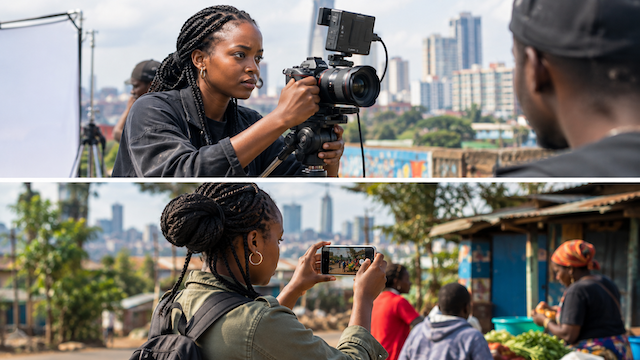
The Safaricom Capture the Good Challenge drew strong participation from creatives across the country. Among the eighteen national finalists, only one woman made the list, and this detail got me thinking.
This got me thinking about women’s participation in the wider creative industry. Having been in this space myself for 13 years, first as a publisher and now venturing into video content, I have watched this dynamic play out across Kenya’s creative industry for much of that time.
Walk into any production house, agency, or newsroom in this country and you will find women in plenty. They are running projects, managing budgets, writing scripts, coordinating shoots and handling communications. In many of these spaces, women are not only present, but they are the ones holding things together. What you will find far less often is a woman calling the shots from behind the camera.
Read more – Capture The Good – Kenyans Are Turning Community Impact Into Powerful Stories
Is this to say that women are less creative or any less technical? Not, but I think that the industry has quietly built two different entries into creative work, but they are not equally open.
Roles like production, coordination and writing tend to have more accessible entry points since they do not require one to own expensive gear to get started and do not have many barriers unique to women. Photography and videography, on the other hand, are a different ball game, often requiring upfront capital that many young creatives, regardless of gender, simply do not have. They also often demand a level of independence and mobility that are not equally possible for everyone, and that can be harder to sustain for women. We are speaking of demand for unstructured hours, early mornings and early nights, and unpredictable travel.
All is not lost though. On the flipside, I have also seen what it looks like when that access is in place. When a young woman gets her hands on the right equipment and is trusted with a shoot the same way a man in her position would, the output suggests nothing about a shortage of vision or skill but showcases what is possible once these barriers to entry are cleared.
Now this is the conversation worth having. Not why women are missing from this industry, but why so few of them take up the roles that put a camera in their hands, with the cost of equipment forming only a part of it and factors like mentorship and early exposure to the right opportunities being the other.
In all fairness, some of these barriers are not unique to women, but when an entire line of work remains lopsided year after year, it is worth asking what would need to change for women to move through that door as easily as their male counterparts.
Platforms like Safaricom’s Capture the Good are one of a kind of space that would help close this gap by putting cameras, skill and creativity in the hands of ordinary Kenyans, allowing them to tell everyday stories as they see them. The next step is to see more women pick cameras up, because the stories we tell are better when everyone capable of telling them is empowered to.
There is another reason I am hopeful. More Kenyans now have decent phone cameras in their pockets than ever before. You do not need to raise capital for a smartphone the way you would for professional filming equipment, and this removes one of the bigger obstacles that has kept many women out of this space.
Some of the most compelling visual storytelling happening in Kenya right now is being shot on phones, and this may well serve as the most practical way to gain entry for the net generation of Kenyan women, telling our stories from their own lens.
Never miss a story 💜
Breaking news, real stories and money tips for Kenyan women, as they happen.

