
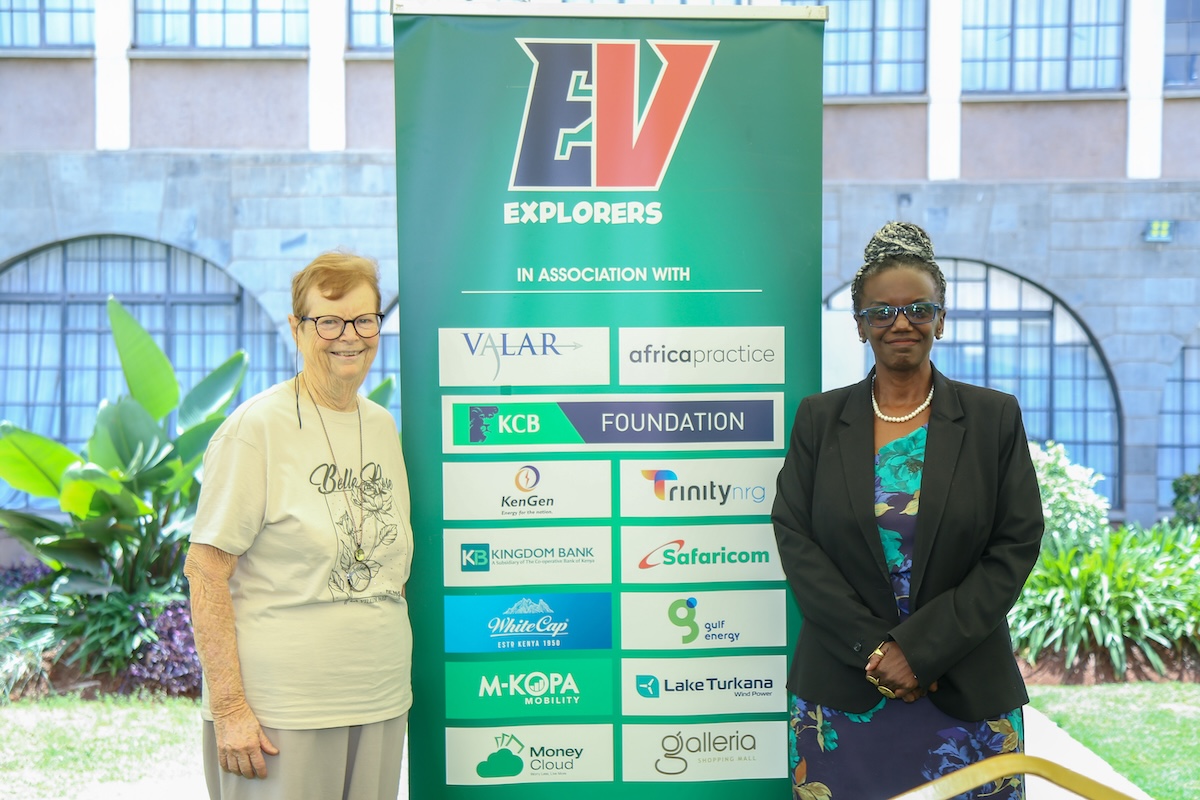
Two names now sit at the centre of Kenya’s electric mobility story, and both belong to women still finishing their technical education. Caroline Mutheu and Esther Leja, students at Technical and Vocational Education and Training institutions, have been named winners of the EV Explorers Rhino Charge 2026 Innovation Challenge, a result that marks a real step forward for innovation, sustainability and electric mobility adoption in the country.
The judges picked them out for solutions that showed creativity, technical ingenuity and a real grasp of the practical problems electric mobility still needs to solve. That combination is now paying off in concrete terms. Each winner will receive a partial scholarship covering up to 75 percent of her remaining tuition fees, a three month paid internship at Silent Savannah, and a place at the 2027 Rhino Charge as a technical observer alongside the EV Explorers crew.
The innovation challenge sat inside something much bigger, the Rhino Charge itself, an off road motorsport event where teams navigate brutal terrain to raise money for conservation. Adding an electric mobility component to that event gave participants a chance to prove what electric technology can do well outside the tidy conditions of a city street.
KCB Foundation Managing Director Mendi Njonjo spoke at the awards ceremony about what the scholarships represent for the country’s workforce. “At KCB Foundation, we are helping shape the workforce required for Kenya’s green transition,” she said. “Scholarships like these are an important tool for connecting education to applied learning, industry exposure, and pathways into employment. This is a practical example of our education-to-employment approach and demonstrates how we can work with industry to develop future-facing talent and connect young people to opportunities in the green economy.”
That green economy is already generating real demand, for electrical engineers, battery systems specialists, vehicle designers, electronics experts, energy management professionals and charging infrastructure planners. Kenya’s National Energy Efficiency and Conservation Strategy has set targets for increasing electric vehicle uptake, and the country’s developing e-mobility policy framework is working to strengthen the infrastructure, investment and skills base the sector will need to get there.
Richard Kiplagat, Africa Practice Partner and EV Explorers team leader, framed the moment as proof of what African engineering can do. “Our mission with EV Explorers is to demonstrate that African engineering can deliver world-class e-mobility solutions in even the most extreme conditions,” he said. “Having made history as the first electric vehicle to complete the Rhino Charge, extending this platform to Caroline and Esther allows us to transfer real-world engineering data into the hands of talented young Kenyan women who will help shape the future of sustainable transport.”
That history was made in May 2026, when EV Explorers took part in the 37th Rhino Charge in Ngilai, Samburu County, becoming the first electric vehicle to finish the gruelling off road competition. The vehicle itself was designed, built and assembled entirely in Kenya, completing the course on a 62 kWh battery system backed by an off grid solar charging setup.
Andrew Waititu, EV Explorers Innovation Challenge Lead, explained what the scholars will actually be doing during their placement. “Developing vehicles capable of operating in rough, off-grid terrain requires specialized knowledge of battery thermal management, structural durability, and solar integration,” he said. “During their placement at Silent Savannah, our scholars will utilise the performance telemetry datasets to assist our crew with chassis, wiring, and energy optimizations for the 2027 entry.”
The Rhino Charge has long linked engineering innovation with conservation work. This year’s event raised Ksh365 million for protecting Kenya’s mountain ecosystems, part of more than Ksh2.6 billion raised since the event began. That funding has helped Rhino Ark build roughly 650 kilometers of electric fencing, protecting forest ecosystems and more than 80,000 households from human wildlife conflict.
The 2027 Rhino Charge is set for May 29, giving Caroline and Esther a front row seat to watch their own engineering data put to the test in one of Kenya’s toughest off road environments.
Never miss a story 💜
Breaking news, real stories and money tips for Kenyan women, as they happen.

